 Art
Art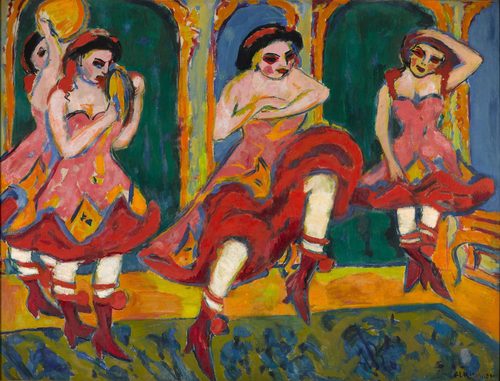
Die Brücke and Der Blaue Reiter are the two founding groups of German Expressionism, not variations of one another — Die Brücke, formed in Dresden in 1905, favored raw, jagged figuration and urban anxiety, while Der Blaue Reiter, formed in Munich in 1911, moved toward abstraction and spiritual, almost mystical color theory. Die Brücke, meaning the bridge, was founded by artists including Ernst Ludwig Kirchner, who wanted a bridge from academic tradition into a new, more instinctive art, drawing on German woodcut tradition and African and Oceanic art for its blunt, angular style. Der Blaue Reiter, the blue rider, formed later in Munich around Wassily Kandinsky and Franz Marc, and pushed further from recognizable subject matter toward color used almost like music, chasing inner spiritual truth rather than urban unease. Die Brücke disbanded in 1913 amid internal disputes; Der Blaue Reiter dissolved the following year when World War One scattered its members.
Die Brücke vs. Der Blaue Reiter at a glance
| Die Brücke | Der Blaue Reiter | |
|---|---|---|
| Years | 1905–1913 | 1911–1914 |
| Origin | Dresden, Germany | Munich, Germany |
| Style | Raw, jagged figuration with harsh outlines and angular distortion. | Looser, more lyrical brushwork moving toward pure abstraction. |
| Subject matter | City streets, nudes, and cabaret life rendered with nervous energy. | Landscapes, animals, and spiritual themes, especially Franz Marc's horses. |
| Key figures | Ernst Ludwig Kirchner and fellow founders in Dresden, later Berlin. | Wassily Kandinsky and Franz Marc, based in Munich. |
| Influences | German woodcut tradition and African and Oceanic sculpture. | Folk art and Kandinsky's theories linking color to music and spirituality. |
| Attitude | Confrontational and urban, channeling anxiety about modern city life. | Contemplative and idealistic, seeking harmony and inner spiritual truth. |
| Timeline | Active from 1905 to 1913, based first in Dresden, later Berlin. | Active from 1911 to 1914, ending when World War One began. |
How to tell them apart
If figures look jagged, harshly outlined, and slightly menacing — nudes, cabaret dancers, or crowded city streets rendered in raw, unpolished color — that's Die Brücke. If instead the image dissolves toward abstraction, with glowing color and symbolic animals like Franz Marc's blue horses, or Kandinsky's swirling near-abstract compositions, you're looking at Der Blaue Reiter. Die Brücke feels urban and confrontational; Der Blaue Reiter feels spiritual and lyrical. Woodcut-like harshness points to Die Brücke; musical, glowing color points to Der Blaue Reiter.
What they share
Both groups are foundational to German Expressionism and both rejected academic realism in favor of intense, non-naturalistic color and emotional directness. Both formed around close-knit circles of artist friends who exhibited and often lived together, and both treated painting as a vehicle for something beyond visual accuracy, whether urban feeling or spiritual truth. Some artists moved between overlapping Expressionist circles of the period, keeping the two groups in close dialogue.
Try both
Settle it yourself — generate the same subject in each style and compare the results.
Frequently asked questions
Is Der Blaue Reiter part of Die Brücke?
No. They are two separate founding groups of German Expressionism, formed independently in different cities — Die Brücke in Dresden in 1905, Der Blaue Reiter in Munich in 1911.
Which came first, Die Brücke or Der Blaue Reiter?
Die Brücke, founded in Dresden in 1905. Der Blaue Reiter formed six years later, in 1911, in Munich, and both groups were active in the early 1910s.
What's the main visual difference between Die Brücke and Der Blaue Reiter?
Die Brücke favored raw, jagged, urban figuration, while Der Blaue Reiter moved toward lyrical, near-abstract color exploring spiritual and symbolic themes, notably Franz Marc's animal paintings.