 Art
Art
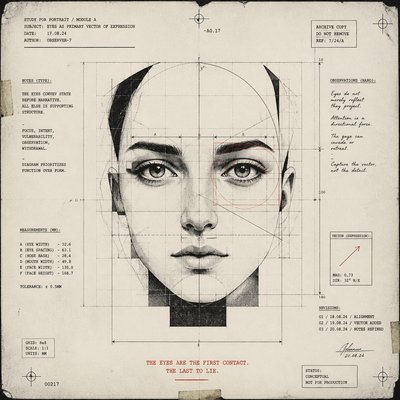
Minimalism reduces the art object to its simplest physical form; Conceptual Art asks whether you need a physical object at all. Minimalism took shape in New York starting around 1960, as artists like Donald Judd and Carl Andre built geometric, often industrially fabricated works meant to be taken purely at face value, without symbolism or hidden meaning. Conceptual Art followed a few years later, developing internationally from around 1965, as artists such as Sol LeWitt and Joseph Kosuth argued that the idea behind a work mattered more than its physical execution, sometimes replacing the object with instructions, photographs, or text alone. Sol LeWitt is the key bridge figure, moving from Minimalist geometric structures to writing that the concept itself is the machine that makes the art. So the split runs from reducing the object to questioning whether the object needs to exist at all.
Minimalism vs. Conceptual Art at a glance
| Minimalism | Conceptual Art | |
|---|---|---|
| Years | 1960–1975 | 1965–1980 |
| Origin | New York, United States | International |
| Physical object | Always a real, fabricated object — a cube, a stack, a grid of steel or plexiglass. | Often minimal or entirely absent, replaced by instructions, text, or documentation. |
| Emphasis | The finished object's form, material, and presence in physical space. | The idea or premise behind the work, independent of its physical form. |
| Materials | Industrial materials like steel, plexiglass, and fluorescent tubing, precisely fabricated. | Anything that can carry an idea — language, photographs, maps, or simple instructions. |
| Role of artist | Often designs a work fabricated by outside industrial manufacturers. | Frequently generates instructions that others, or the audience, can carry out. |
| Viewer experience | Direct physical encounter with an object's scale, surface, and placement. | Reading, thinking, or following instructions — the object may be secondary or missing. |
| Key figures | Donald Judd, Carl Andre, and Dan Flavin. | Sol LeWitt, Joseph Kosuth, and Lawrence Weiner. |
How to tell them apart
If you're standing in front of a real, fabricated geometric object — a stack of identical steel boxes, a grid of firebrick, a wall of fluorescent tubes — that's Minimalism. If instead you're reading a wall text, following a set of instructions, or looking at a work that's mostly documentation, photographs, or language, that's Conceptual Art; Kosuth's pairing of an object, a photo, and a dictionary definition is a classic example. Minimalist works reward walking around and noticing scale and material. Conceptual works often reward reading first and looking second, if there's anything to look at all.
What they share
Both movements reacted against Abstract Expressionism's emotional gesture, favoring cool, controlled, often impersonal presentation over visible brushwork or personal symbolism. Both questioned traditional ideas about craftsmanship, since Minimalist objects were frequently fabricated by outside manufacturers and Conceptual works sometimes existed only as instructions anyone could execute. Sol LeWitt worked across both movements directly, and many artists moved from Minimalist objects toward Conceptual strategies as they pushed the logic of reduction further, toward the idea itself.
Try both
Settle it yourself — generate the same subject in each style and compare the results.
Frequently asked questions
Did Conceptual Art grow out of Minimalism?
Largely yes. Several Conceptual artists, especially Sol LeWitt, started with Minimalism's reduced geometric objects and then pushed further, arguing the idea behind a work mattered more than its physical form or execution.
Which came first, Minimalism or Conceptual Art?
Minimalism, by about five years. It formed in New York starting around 1960, while Conceptual Art developed internationally starting around 1965.
Can a Conceptual artwork exist with no physical object?
Yes. Many Conceptual works consist entirely of instructions, text, or documentation, with the physical object either optional, temporary, or never fabricated at all — the idea itself is considered the artwork.