 Art
Art

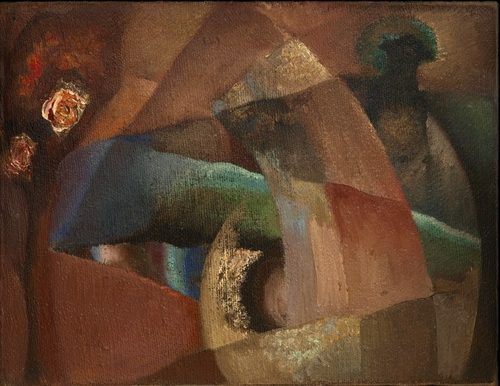
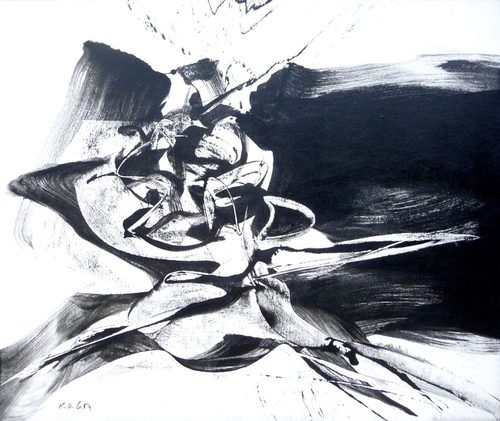
Abstract Expressionism pours the artist's emotion onto the canvas; Minimalism strips the artist's hand out of the object entirely. Abstract Expressionism took hold in New York from 1943, prizing gesture, scale, and personal risk as painters like Pollock and de Kooning treated the canvas as a record of physical and psychological struggle. By 1960, a younger generation in the same city had grown skeptical of all that heroic feeling, and Minimalism emerged as a direct reaction against it. Artists such as Donald Judd and Sol LeWitt wanted geometric, often industrially fabricated objects that refused symbolism, biography, or visible brushwork — what you saw was meant to be exactly what was there, nothing more. Where Abstract Expressionism treats a painting as a trace of an event, Minimalism treats an object as a fact in a room, and that shift in attitude, more than any change in materials, is the real split between them.
Abstract Expressionism vs. Minimalism at a glance
| Abstract Expressionism | Minimalism | |
|---|---|---|
| Years | 1943–1965 | 1960–1975 |
| Origin | New York, United States | New York, United States |
| Artist's hand | Every mark records a specific physical gesture — you can see the brushstroke and the drip. | Surfaces are often smooth, machine-fabricated, or store-bought, with no visible hand at all. |
| Materials | Oil paint, house paint, and canvas, applied and layered by hand. | Industrial materials like sheet metal, plexiglass, fluorescent tubes, and firebrick. |
| Emotion | Explicitly emotional and personal — meant to register the artist's inner state. | Deliberately impersonal — meant to exclude symbolism, mood, or biography. |
| Form | Irregular, organic, gestural compositions built from improvisation. | Geometric, often modular forms — grids, cubes, and repeated units. |
| Composition | All-over or asymmetrical arrangements built up through layered, spontaneous decisions. | Simple, predetermined arrangements often planned before fabrication begins. |
| Attitude | Painting as an arena for existential struggle and self-discovery. | The object as a plain fact in space — what you see is what you see. |
How to tell them apart
If you can trace individual brushstrokes, drips, or scrapes and feel a sense of physical struggle, you're looking at Abstract Expressionism. If the surface is flawless, machine-cut, or clearly fabricated rather than painted, you're in Minimalist territory. Rothko's soft-edged color fields and Pollock's tangled drips both still carry visible human touch; Judd's stacked metal boxes and Flavin's fluorescent-tube installations deliberately erase it. Abstract Expressionist paintings tend to have titles hinting at emotion or myth, while Minimalist works are often just numbered or untitled, refusing interpretation. One rewards close reading of the surface; the other rewards standing back and reading the whole room.
What they share
Both movements are proudly New York-centered and both pushed American art toward larger scale and greater ambition on the world stage. Both rejected illusionism and traditional representational subject matter in favor of direct physical presence, whether that presence is a gesture or a geometric object. Several Minimalists, including Frank Stella, began their careers absorbing Abstract Expressionism before reacting against it, so the two movements share not just a city but a lineage of artists moving from one to the other.
Try both
Settle it yourself — generate the same subject in each style and compare the results.
Frequently asked questions
Was Minimalism a reaction against Abstract Expressionism?
Yes, largely. Minimalist artists in the 1960s saw Abstract Expressionism's emotional gesture and myth-making as overblown, and deliberately built cool, geometric, often industrially fabricated objects as a corrective.
Which came first, Abstract Expressionism or Minimalism?
Abstract Expressionism, by roughly two decades. It formed in New York starting in 1943, while Minimalism emerged in the same city starting around 1960, partly in response to it.
Do Abstract Expressionism and Minimalism share any artists?
Not directly as mature styles, but several Minimalists, notably Frank Stella, began their careers working in an Abstract Expressionist mode before moving toward flatter, more geometric painting.