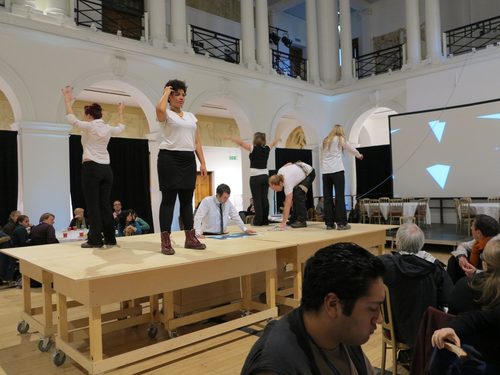
 Art
Art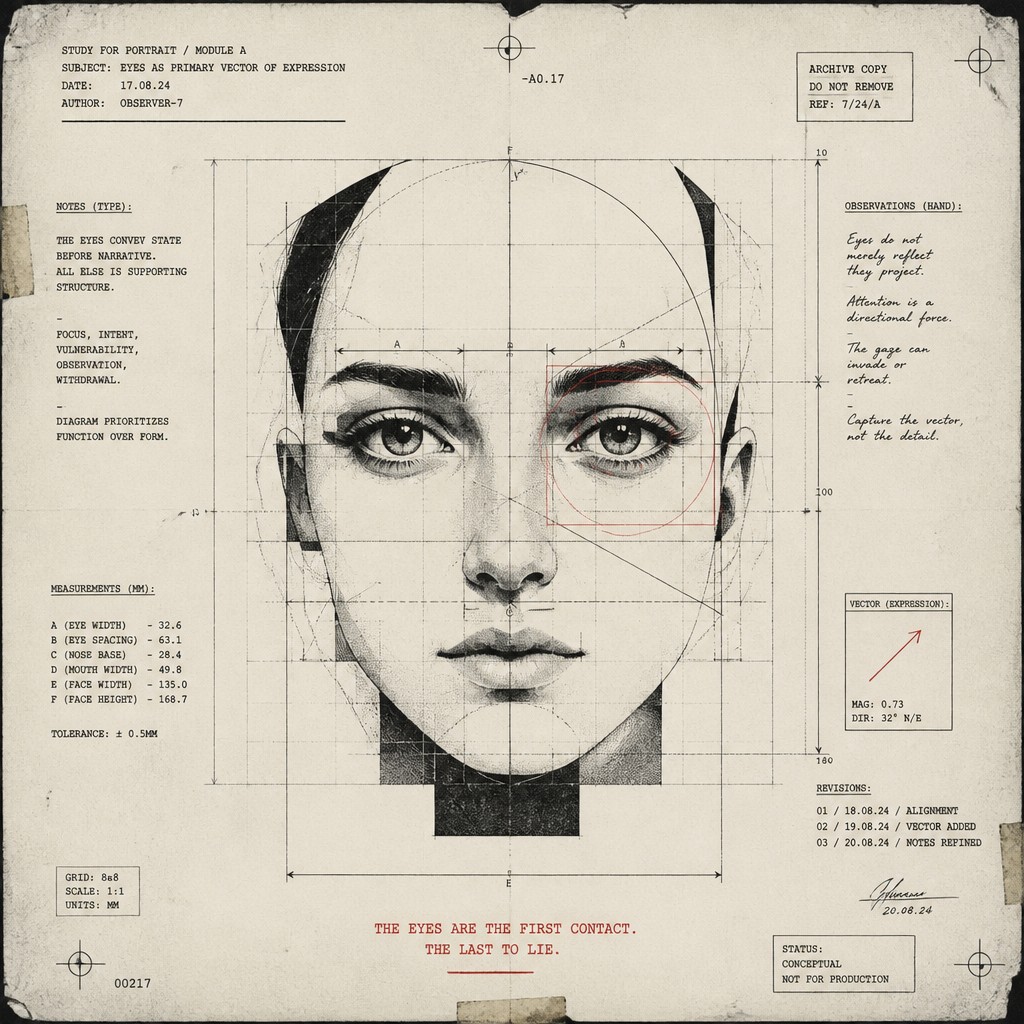 AI-generated
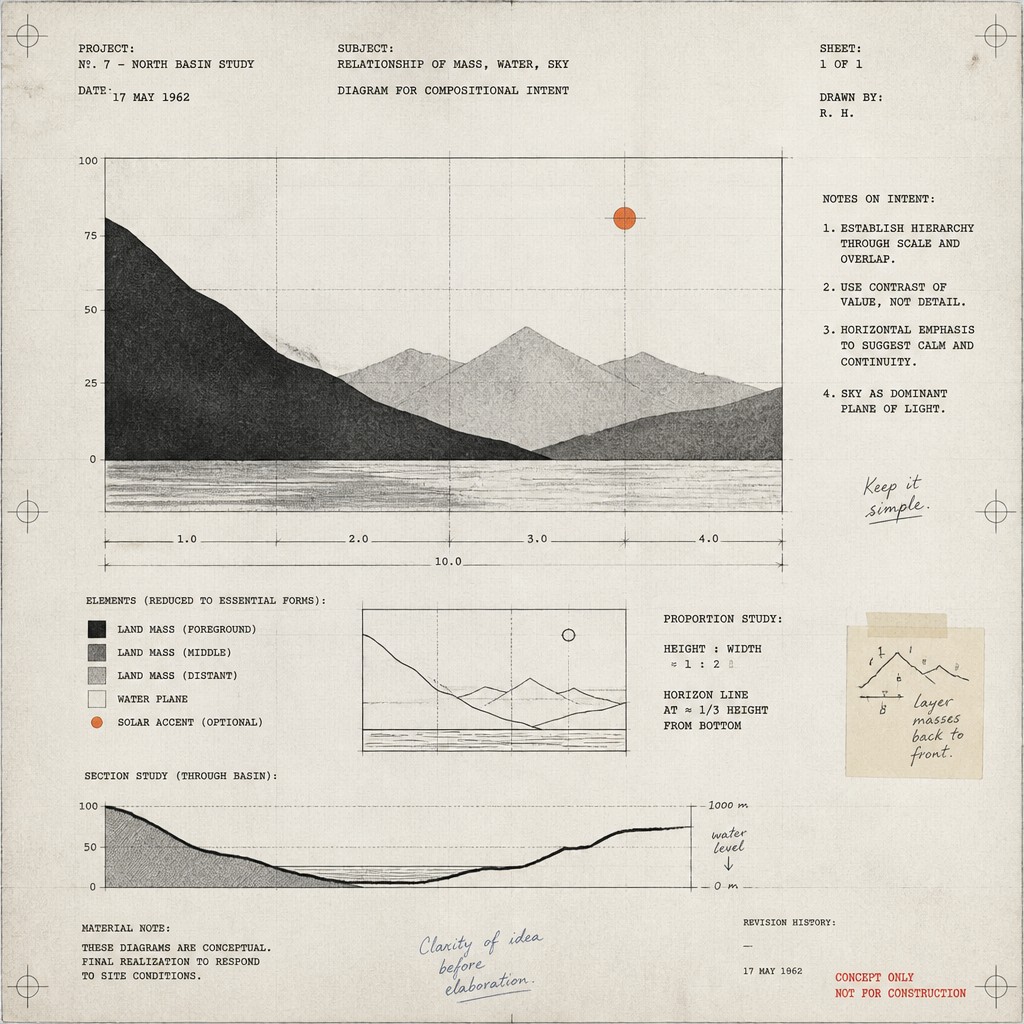 AI-generated
 AI-generated
Conceptual Art describes a wide-ranging body of practice, beginning in the mid-1960s, built on the premise that an artwork's idea or concept is more important than any particular physical form it might take. In its most radical versions, the work dispenses with a crafted object altogether, existing instead as a written statement, a set of instructions, a photograph, a diagram, or simply documentation of an act that occurred and then ended. Sol LeWitt's frequently quoted formulation captured the movement's core premise: "the idea becomes a machine that makes the art."
The style visually varies enormously — there is no single Conceptual Art look — but shares a consistent set of strategies. Joseph Kosuth's "One and Three Chairs" (1965) presents an actual chair alongside a photograph of that chair and a printed dictionary definition of the word "chair," asking which of the three — object, image, or language — constitutes the "real" artwork. Lawrence Weiner replaced physical objects entirely with typed statements describing actions or material configurations, insisting that the work existed fully whether or not it was ever physically realized. Sol LeWitt devised precise verbal or diagrammatic instructions for wall drawings that could be executed by any trained draftsperson, separating authorship from physical execution. On Kawara painted a single flat date on canvas nearly every day for decades, using repetition and documentation to record the passage of time itself.
Conceptual Art rebelled directly against the art market's emphasis on a unique, collectible, skillfully made object, and against Minimalism's continued investment, however reduced, in a physical form occupying gallery space. Critics Lucy Lippard and John Chandler described this shift, in their 1968 essay "The Dematerialization of Art," as the "dematerialization" of the art object. The movement matters because it permanently expanded what could count as art — text, instructions, documentation, and pure idea joined paint and stone as legitimate artistic media — and because it directly enabled the diverse text-based, institutional-critique, and idea-driven practices that dominate much contemporary art today.
What defines Conceptual Art
Idea over object
The concept or plan behind a work is treated as its essential content, while physical execution becomes secondary, optional, or delegable to others. A work's value lies in its idea, not in the skill of its making.
Language and text as medium
Written statements, definitions, instructions, and printed text frequently replace or accompany visual imagery, treating words as a legitimate artistic material in their own right. Joseph Kosuth and Lawrence Weiner both built entire practices around language-based work.
Documentation in place of the object
Photographs, typed statements, certificates, and other records often stand in for an artwork that was performed, built temporarily, or never physically realized at all. The documentation itself frequently becomes the collectible or exhibitable form of the piece.
Instructions and delegated execution
Some works exist as a set of written or diagrammatic instructions that can be carried out by anyone, separating the originating idea from the artist's own physical labor. Sol LeWitt's wall drawings are a defining example, executed by assistants following his written formulas.
Seriality and systems
Many Conceptual works follow a predetermined rule, system, or duration — daily repetition, numerical sequence, alphabetical order — letting an external logic generate the work rather than compositional intuition. On Kawara's decades-long date paintings exemplify this systematic, rule-based approach.
Institutional and linguistic self-questioning
Works frequently interrogate the definitions, conventions, and institutions of art itself — what a museum is, what a chair is, what a statement can claim — turning philosophical inquiry into the work's actual subject matter.
History
Conceptual Art's roots trace to Marcel Duchamp's early twentieth-century readymades, which had already proposed that an artist's selection and designation, rather than skilled making, could constitute a work of art, and to the event-based, anti-object practices of the Fluxus group in the early 1960s. The term "concept art" was first used by artist and theorist Henry Flynt in a 1961 essay associated with Fluxus circles, though the movement's more familiar form crystallized several years later.
Sol LeWitt's 1967 essay "Paragraphs on Conceptual Art," published in Artforum, gave the emerging tendency its clearest early theoretical statement, describing works in which "the idea becomes a machine that makes the art." Joseph Kosuth's 1965 work "One and Three Chairs" and his 1969 essay "Art after Philosophy," which argued that art since Duchamp had effectively become a form of philosophical inquiry into its own definition, were similarly foundational. Lawrence Weiner's 1968 "Statements," a book of typed descriptions of possible works, pushed the dematerialization of the object to a further extreme.
The movement quickly became international, with the British collective Art & Language developing a rigorously text-based, collaborative version of Conceptualism, and artists worldwide, from On Kawara in New York to various practitioners in Latin America and Eastern Europe, working with related ideas often under conditions of political constraint that made non-object-based art practical or necessary. Landmark exhibitions — "When Attitudes Become Form" in Bern in 1969 and "Information" at the Museum of Modern Art in 1970 — brought international Conceptual practice before wide audiences. Critic Lucy Lippard's 1973 book "Six Years: The Dematerialization of the Art Object" chronicled the movement's first phase in detail. By the late 1970s, Conceptual Art's most radical, purely dematerialized phase had given way to a broader, more image- and object-inclusive idea-driven practice that continues into the present.
Key works
| Work | Artist | Year | Why it matters |
|---|---|---|---|
| One and Three Chairs | Joseph Kosuth | 1965 | A physical chair, a photograph of that chair, and a printed dictionary definition of 'chair' displayed together, questioning what actually constitutes the artwork. |
| Paragraphs on Conceptual Art | Sol LeWitt | 1967 | An influential essay arguing that a work's underlying idea, rather than its physical execution, constitutes the true artwork. |
| Statements | Lawrence Weiner | 1968 | A book of typed descriptions of possible works or actions, proposing that language alone could fully constitute a piece of art. |
| Today (Date Paintings) | On Kawara | 1966 | A decades-long daily practice of painting the exact date on canvas, using repetition and documentation to register the passage of time. |
How to make art in this style
Working in a Conceptual Art Style
Start with the idea, not the material. Before deciding what a piece will look like, articulate the underlying concept, question, or proposition in a single clear sentence. Let this idea, rather than aesthetic preference, determine every subsequent decision about form and material.
Consider language as a medium. Typed statements, dictionary definitions, instructions, and printed text can carry as much artistic weight as an image. Draft the wording of a piece with the same care a painter gives to composition.
Write instructions others could follow. Try composing a work as a set of directions — precise enough that another person, or even you at a later date, could execute it exactly. This separates the originating idea from any single physical realization.
Use documentation deliberately. If a work involves an action, a temporary installation, or an ephemeral event, decide in advance how it will be recorded — photograph, typed report, certificate, video — since this record may become the lasting form of the piece.
Build in a system or rule. A predetermined structure — daily repetition, alphabetical sequence, a strict numerical count — can generate a work's form without relying on compositional intuition, echoing the systematic seriality common to the movement.
Question the frame itself. Consider directing the piece at the conventions of art-making or exhibition itself — what counts as a work, an artist, a gallery — since self-reflexive inquiry into art's own definitions was a central Conceptual strategy.
Keep the object secondary. Resist the urge to make the physical result overly polished or precious; let plainness of presentation keep attention on the idea rather than on craft or material seduction.
Legacy
Conceptual Art's central claim — that an idea alone can constitute a complete artwork — permanently reshaped the boundaries of contemporary art practice, opening the door to text-based work, institutional critique, and idea-driven installation and performance that remain central to art made today. Its questioning of the art object's necessity influenced virtually every subsequent movement concerned with language, systems, or documentation, from 1970s feminist and identity-based art through relational and social practice in more recent decades. Many of the most prominent artists working internationally since the 1980s and 1990s trace a direct line to Conceptual Art's strategies of appropriation, text, and institutional questioning. The movement also changed how art institutions themselves operate, since collecting, exhibiting, and authenticating instruction-based or dematerialized works required museums to develop entirely new curatorial and conservation practices, a challenge many collections still navigate. Sol LeWitt's delegated wall drawings, executed by assistants from his written instructions, established a lasting model for collaborative and reproducible authorship that later artists have continued to adapt. On Kawara's disciplined daily practice remains widely cited as a touchstone for artists using repetition, duration, and documentation as primary material. More broadly, Conceptual Art's insistence that art is fundamentally an act of thought, not just of making, remains one of the most consequential ideas in the history of twentieth-century art.
Frequently asked questions
What is Conceptual Art?
Conceptual Art is a movement, beginning in the mid-1960s, based on the premise that the idea or concept behind a work is more important than its physical execution, often replacing crafted objects with language, instructions, or documentation.
Who started Conceptual Art?
No single artist founded the movement, but Sol LeWitt, Joseph Kosuth, and Lawrence Weiner are widely credited as its central early figures, with roots tracing back to Marcel Duchamp's readymades and the Fluxus group.
What does "dematerialization of the art object" mean?
It is a phrase introduced by critics Lucy Lippard and John Chandler in their 1968 essay "The Dematerialization of Art" to describe Conceptual Art's tendency to replace or minimize the physical, collectible art object in favor of ideas, language, and documentation.
How does Conceptual Art differ from Minimalism?
Minimalism still produced physical, often industrially fabricated objects meant to be experienced in real space, while Conceptual Art frequently dispensed with a crafted object altogether, treating an idea, instruction, or statement as the complete work.
Do Conceptual artworks have to look like anything?
No; many Conceptual works consist entirely of text, instructions, or documentation with no conventional visual form, though other Conceptual artists incorporated photography, objects, or diagrams as carriers for their ideas.