 Art
Art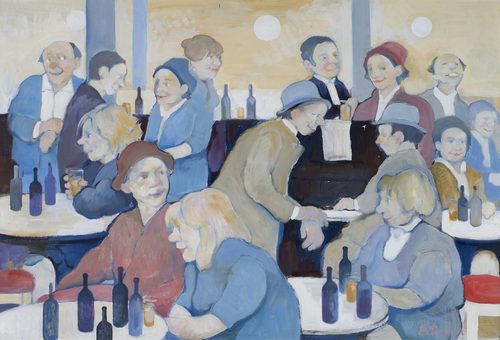
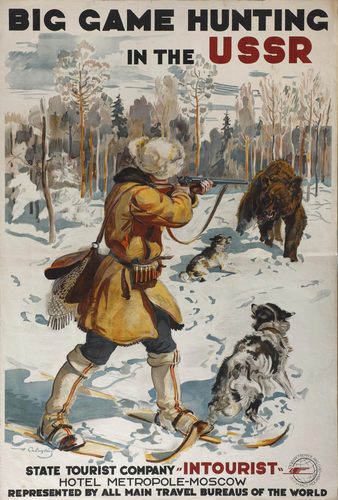
Social Realism was independent artists critiquing hardship under capitalism, while Socialist Realism was a state-mandated style glorifying life under communism. Social Realism took shape in the United States and Europe around 1929, as the Great Depression pushed painters and printmakers to document poverty, labor struggles, and everyday working-class life, often as pointed social criticism aimed at government and industry. Artists worked independently, driven by conscience rather than official instruction. Socialist Realism emerged separately in the Soviet Union starting in 1932, when the state formally declared it the only acceptable artistic style, requiring artists to depict idealized, heroic workers, soldiers, and leaders in an optimistic, easily readable manner that served Communist Party propaganda. Where Social Realism criticized existing conditions from the outside, Socialist Realism was commissioned from within a one-party state to celebrate conditions as the government wanted them portrayed, and it remained mandatory policy in the Soviet Union for decades.
Social Realism vs. Socialist Realism at a glance
| Social Realism | Socialist Realism | |
|---|---|---|
| Years | 1929–1950 | 1932–1980 |
| Origin | United States & Europe | Soviet Union |
| Origin | Grew organically among independent artists in the United States and Europe during the Great Depression. | Declared official Soviet state policy by the Communist Party in 1932, mandatory for all artists. |
| Tone | Critical and often somber, showing hardship, poverty, and struggle without a happy resolution. | Optimistic and heroic, showing idealized workers and leaders in confident, triumphant poses. |
| Subject matter | Breadlines, factory labor, migrant workers, and urban poverty depicted with sympathy. | Heroic laborers, soldiers, and Communist Party leaders shown as strong and virtuous. |
| Purpose | Social criticism and documentation, meant to provoke conscience and reform. | State propaganda, meant to build loyalty to the Communist Party and its ideals. |
| Freedom | Artists worked independently, choosing subjects based on personal conviction. | Artists worked under government mandate, with deviation risking official punishment. |
| Key figures | Ben Shahn and Dorothea Lange are closely associated with the American strand. | State-approved painters worked through official unions, rewarded for hewing to Party-approved subjects. |
How to tell them apart
If the painting shows tired, careworn faces, breadlines, factory workers, or migrant families, rendered with sympathy but no forced smile, that's Social Realism, art made to criticize hardship. If instead you see a broad-shouldered worker or soldier gazing confidently toward a bright horizon, or a portrait of a Communist Party leader rendered heroically, that's Socialist Realism, art made to celebrate an idealized state. Social Realism often feels documentary and gritty; Socialist Realism feels polished, staged, and unmistakably optimistic. Government-poster-style optimism about a glorious future signals Socialist Realism.
What they share
Both movements share a name, a rough time period, and a commitment to figurative, easily readable painting depicting working-class and laboring subjects rather than abstraction or elite leisure. Both also rejected art for art's sake, insisting that painting should carry a clear social or political message. The confusion between them is understandable, since both grew from left-leaning political commitments in the same interwar decades, even though their relationship to power was opposite.
Try both
Settle it yourself — generate the same subject in each style and compare the results.
Frequently asked questions
Is Socialist Realism the same as Social Realism?
No, despite the similar name. Social Realism was independent, often critical art made in the United States and Europe during the Great Depression. Socialist Realism was mandatory Soviet state policy from 1932 onward, requiring artists to produce optimistic, heroic propaganda glorifying communism.
Which came first, Social Realism or Socialist Realism?
Social Realism came first, emerging around 1929 amid the Great Depression. Socialist Realism followed in 1932, when the Soviet state declared it official policy.
Was Socialist Realism mandatory?
Yes. From 1932, the Soviet government required Socialist Realism as the only acceptable style, and artists faced serious professional and political consequences for working outside its approved, idealized aesthetic.