 Art
Art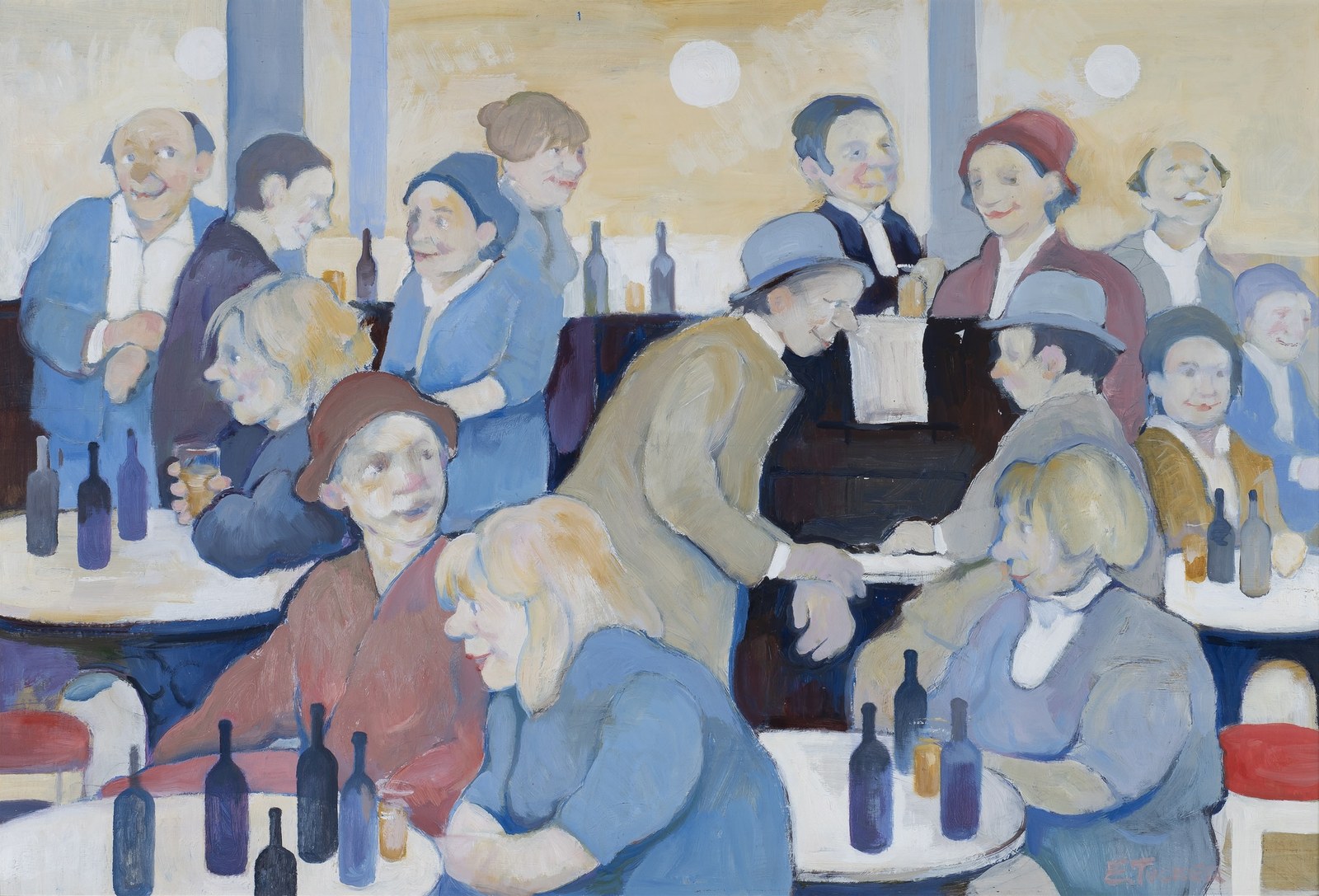
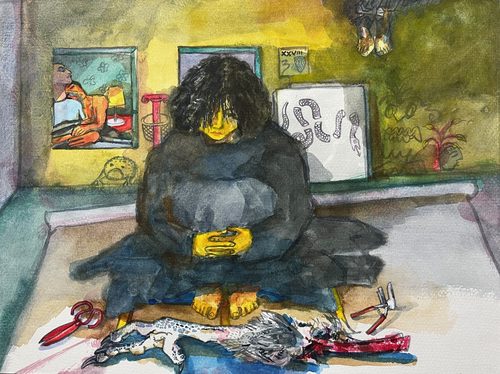
Eric Tucker 'Temptation' - wiki. Image: Nedbrowne · CC BY-SA 4.0 · Wikimedia Commons, accessed 2026-08-04
Social Realism describes art, spanning painting, printmaking, and photography, that depicts the everyday hardships of working-class and poor people, often carrying an implicit or explicit critique of economic inequality and social injustice. The movement flourished in the United States during the Great Depression, roughly from 1929 to 1950, with parallel currents in Europe.
American Social Realism's most enduring images came largely from photography. Dorothea Lange and Walker Evans, working for the federal Farm Security Administration, produced stark, direct documentary photographs of migrant laborers, tenant farmers, and rural poverty that remain among the defining visual records of the Depression era. In painting and printmaking, Ben Shahn used a spare, graphic style to address political causes directly, most famously in his series on the Sacco and Vanzetti trial, a controversial 1920s case involving two Italian immigrant anarchists executed on contested evidence.
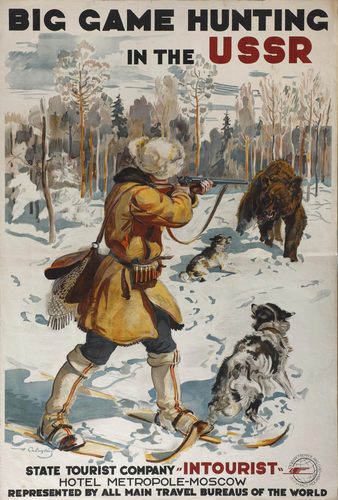
Social Realism should be distinguished from Socialist Realism, the state-mandated official art style of the Soviet Union. Where Socialist Realism was propaganda glorifying an idealized Communist present, American Social Realism was typically independent, often left-leaning social criticism, unsparing rather than triumphant in its depiction of conditions. It drew on the earlier Ashcan School's gritty urban subject matter and on Mexican Muralism's model of politically committed public art; Shahn, notably, assisted Diego Rivera on his controversial Rockefeller Center mural.
The movement rebelled against art-for-art's-sake aestheticism and academic idealization, insisting that art bear direct witness to real conditions and, implicitly or explicitly, advocate for change. Federal New Deal programs, including the WPA Federal Art Project and the Farm Security Administration's photography unit, gave many Social Realist artists institutional support and a wide public audience for the first time.
Social Realism matters because it established documentary witness as a central, legitimate mode of serious art, elevating photojournalism and socially conscious painting alike into the historical record of a defining American crisis, and set a template for socially engaged art that later movements would repeatedly return to.
What defines Social Realism
Documentary, unsentimental depiction of hardship
Poverty, unemployment, and labor conditions were depicted directly and starkly, without idealization or sentimentality, emphasizing the reality of Depression-era conditions.
Working-class and marginalized subjects
Migrant farmworkers, factory laborers, tenant families, and breadlines were the movement's central subjects, foregrounding people typically excluded from fine art's traditional focus.
Photography's central role
Farm Security Administration photographers, including Dorothea Lange and Walker Evans, produced some of the era's most influential images, establishing documentary photography as a major art form in its own right.
Explicit political and social engagement
Many works carried implicit or overt critique of capitalism, racial injustice, and economic inequality, reflecting many artists' leftist political sympathies.
Sober, direct compositional framing
Paintings and photographs alike favored stark, direct framing over decorative composition, emphasizing the subject's dignity within difficult circumstances.
Wide distribution through printmaking
Lithography and etching were frequently used to produce affordable, widely distributable politically engaged imagery, extending the movement's reach beyond gallery walls.
History
Social Realism emerged as the Great Depression, beginning in 1929, devastated the American economy, giving artists urgent new subject matter in mass unemployment, rural poverty, and labor unrest. President Franklin Roosevelt's New Deal created federal programs that directly employed artists: the WPA Federal Art Project supported painters and printmakers, while the Farm Security Administration hired photographers, including Dorothea Lange, Walker Evans, and later Gordon Parks, to document rural conditions and the displacement of farming families, producing some of the most enduring images of the era.
Ben Shahn's paintings engaged political causes head-on, most notably his 1931–32 series on the trial and execution of Sacco and Vanzetti, which used a spare, graphic style to protest what many saw as a miscarriage of justice rooted in anti-immigrant and anti-radical prejudice. Shahn's connection to Mexican Muralism, he assisted Diego Rivera on the ill-fated Rockefeller Center mural, reflects the broader influence Mexican muralists had on American Social Realist painters, alongside the earlier gritty urban realism of the Ashcan School.
Dorothea Lange's 1936 photograph Migrant Mother, taken at a California pea-pickers' camp, became one of the most reproduced images in American history and a lasting symbol of Depression-era hardship. Walker Evans's photographs of Alabama tenant farmer families, later published alongside James Agee's text as Let Us Now Praise Famous Men, similarly became foundational documents of the period.
Social Realism's prominence declined after World War II, as Cold War anti-Communist politics made overtly leftist art politically risky, and as Abstract Expressionism displaced figurative social commentary as the dominant mode in American art by the late 1940s and 1950s. Its documentary impulse, however, continued directly into later photojournalism and socially engaged art.
Key works
| Work | Artist | Year | Why it matters |
|---|---|---|---|
| Migrant Mother | Dorothea Lange | 1936 | An iconic Farm Security Administration photograph of a destitute mother, among the most reproduced images of the Great Depression. |
| The Passion of Sacco and Vanzetti | Ben Shahn | 1932 | A series of paintings protesting the controversial trial and execution of two Italian immigrant anarchists, exemplifying Social Realism's political engagement. |
| Allie Mae Burroughs, Hale County, Alabama | Walker Evans | 1936 | Stark documentary photographs of Alabama tenant farmer families, later published alongside James Agee's text as a landmark of Depression-era documentation. |
| Bud Fields and His Family | Walker Evans | 1936 | A stark, direct documentary portrait of a rural Alabama tenant-farming family, part of the same Depression-era project. |
How to make art in this style
Palette. Work in desaturated, somber tones, grays, browns, muted blues, reserving stark contrast or brighter accents for emphasis rather than decoration. Avoid saturated, celebratory color that would undercut the subject's gravity.
Composition. Favor direct, frontal framing that confronts the viewer with the subject rather than romanticizing or distancing them. In photography, get close enough to register individual expression and detail; in painting, use spare, uncluttered backgrounds that keep focus on the figure.
Technique. In photography, prioritize documentary clarity and unposed, natural expression over stylization. In painting or printmaking, favor bold, simplified graphic forms, strong outlines and flattened planes work well for wide reproduction in prints and illustrations, over painterly ornamentation.
Subjects. Depict labor and its hardships directly: migrant and agricultural workers, factory laborers, unemployment lines, tenement housing, industrial landscapes. Individual, specific figures, rather than generalized types, carry more force; a particular face, a particular posture of exhaustion or resolve, does the work a caption cannot.
Tone. Aim for unsentimental dignity rather than pity. The strongest work in this mode neither exploits nor idealizes its subjects but presents them with the same seriousness a portrait of power or wealth would receive, letting the conditions themselves carry the implicit argument for change.
Legacy
Social Realism established documentary photography as a powerful and legitimate vehicle of social conscience, directly shaping subsequent photojournalism, civil-rights-era photography, and socially engaged documentary work through the present day. Farm Security Administration images remain foundational to American visual memory of the Depression, continually reproduced in textbooks, exhibitions, and popular media.
The movement's insistence that art could and should bear witness to injustice influenced later socially engaged art, from 1960s protest imagery to contemporary documentary and social-practice art addressing poverty, labor, and inequality. Ben Shahn's spare, graphic political style continued to influence illustration and protest art for decades after his death.
The ongoing tension Social Realism navigated, between aesthetic form and direct political advocacy, remains an active question for artists and photographers working in socially conscious modes today. Its core commitment, that unsparing, direct depiction of real conditions carries its own moral and artistic authority, continues to underpin much documentary and activist art.
Frequently asked questions
What is Social Realism in art?
Social Realism is a movement, especially prominent during the Great Depression, that depicts the hardships of working-class and poor people through painting, printmaking, and documentary photography, often carrying an implicit critique of economic inequality.
What is the difference between Social Realism and Socialist Realism?
Social Realism was independent, often critical art documenting real hardship, largely produced in the United States and Western Europe. Socialist Realism was the Soviet Union's state-mandated official style, which glorified an idealized Communist present rather than critiquing conditions.
Who were the key Farm Security Administration photographers?
Dorothea Lange and Walker Evans are the best known, alongside photographers including Gordon Parks and Arthur Rothstein, all hired by the Farm Security Administration to document rural poverty during the Depression.
What caused Social Realism's decline?
Cold War anti-Communist politics made overtly leftist art politically risky after World War II, and Abstract Expressionism's rise displaced figurative social commentary as the dominant American art style by the late 1940s and 1950s.