 Art
Art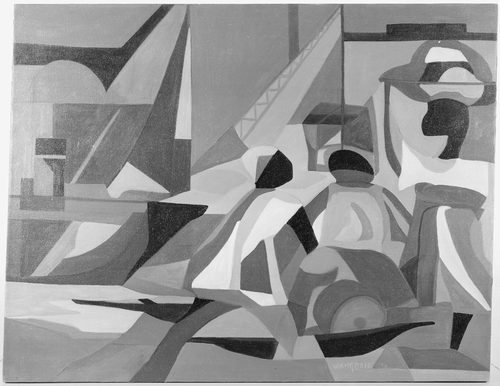
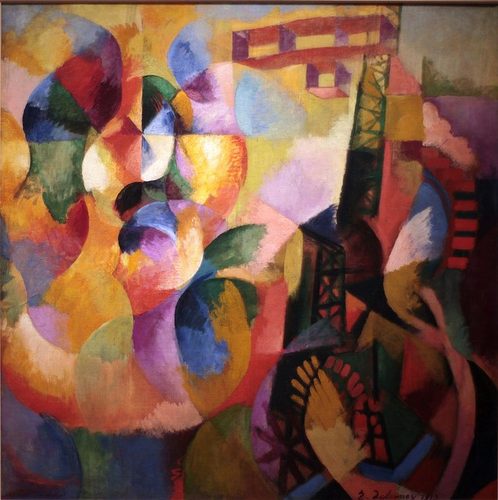
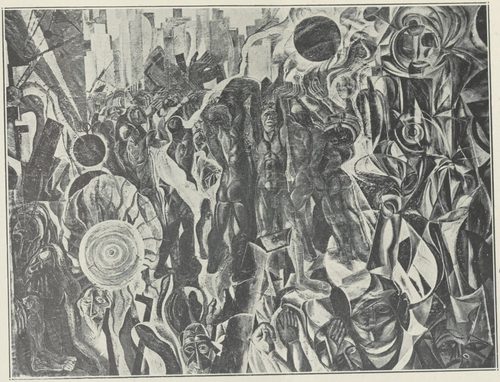
Orphism split off from Cubism to put pure color and abstraction back at the center, while Cubism stayed committed to fracturing solid form under a muted, near-monochrome palette. Cubism emerged in Paris around 1907 with Pablo Picasso and Georges Braque, who broke objects into overlapping geometric facets seen from multiple angles at once, deliberately draining color so viewers focused on structure rather than hue. By 1912, a younger circle around Robert Delaunay and Sonia Delaunay felt that Analytic Cubism had grown too austere and cerebral, so they layered in prismatic, rainbow-bright color and pushed toward near-total abstraction, chasing rhythm and light rather than dissected objects. The poet Guillaume Apollinaire coined the name Orphism for this offshoot, linking its lyrical color harmonies to music and the myth of Orpheus. Orphism burned out fast, largely fading by 1920, but it helped carry Cubist ideas toward pure abstraction and shaped later color-driven painting.
Cubism vs. Orphism at a glance
| Cubism | Orphism | |
|---|---|---|
| Years | 1907–1925 | 1912–1920 |
| Origin | Paris, France | Paris, France |
| Color | Muted, near-monochrome: browns, grays, ochres dominate so structure reads clearly without color competing for attention. | Saturated and prismatic: rainbow gradients and bold complementary contrasts are the painting's main subject. |
| Subject matter | Still lifes, musical instruments, portraits, and cafe scenes broken into fragmented, recognizable planes. | Often near-abstract: circular color discs, city views, and dynamic forms with few recognizable objects. |
| Composition | Flattened, faceted grids of overlapping planes built from straight edges and sharp angles. | Curved, rotating forms built from color discs and sweeping arcs rather than straight facets. |
| Key figures | Pablo Picasso and Georges Braque led its Analytic and Synthetic phases. | Robert Delaunay and Sonia Delaunay led the movement, with Frantisek Kupka nearby. |
| Attitude | Analytical and cerebral, treating painting as a problem of representing form and volume. | Lyrical and musical, chasing sensation, rhythm, and simultaneous color contrast. |
| Legacy | Reshaped modern art's approach to form and multiple viewpoints for decades. | Fed directly into abstract and color-field painting through its color experiments. |
How to tell them apart
If the canvas is nearly colorless, built from stacked gray-brown planes of a guitar, bottle, or face, you're looking at Cubism. If those same fractured planes suddenly explode into rainbow discs and glowing rings, you've crossed into Orphism. Cubism reads angular and dry, like a puzzle solved in charcoal and clay tones. Orphism reads warm and musical, closer to stained glass than a still life. Look for circles: Orphist paintings favor rotating color wheels and sun-like forms, while Cubist paintings favor rectilinear facets and cross-hatched shading. If you can name the object being depicted, lean Cubism; if the painting reads as pure color sensation, lean Orphism.
What they share
Both grew from the same Parisian studios and the same core idea: that a painting could show more than one viewpoint at once. Orphism's founders trained inside Cubism before pushing past it, and both movements rejected traditional perspective and modeling in favor of geometric construction. Each also helped launch abstraction as a serious path for painting, encouraging later artists to abandon recognizable subject matter altogether.
Try both
Settle it yourself — generate the same subject in each style and compare the results.
Frequently asked questions
Is Orphism a type of Cubism?
Orphism grew directly out of Cubism around 1912, keeping its geometric fragmentation but adding bright, prismatic color and pushing toward abstraction. Historians usually treat it as a distinct offshoot, since its aims, color and rhythm, differ sharply from Cubism's focus on form.
Which came first, Cubism or Orphism?
Cubism came first, emerging in Paris around 1907 through Picasso and Braque. Orphism followed around 1912, when Robert and Sonia Delaunay broke from Cubism's muted palette to explore color and abstraction.
Did Cubism and Orphism share any artists?
Not as founders, but Orphism's leaders worked alongside Cubists in the same Paris circles, and painters like Fernand Leger and Frantisek Kupka moved between color-driven and Cubist approaches during the same years.