 Art
Art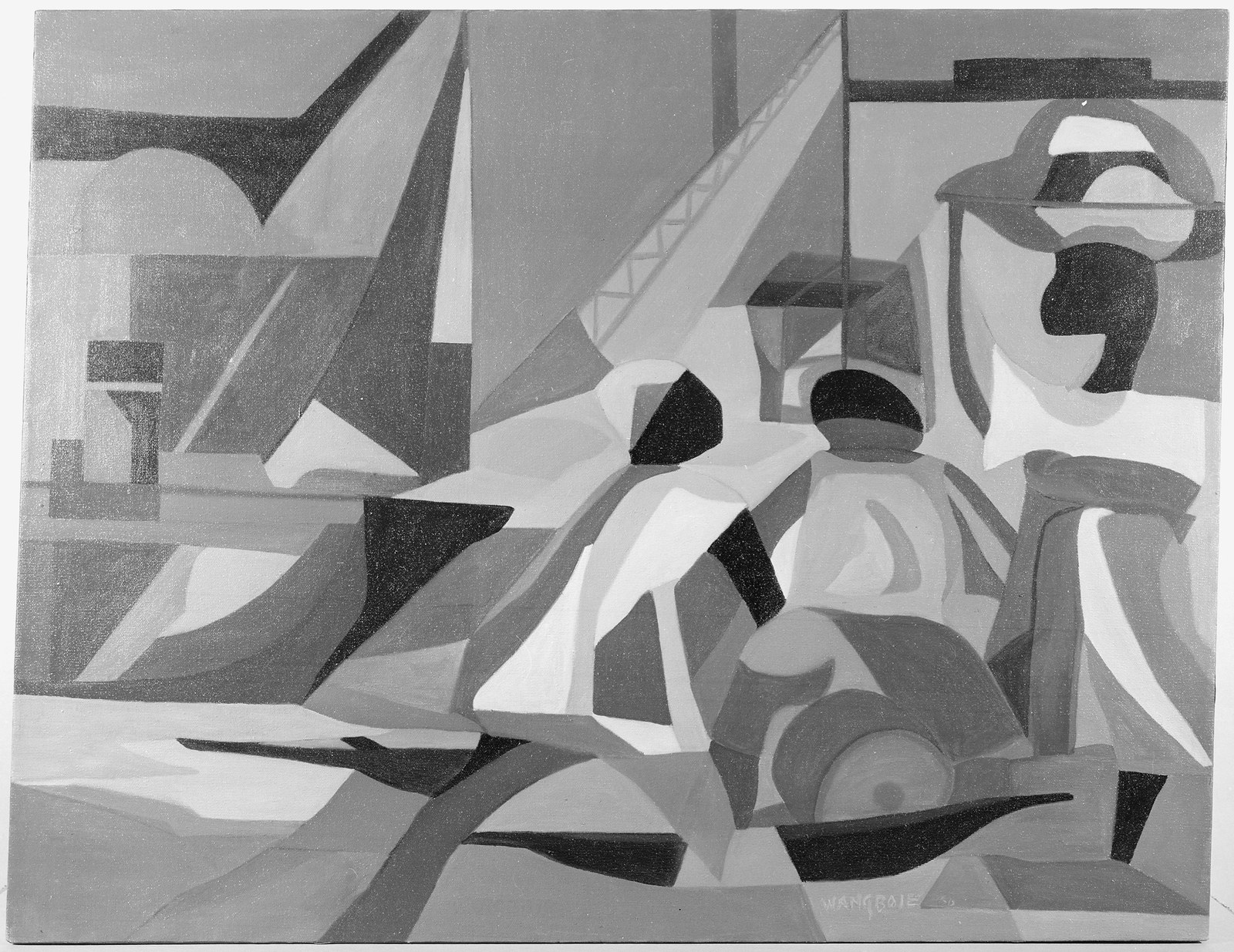
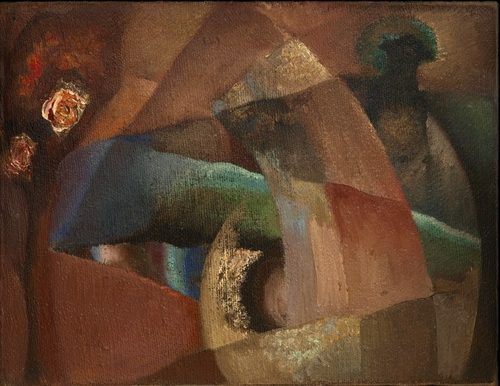
"At the Wharf". Image: Unknown authorUnknown author or not provided · Public domain · Wikimedia Commons, accessed 2026-08-04
Cubism, developed in Paris between roughly 1907 and 1914, with Synthetic Cubism continuing into the 1920s, by Pablo Picasso and Georges Braque, was the most consequential rupture in Western painting since the invention of linear perspective in the Renaissance. Rather than depicting an object from one fixed viewpoint, Cubist painters fractured it into geometric facets and reassembled multiple angles—front, side, above—within the same picture, insisting that a painting was a flat arrangement of shapes on canvas, not a window onto illusionistic space.
The style is usually divided into two overlapping phases. Analytical Cubism (about 1908–1912) produced dense, near-monochrome compositions in browns, grays, and ochres, where figures and still-life objects dissolve into interlocking, semi-transparent planes so thoroughly that subjects become difficult to read. Synthetic Cubism (from about 1912) reversed the process, building images back up from simplified, flatter shapes, brighter color, and, crucially, collaged materials such as newspaper, wallpaper, and rope, introducing real-world texture and text directly into fine art for the first time.
Cubism grew out of Paul Cézanne's late instruction to treat nature "in terms of the cylinder, the sphere, and the cone," and out of the group's encounter with African and Iberian sculpture, whose formal simplification and mask-like faces Picasso absorbed in works like "Les Demoiselles d'Avignon." It rebelled against Impressionism's and academic painting's shared assumption that a picture should record how something looks from a single vantage in a single instant, proposing instead that a picture could record how an object is known—from multiple angles, conceptually as well as optically.
Cubism matters because nearly every major current of early twentieth-century abstraction—Futurism, Orphism, Rayonism, and Vorticism among them—responded to or grew directly out of its innovations. Collage, in particular, permanently expanded what materials count as legitimate for art-making, a premise still central to contemporary practice. Its insistence that a painting is first and foremost a constructed object on a flat surface, not a transparent illusion of the world, remains one of the defining premises of modern and contemporary art.
What defines Cubism
Fragmented, multiple viewpoints
Objects and figures are broken into facets that show several angles at once—a face seen from front and profile simultaneously—rejecting the single fixed vantage point of traditional perspective.
Flattened, shallow space
Cubist canvases collapse illusionistic depth into a shallow, ambiguous space where background and foreground interlock, emphasizing the canvas as a flat surface rather than a window.
Muted, restricted palette (Analytical phase)
Early Cubist works favor browns, grays, ochres, and blacks, deliberately suppressing color so the viewer focuses on structure and form rather than sensory description.
Collage and mixed materials (Synthetic phase)
From 1912 on, Picasso and Braque incorporated newspaper clippings, wallpaper, sheet music, and other found materials directly onto the canvas, a technique known as papier collé.
Geometric simplification
Forms are reduced to interlocking planes, cylinders, cones, and facets, echoing Cézanne's advice to treat nature through basic geometric solids.
Fragmented text and lettering
Stenciled letters and numbers, borrowed from newspaper mastheads and café signage, appear directly within compositions, blurring the line between image and everyday printed material.
History
Cubism's roots lie in Paul Cézanne's late still lifes and landscapes, which flattened space and treated natural forms as interlocking geometric solids; a major Cézanne retrospective in Paris in 1907, the year after his death, deeply affected younger painters. That same year, Pablo Picasso completed "Les Demoiselles d'Avignon," a jagged, mask-faced group of nude figures influenced by Iberian sculpture and African art, usually cited as Cubism's opening gambit, though it was not exhibited publicly until years later.
Picasso and Georges Braque worked in close, almost collaborative dialogue between 1908 and 1914, developing what came to be called Analytical Cubism—dense, fragmented compositions in near-monochrome browns and grays. The term "Cubism" is generally traced to critic Louis Vauxcelles, who described Braque's landscapes as reducing everything to "cubes." Around 1912, the two artists shifted toward Synthetic Cubism, introducing collage: Picasso's "Still Life with Chair Caning" (1912), which incorporated oilcloth printed to resemble chair caning, is usually credited as the first collage in fine art, soon followed by Braque's papiers collés using pasted paper.
The style spread quickly through Paris's avant-garde. Juan Gris developed a more architectural, colorful variant; Fernand Léger pushed Cubism toward tubular, mechanical forms suited to depicting modern industry; and the wider "Salon Cubists," including Albert Gleizes and Jean Metzinger, brought the style to public attention beyond Picasso and Braque's dealer-based market. Cubism's example radiated outward into Italian Futurism, Russian Rayonism, French Orphism, and British Vorticism.
World War I disrupted the movement directly: Braque was wounded in combat, and the Paris art market scattered. Cubism persisted through the 1920s in increasingly decorative and classicizing forms, especially in Gris's and Léger's later work, before giving way to Surrealism and other interwar currents, though its formal vocabulary never left twentieth-century art.
Key works
| Work | Artist | Year | Why it matters |
|---|---|---|---|
| Les Demoiselles d'Avignon | Pablo Picasso | 1907 | A radical breakthrough fracturing five nude figures into angular, mask-like faces, usually seen as Cubism's opening statement. |
| Violin and Candlestick | Georges Braque | 1910 | A quintessential Analytical Cubist still life dissolving its subject into interlocking, near-monochrome planes. |
| Still Life with Chair Caning | Pablo Picasso | 1912 | Widely credited as the first collage in fine art, incorporating printed oilcloth and rope into the composition. |
| Portrait of Pablo Picasso | Juan Gris | 1912 | A tightly structured homage from Gris to Picasso, inscribed "Hommage à Pablo Picasso," showing Cubism's more architectural, colorful second generation. |
| The City | Fernand Léger | 1919 | A vivid, mechanized composition of tubular and geometric forms reflecting Léger's fascination with industry and urban life. |
| The Portuguese | Georges Braque | 1911 | A landmark Analytical Cubist canvas that introduced stenciled lettering into the composition for the first time. |
How to make art in this style
Creating Cubist-Style Art Today
Palette: For an Analytical Cubist look, restrict yourself to browns, grays, ochre, and black, with only occasional muted greens or blues—color should stay secondary to structure. For a Synthetic Cubist look, allow flatter, brighter colors alongside collaged paper elements.
Composition: Choose a simple subject—a guitar, a bottle, a face, a figure at a table—and break it into facets showing several viewpoints at once: a profile and a frontal view merged, a tabletop seen from above set within a scene viewed from the side. Let planes overlap and interlock so foreground and background become ambiguous.
Brushwork/technique: Use flat or lightly hatched paint application rather than blended shading; edges should be crisp and faceted rather than soft. For a Synthetic approach, incorporate real or simulated collage elements—torn or cut paper, printed patterns, faux wood grain, stenciled letters—applied directly into the composition.
Subjects: Cubism's classic subjects are still life (musical instruments, bottles, glasses, newspapers, fruit), portraits, and café or studio scenes. Avoid grand narrative or landscape-heavy subjects in favor of intimate, everyday objects examined from several angles at once.
Practical tip: Work from a real object placed on a table and physically walk around it, sketching what you see from three or four different angles before combining those sketches into a single fractured composition—this mirrors how Picasso and Braque developed their compositions from observed motifs.
Legacy
Cubism reset the terms of Western art. By treating the canvas as a constructed arrangement of forms rather than an illusionistic window, it opened the door to abstraction across nearly every subsequent movement, from Futurism's dynamism to Mondrian's grid-based geometry, which grew directly out of his own early Cubist experiments. Collage, introduced through Synthetic Cubism, permanently expanded the materials legitimate for fine art and remains foundational to assemblage, mixed-media work, and much of contemporary studio practice.
Cubism's example also reshaped design, architecture, and even fashion in the twentieth century, feeding into Art Deco's faceted ornament and into graphic design's interest in flattened, geometric composition. Its habit of showing multiple viewpoints at once has become a broadly recognizable visual shorthand for "modern art" itself, appearing in advertising, animation, and popular culture whenever a fractured, geometric face signals avant-garde sophistication. Picasso's late-career fame made Cubism the most publicly recognized branch of early modernism, and museums worldwide continue to build major exhibitions around it. Its central premise—that a picture need not replicate a single moment of optical vision to be truthful—remains one of modern art's most durable ideas, still visible in how contemporary painters and designers combine multiple perspectives within a single flat image.
Frequently asked questions
What is Cubism?
Cubism is an early twentieth-century art movement, pioneered by Pablo Picasso and Georges Braque in Paris starting around 1907, that depicted subjects from multiple viewpoints simultaneously by breaking them into geometric facets. It rejected single-point perspective in favor of a flattened, fragmented picture space.
What is the difference between Analytical and Synthetic Cubism?
Analytical Cubism (roughly 1908–1912) used a muted palette to dissect subjects into dense, overlapping planes that are often hard to read. Synthetic Cubism (from about 1912) simplified forms again, added brighter color, and introduced collage materials directly into the work.
Who started Cubism?
Pablo Picasso and Georges Braque developed Cubism together in close collaboration between 1907 and 1914, building on Paul Cézanne's late paintings and on African and Iberian sculpture that influenced Picasso's "Les Demoiselles d'Avignon."
How is Cubism different from Futurism?
Cubism analyzed static objects from multiple viewpoints in a fairly restrained palette, largely uninterested in narrative. Futurism, founded shortly after in Italy, borrowed Cubism's fragmentation but applied it to depict motion, speed, and machinery, often glorifying modern technology and violence.
What was the first Cubist collage?
Picasso's "Still Life with Chair Caning" (1912), which incorporated a piece of printed oilcloth simulating chair caning along with a length of rope, is generally credited as the first collage in fine art.
Why is Cubism considered so important?
Cubism broke with the Renaissance tradition of single-point perspective that had dominated Western painting for centuries, treating the canvas as a constructed arrangement of forms rather than an illusion of a single moment of sight. This opened the way for nearly all subsequent abstract art movements.