 Art
Art
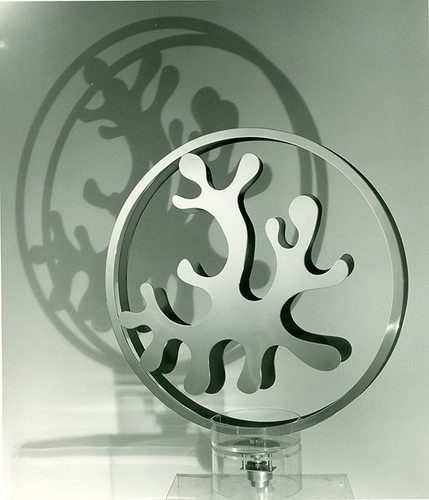
Op Art tricks your eyes into perceiving movement on a completely still surface; Kinetic Art skips the illusion and actually moves. Op Art developed internationally starting around 1960, with artists like Bridget Riley and Victor Vasarely using precise geometric patterns, stripes, and contrasting colors so that a static painting seems to shimmer, pulse, or ripple as the viewer's eyes scan it. Kinetic Art has deeper and more scattered roots, gaining momentum across Paris and internationally from around 1955, as sculptors like Jean Tinguely and Alexander Calder built works with motors, wind, or viewer interaction that genuinely change over time. Some artists, notably Jesús Rafael Soto and Yaacov Agam, worked comfortably in both modes, and the two movements shared exhibitions in the mid-1960s. The core distinction holds regardless: Op Art is an illusion generated by a fixed object; Kinetic Art involves an object with actual, physical motion.
Op Art vs. Kinetic Art at a glance
| Op Art | Kinetic Art | |
|---|---|---|
| Years | 1960–1970 | 1955–1975 |
| Origin | International | Paris & international |
| Movement | Entirely illusory — the surface never physically changes, only your perception of it does. | Real and physical — parts of the work actually move, rotate, or shift. |
| Medium | Almost always flat paintings or prints on canvas or panel. | Sculptural, often three-dimensional, involving motors, wind, or hanging elements. |
| Mechanism | Precisely calculated patterns exploit how the human eye processes contrast and line. | Physical mechanisms like motors, magnets, or air currents drive actual motion. |
| Viewer role | The viewer's own eye movement generates the sense of change. | The viewer may need to walk around, wait, or trigger the work to see change. |
| Key figures | Bridget Riley and Victor Vasarely. | Jean Tinguely and Alexander Calder. |
| Typical setting | Hung flat on a gallery wall like a conventional painting. | Installed as freestanding sculpture, often requiring floor space or ceiling mounts. |
How to tell them apart
If a flat painting seems to shimmer, pulse, or ripple as you move your eyes across it, but nothing on the surface is actually moving, that's Op Art — Bridget Riley's striped canvases are the classic test. If you see actual moving parts — a sculpture rotating, wind-driven elements shifting, or motorized components changing position — that's Kinetic Art, as in Alexander Calder's mobiles or Jean Tinguely's clattering machines. Op Art lives on a wall; Kinetic Art usually needs floor space, a motor, or moving air. If nothing in the room is physically in motion, you're looking at an illusion, not the real thing.
What they share
Both movements share a fascination with perception, motion, and the physics of how viewers experience an artwork, and both grew out of earlier abstract and constructivist traditions rather than gestural painting. Several artists, especially Jesús Rafael Soto and Yaacov Agam, worked across both categories, building pieces that combine optical pattern with genuine physical movement. Both were featured together in landmark 1960s exhibitions exploring perception and motion, and critics of the period often discussed them as closely related responses to the same postwar interest in science and technology.
Try both
Settle it yourself — generate the same subject in each style and compare the results.
Frequently asked questions
Is Op Art a type of Kinetic Art?
No, though they're closely related and sometimes overlap in the same artist's work. Op Art creates an illusion of movement on a completely still surface, while Kinetic Art involves parts that genuinely move.
Which came first, Op Art or Kinetic Art?
Kinetic Art has the earlier roots, gaining momentum from around 1955, while Op Art developed as a more defined movement starting around 1960.
Did any artists work in both Op Art and Kinetic Art?
Yes. Jesús Rafael Soto and Yaacov Agam are the clearest examples, producing work that combines Op Art's optical patterning with genuine physical motion.