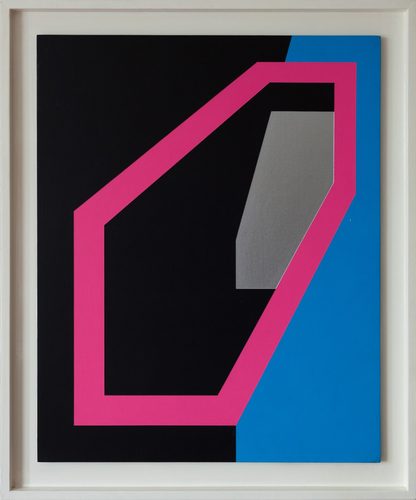
 Art
Art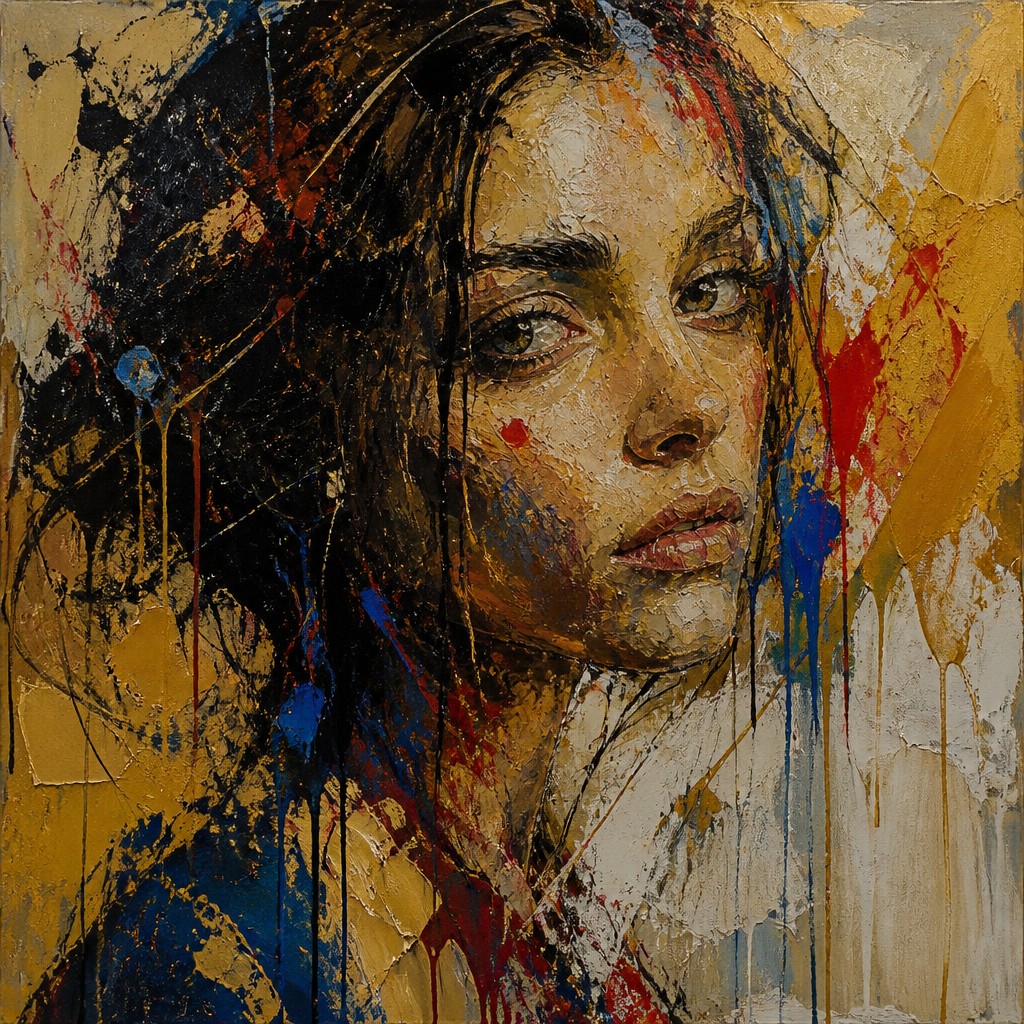 AI-generated
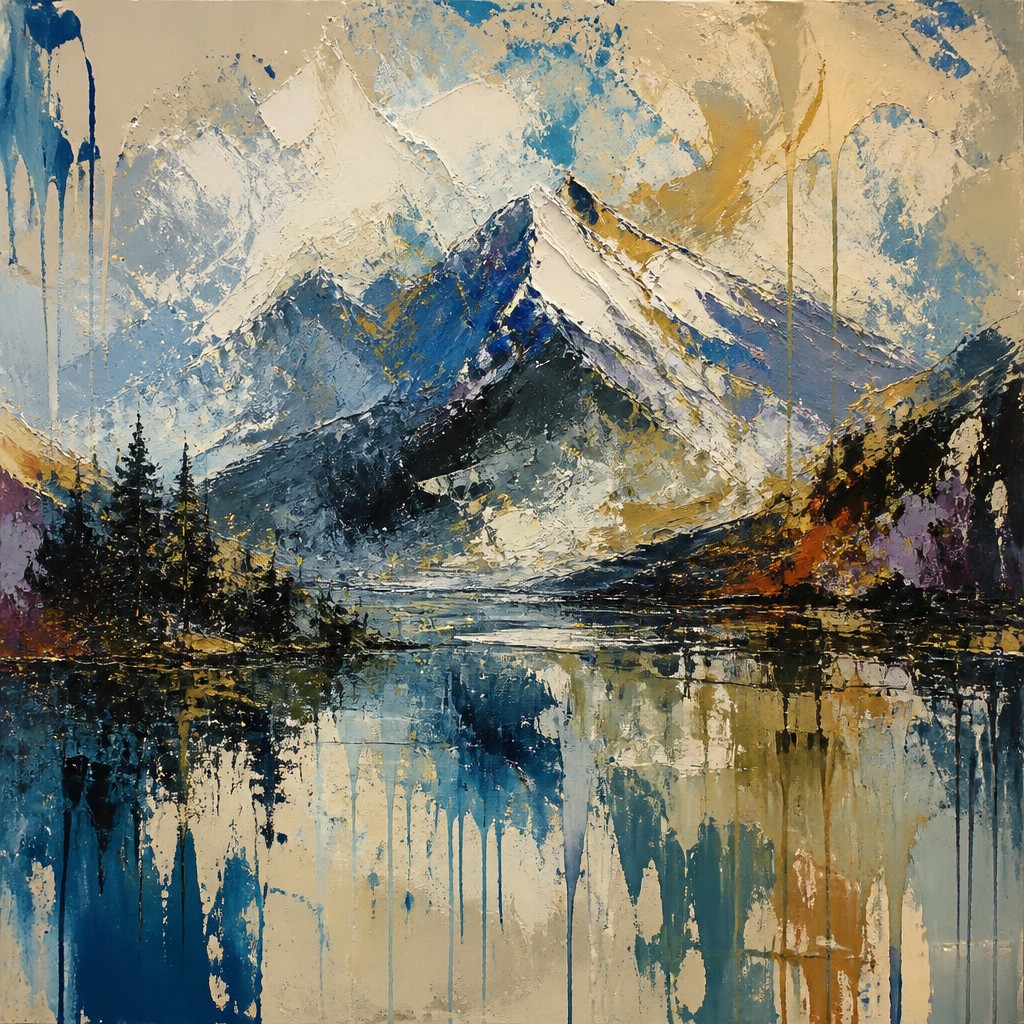 AI-generated
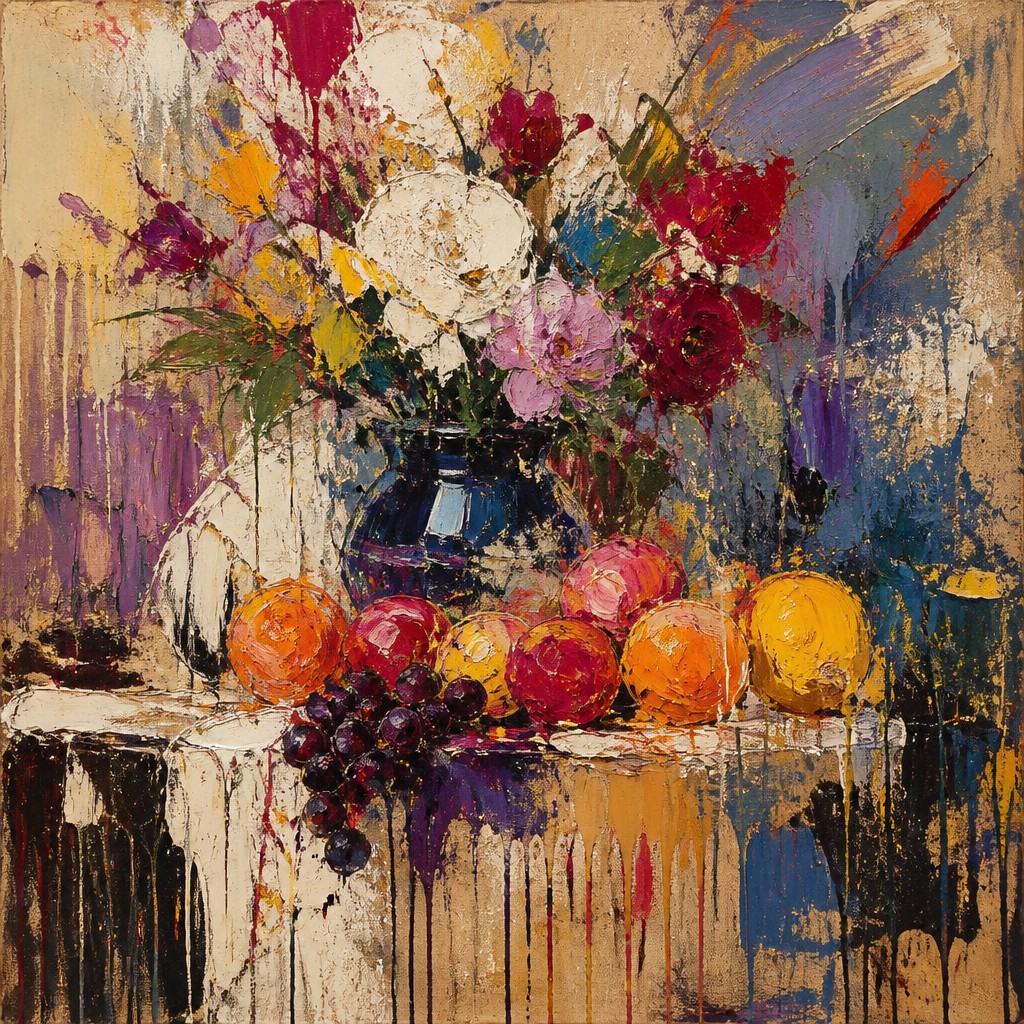 AI-generated
Abstract Expressionism emerged in New York in the 1940s as the first American art movement to seize international leadership from Paris, driven by a generation of painters — Jackson Pollock, Mark Rothko, Willem de Kooning, Lee Krasner, Clyfford Still, Franz Kline, and Barnett Newman among them — who abandoned recognizable subject matter in favor of scale, gesture, and color as the direct carriers of emotional and psychological content.
The movement had no single style but two broad tendencies. Action painting, associated with Pollock and de Kooning, emphasized the physical act of painting itself: dripped, flung, or violently brushed paint recording the artist's bodily movement across a canvas often laid on the floor. Color field painting, associated with Rothko, Newman, and Still, instead used large, simplified areas of color, often soft-edged and glowing, to create immersive, meditative fields meant to be experienced at close range and large scale. What united both currents was ambition: canvases grew enormous, compositions abandoned any single focal point or hierarchy, and the finished work was presented as a direct trace of the artist's inner state rather than a representation of anything external.
Abstract Expressionism rebelled against representational art broadly, against the regionalist and social-realist painting that had dominated American art in the 1930s, and against the idea that European movements like Cubism and Surrealism marked the outer limit of ambition for non-figurative art. It absorbed Surrealism's interest in the unconscious and automatic gesture but rejected its illustrative, dreamlike imagery in favor of pure abstraction.
The movement matters because it marked the moment the center of gravity in Western art shifted from Paris to New York, established scale and gesture as legitimate primary content for painting, and set the terms — expressive freedom, individual authorship, the canvas as an arena rather than a picture — against which nearly every subsequent American art movement, from Pop Art to Minimalism, would define itself, whether by extension or reaction.
What defines Abstract Expressionism
All-over composition
Paintings typically reject a central focal point or hierarchy of forms, instead distributing marks, color, or gesture evenly across the entire canvas, so the eye finds no single place to rest.
Monumental scale
Canvases grew far larger than earlier easel painting, often filling a wall, so viewers standing close to the work feel physically enveloped by it rather than observing it from a comfortable distance.
Gesture as content
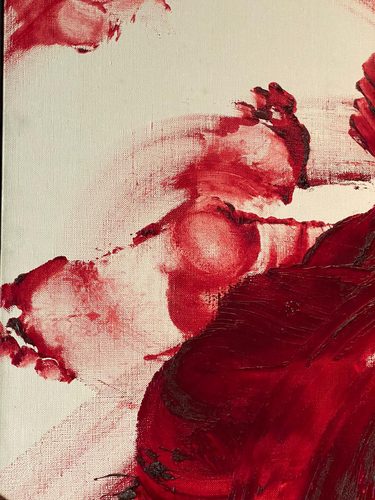
The physical act of painting — the sweep of an arm, the drip of loaded paint, the scrape of a brush — is left visible and legible, treated as the primary subject rather than a means to an illustrative end.
Non-representational imagery
Recognizable objects, figures, and landscapes are almost entirely absent; color, shape, texture, and gesture carry the emotional and psychological weight the subject once did.
Emphasis on process and spontaneity
Many artists worked intuitively, allowing the painting to evolve through action rather than planning it in advance, a method indebted to Surrealist automatism and psychoanalytic ideas about the unconscious.
Two major currents
The movement split loosely between gestural, high-energy action painting and quieter, contemplative color field painting, though individual artists often moved between the two approaches over their careers.
History
Abstract Expressionism took shape in New York during the early 1940s, as European Surrealist artists exiled by World War II brought firsthand exposure to Surrealism's ideas about automatic drawing and the unconscious. American painters including Jackson Pollock, Arshile Gorky, and Robert Motherwell absorbed these ideas while working through the influence of Cubism and Mexican muralism, gradually shedding recognizable imagery altogether over the course of the decade.
By the mid-to-late 1940s the mature style had emerged: Pollock began his signature drip paintings around 1947, Rothko moved toward soft-edged floating rectangles of color by 1949, and Willem de Kooning alternated between gestural abstraction and his controversial "Woman" series through the early 1950s. Critics Clement Greenberg and Harold Rosenberg became the movement's chief theorists and champions, with Rosenberg coining the term "action painting" in 1952 to describe the gestural wing of the movement, while Greenberg promoted the formal, color-based achievements of painters like Rothko and Newman.
The movement gained institutional support quickly: the Museum of Modern Art and influential dealers exhibited and promoted the artists through the late 1940s and 1950s, and the style became closely associated with New York's emergence as the new capital of the international art world, a status Paris had held since the nineteenth century.
By the early-to-mid 1960s, Abstract Expressionism's dominance faded as Pop Art, Minimalism, and other movements reacted against its scale, seriousness, and emphasis on individual authorship. Several key figures, including Pollock (1956) and Franz Kline (1962), died during or shortly after the movement's peak, and by the mid-1960s Abstract Expressionism had passed from the avant-garde into art history, though its influence on subsequent American painting remained immense.
Key works
| Work | Artist | Year | Why it matters |
|---|---|---|---|
| Autumn Rhythm (Number 30) | Jackson Pollock | 1950 | A large-scale drip painting demonstrating Pollock's mature all-over technique of flung and poured paint. |
| Woman I | Willem de Kooning | 1952 | A violently brushed, semi-figurative portrait that provoked debate over whether Abstract Expressionism could accommodate the human figure at all. |
| No. 61 (Rust and Blue) | Mark Rothko | 1953 | A characteristic floating rectangle composition demonstrating Rothko's use of soft-edged color to create an immersive, contemplative field. |
| The Seasons | Lee Krasner | 1957 | A large, densely worked abstract canvas from Krasner's mature period, reasserting her independent standing within a movement long dominated by her male peers. |
How to make art in this style
Working in the Abstract Expressionist Style
Palette: There is no single Ab Ex palette — work ranges from earthy blacks, whites, and metallic silvers to glowing maroons and oranges. Choose a limited, emotionally resonant range and commit to it across the whole canvas rather than varying color locally.
Composition: Reject a central focal point. Distribute marks, color, or gesture evenly so the eye moves continuously across the surface rather than settling on one area — this "all-over" approach is the movement's most consistent formal trait. Work at a large scale if possible; size itself is part of the effect, meant to surround rather than be framed at a comfortable distance.
Technique: For the gestural approach, work fast and physically — dripping, flinging, or dragging loaded brushes and sticks, often with the canvas on the floor or leaned against a wall rather than on a traditional easel, letting the motion of the whole arm and body register in the paint. For the color field approach, work slowly and deliberately, building soft-edged, thinly stained or layered areas of color with diluted paint, letting edges bleed and breathe rather than defining hard boundaries.
Subjects: There are none in the traditional sense — no models, objects, or scenes. The "subject" is the act of painting itself and the emotional or psychological state it registers.
Mood: Aim for authenticity of feeling over technical polish — urgency, tension, or contemplative depth, but always treated as genuinely felt rather than illustrated.
Legacy
Abstract Expressionism's influence on later art is difficult to overstate. It established scale, gesture, and process as legitimate primary content for painting, a premise that Pop artists, Minimalists, and Conceptual artists all had to answer, whether by rejecting figuration further, embracing cool detachment in reaction to Ab Ex's heat, or dissolving the art object altogether. Performance art and installation art both draw on the movement's insistence that the act of making is itself part of the work's meaning.
The movement also permanently shifted the geography of the art world: New York's status as an international art capital, established in this period, persisted for decades afterward. Its visual vocabulary — large fields of color, dripped or gestural mark-making, canvases meant to be experienced as immersive environments — continues to appear in contemporary abstract painting, in graphic design, and in popular culture's shorthand image of "modern art" itself.
Its emphasis on the solitary, tortured genius-artist has drawn sustained critical reexamination, particularly regarding the movement's near-exclusion of women and artists of color from its initial canon; renewed attention to figures like Lee Krasner has reshaped how the movement is taught and exhibited today, without diminishing its historical significance.
Frequently asked questions
What is Abstract Expressionism?
Abstract Expressionism was a mid-twentieth-century American art movement, centered in New York, in which painters abandoned recognizable subject matter in favor of gesture, scale, and color as direct vehicles for emotional and psychological expression.
What is the difference between action painting and color field painting?
Both are branches of Abstract Expressionism. Action painting emphasizes vigorous physical gesture — dripping, flinging, or dragging paint — while color field painting uses large, soft-edged areas of color meant to be experienced as immersive, contemplative fields.
Who started Abstract Expressionism?
No single founder is credited; the movement grew through the 1940s among a loose group of New York painters, with Jackson Pollock, Willem de Kooning, and Mark Rothko emerging as its most influential figures alongside critics Clement Greenberg and Harold Rosenberg.
Why is Abstract Expressionism considered important?
It marked the first time an American art movement, rather than a European one, set the international artistic agenda, and it established large scale, gesture, and process as legitimate primary content for painting, shaping nearly every American art movement that followed.
Is Abstract Expressionism the same as abstract art?
No. Abstract art is a broad category covering any non-representational art across history, while Abstract Expressionism refers specifically to the American movement of the 1940s-1960s that emphasized emotional expression through gesture and scale.