 Art
Art
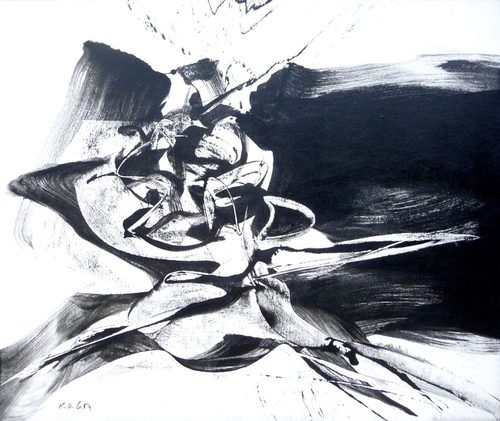
Abstract Expressionism and Tachisme are twin movements that erupted almost simultaneously on opposite sides of the Atlantic, both trading recognizable imagery for raw, gestural abstraction. Abstract Expressionism formed in New York starting in 1943, driven by painters who wanted enormous canvases charged with heroic, personal risk. Tachisme followed two years later in Paris, its name borrowed from the French word for stain, describing loose blots and calligraphic strokes applied with comparable spontaneity. The two scenes knew of each other and shared roots in Surrealist automatism, but they diverged in temperament: New York leaned toward scale, myth, and manifesto-level ambition, while Paris favored a more intimate, lyrical touch closer to gestural calligraphy than to grand statement. Tachisme is often grouped under the broader European umbrella term Art Informel, the continental counterpart to what America was calling Abstract Expressionism.
Abstract Expressionism vs. Tachisme at a glance
| Abstract Expressionism | Tachisme | |
|---|---|---|
| Years | 1943–1965 | 1945–1960 |
| Origin | New York, United States | Paris, France |
| Scale | Frequently mural-sized, built to overwhelm a viewer standing close to the canvas. | Generally smaller and more intimate, sized for close, quiet looking. |
| Mark-making | Bold, physical gesture — full-arm sweeps, drips, and pours across the surface. | Lighter, more calligraphic blots and stains, closer to ink-brush spontaneity. |
| Tone | Heroic and confrontational, often framed by critics as existential risk-taking. | Lyrical and improvisational, closer in spirit to free, jazz-like association. |
| Key figures | Jackson Pollock, Willem de Kooning, and Mark Rothko led distinct wings of the movement. | Georges Mathieu, Hans Hartung, and Wols pioneered its loose, stain-based technique. |
| Materials | House paint and industrial pigments poured directly from the can. | Traditional oils and inks applied with rapid, gestural brushwork. |
| Context | Tied to New York's postwar rise as the new center of the art world. | Tied to Paris rebuilding its identity as Europe's art capital after occupation. |
How to tell them apart
Size is the fastest clue: if a gestural abstract painting is big enough to make you step back, it's probably Abstract Expressionism. If it's smaller and the marks look like ink blots or rapid calligraphy, you're likely looking at Tachisme. Pollock's tangled drip fields and de Kooning's slashing brushwork carry a confrontational, physical weight; Mathieu's or Hartung's canvases feel closer to handwriting caught mid-motion. Abstract Expressionist titles often lean mythic or numbered, like 'Number 1,' while Tachisme stays closer to pure gesture without grand naming. Gallery labels citing New York point one way; labels citing Paris point the other.
What they share
Both movements rejected figuration and academic technique in favor of spontaneous, gesture-driven abstraction rooted in Surrealist automatism. Both emerged from the trauma of the Second World War and treated the act of painting itself as meaningful, not just its finished image. Critics and artists on each side of the Atlantic were aware of the other's work, and both are now read as parallel responses to the same historical moment rather than one imitating the other.
Try both
Settle it yourself — generate the same subject in each style and compare the results.
Frequently asked questions
Is Tachisme the European version of Abstract Expressionism?
That's the common shorthand, and it holds up loosely — both favor gestural, non-representational abstraction from the same postwar years. But Tachisme tends toward smaller, more lyrical marks, while Abstract Expressionism often works at a heroic, mural-like scale.
Which came first, Abstract Expressionism or Tachisme?
Abstract Expressionism, by about two years. It took shape in New York starting in 1943; Tachisme emerged in Paris around 1945, developing independently but along similar lines.
Are Tachisme and Art Informel the same thing?
Tachisme is usually treated as a French strand within the broader European movement called Art Informel, which covers gestural, non-geometric abstraction across the continent in the 1940s and 1950s.