 Art
Art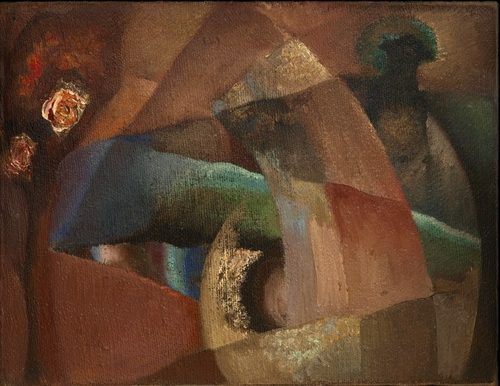
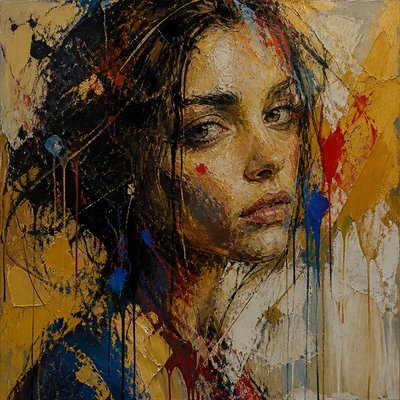
Expressionism twists the visible world to show what's happening inside a person; Abstract Expressionism throws the visible world out and lets raw paint do that work instead. Expressionism took shape in Germany and Austria starting around 1905, when artists in groups like Die Brücke pushed color, line, and proportion past naturalism to register anxiety, desire, and alienation in bodies, faces, and city streets you could still recognize. Abstract Expressionism arrived nearly four decades later, centered in New York from 1943, as a generation shaped by the Depression and a world war reached for the same emotional intensity but cut the figure loose entirely. The name was applied from outside — critics cast the new painting as extending Expressionism's core idea, that paint can transmit feeling directly, into total abstraction. So this isn't a disagreement about whether art should carry emotion. It's a disagreement about whether you still need a recognizable image to carry it.
Expressionism vs. Abstract Expressionism at a glance
| Expressionism | Abstract Expressionism | |
|---|---|---|
| Years | 1905–1930 | 1943–1965 |
| Origin | Germany & Austria | New York, United States |
| Subject matter | Distorted but recognizable figures, faces, and city scenes — the body stays the subject. | No figures at all — the canvas itself, its scale and gesture, is the subject. |
| Color | Jarring, unnatural color used to signal mood — sickly greens, acid yellows, blood reds. | Color deployed as raw material — poured, dripped, or laid in fields for physical presence. |
| Line & mark | Jagged contour lines and woodcut-influenced angularity outline each form. | The mark itself — the drip, the swipe, the stain — replaces the outline entirely. |
| Scale | Modest canvases sized for gallery walls and print portfolios. | Often mural-sized canvases meant to surround and engulf the viewer. |
| Mood | Anxious, alienated, urban — dread about modern city life and the self. | Heroic, searching, existential — postwar unease without a named object of fear. |
| Origin | Grew out of anti-academic artist circles and woodcut traditions in Dresden and Munich. | Grew out of New York studios, the WPA, and émigré Surrealists fleeing Europe. |
How to tell them apart
Look for a face, a body, or a street corner. If one is staring back at you — twisted, garishly colored, but still a person — you're looking at Expressionism; think Kirchner's angular Berlin street scenes or Schiele's raw-nerve portraits. If the canvas is enormous and there's nothing to identify, only color and gesture, you're in Abstract Expressionism's territory. Splatters and tangled drips that record the painter's physical movement point to Pollock's wing of the movement; huge, softly bounded fields of a single hue that seem to hum point to Rothko's. Expressionism also tends to hang at a human, portrait-friendly scale, while Abstract Expressionism often needs a wall of its own to breathe.
What they share
Both movements insist that painting's real job is to transmit feeling, not describe appearances, and both grew out of moments of national crisis — Expressionism amid pre-war German anxiety, Abstract Expressionism after a global war. Both prized spontaneity and personal mark-making over academic polish, and German Expressionist painting reached New York through exhibitions and émigré teachers well before the Americans pushed past it. The lineage is direct: without Expressionism's premise that paint carries emotion, Abstract Expressionism's leap into pure abstraction doesn't happen.
Try both
Settle it yourself — generate the same subject in each style and compare the results.
Frequently asked questions
Is Abstract Expressionism just modern Expressionism?
No. It shares Expressionism's belief that paint can carry raw emotion, but it drops recognizable subject matter entirely. Expressionism keeps the figure, however distorted; Abstract Expressionism works without one.
Which came first, Expressionism or Abstract Expressionism?
Expressionism, by decades. It emerged in Germany and Austria around 1905, while Abstract Expressionism formed in New York starting in 1943, after many of its painters had already encountered Expressionist work firsthand.
Why do the names sound so similar?
The label came from critics, who read the new abstract style as a direct extension of Expressionism's central idea — that paint itself can express feeling — taken all the way to abstraction. Many of the painters disliked it.