 Art
Art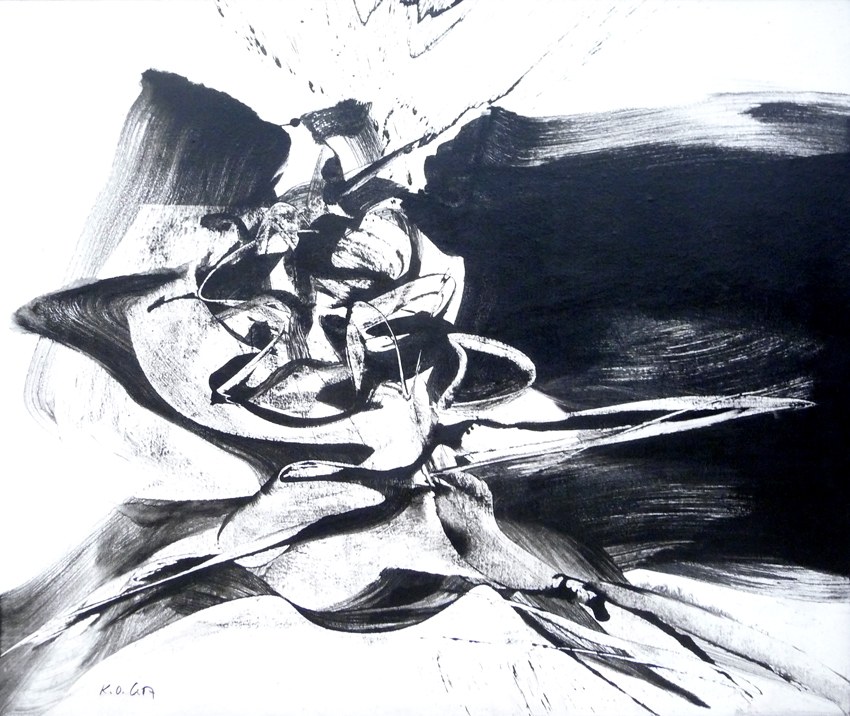
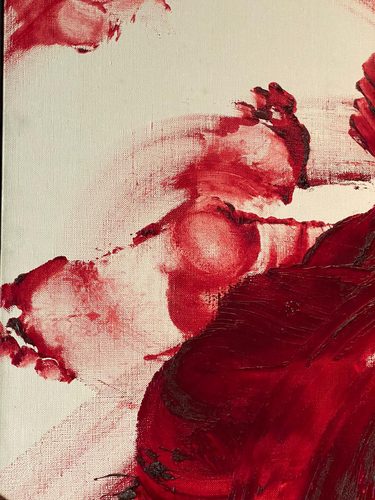
Riemu. Image: Gemälde: K. O. Götz. Foto: Jan Schüler · CC BY-SA 3.0 de · Wikimedia Commons, accessed 2026-08-04
Tachisme takes its name from the French word tache, meaning stain or blot, and describes a wave of gestural, non-geometric abstraction that dominated the Paris art scene from the mid-1940s through the 1950s. It ran parallel to, and shared much of the spirit of, American Abstract Expressionism, though the two developed largely independently on either side of the Atlantic. The critic Michel Tapié gave the wider tendency a more theoretical name, Art Informel ("formless art" or "art of the unformed"), in his 1952 book Un Art Autre, and the terms Tachisme, Art Informel, and Lyrical Abstraction are now used more or less interchangeably for this loose, unofficial grouping.
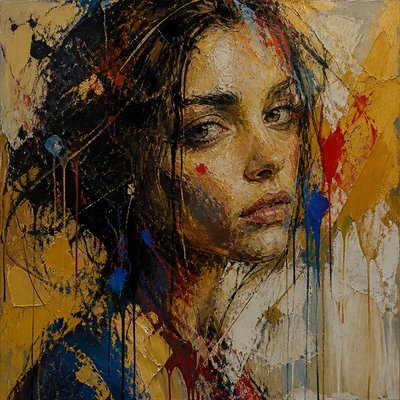
Tachiste painting favored stains, splatters, scraped impasto, and rapid calligraphic marks over any predetermined composition or geometric structure. Some painters, like Jean Fautrier, built up thick, cratered surfaces in near-monochrome grays and ochres; others, like Georges Mathieu, worked with theatrical speed, squeezing paint directly from the tube in fast, sword-like strokes, sometimes performing the act of painting in front of an audience. Wols filled small, dense canvases with nervous, web-like lines that read as private, anxious diaries. What united these disparate approaches was a rejection of composition planned in advance — the mark itself, not the finished image, carried the meaning.
Tachisme rebelled against two things at once: the rigid, geometric abstraction of movements like De Stijl and Constructivism, which its painters found cold and doctrinaire, and the broader idea that art after the catastrophe of the Second World War could proceed as if nothing had happened. Its unruly surfaces echoed the existentialist philosophy current in Paris at the time — the belief that meaning was made through direct, authentic action rather than inherited system or theory. It matters because it kept Paris relevant as an abstract-painting capital just as New York was beginning to eclipse it, and because it established gestural mark-making, texture, and improvisation as legitimate ends in themselves — ideas that fed forward into later object-based and process-based art across Europe.
What defines Tachisme
Stained and blotted surfaces
The canvas ground is treated as a field to be marked rather than a space to be composed, with paint dripped, spattered, or pooled to leave stain-like traces.
Thick, cratered impasto
Many Tachiste painters built paint up in heavy layers, scraping and gouging the surface to expose earlier layers and create a rough, geological texture.
Calligraphic, rapid gesture
Fast, sweeping, often sword-like brushstrokes read almost like handwriting, prioritizing speed and physical commitment over careful control.
Muted, earthy color range
Palettes lean toward black, gray, ochre, and off-white, with color used sparingly against raw or darkened grounds rather than in bright, planned combinations.
Absence of figure or planned composition
Works are non-representational and built without a preconceived structure, letting the accumulation of marks determine the final image.
Performative execution
Several artists painted in front of audiences or treated the act of painting itself as a kind of event, emphasizing the physical, time-based nature of the gesture.
History
Tachisme grew out of the wreckage of prewar geometric abstraction and Surrealism in occupied and postwar Paris. Wols, a German-born photographer and painter living in France, began producing small, obsessive ink and watercolor abstractions during the war years that are often cited as an early source for the style. Jean Fautrier's Otages (Hostages) series, painted in 1943–45 in response to the torture and execution of prisoners near his hiding place outside Paris, introduced the thick, wounded-looking impasto surfaces that became a Tachiste hallmark.
After the war, a loose community of painters — Fautrier, Wols, Hans Hartung, Georges Mathieu, Pierre Soulages, and later the Canadian Jean-Paul Riopelle — exhibited together in Paris galleries through the late 1940s and 1950s, though they never formed a single organized group with a manifesto. Georges Mathieu became the style's most public figure, staging rapid, theatrical painting performances before audiences and press, and organizing group exhibitions that helped brand the tendency internationally. Critic Michel Tapié's 1952 book Un Art Autre gave the wider tendency the name Art Informel and positioned it as a serious rival to American gestural abstraction.
Through the 1950s, Tachisme was shown widely in Paris and internationally, and its painters were seen — alongside the Abstract Expressionists in New York — as the leading edge of postwar abstraction. By the 1960s, however, the style's dominance faded as newer tendencies, including Nouveau Réalisme, Pop Art, and Minimalism, shifted attention toward cooler, more conceptual approaches, and as some former Tachiste painters, like Pierre Soulages, moved toward more reductive, monumental abstraction. Tachisme is now understood less as a single movement than as the collective label for Paris's postwar gestural-abstraction scene, an essential counterpart to Abstract Expressionism in the broader story of postwar painting.
Key works
| Work | Artist | Year | Why it matters |
|---|---|---|---|
| Otages (Hostages) series | Jean Fautrier | 1945 | Thickly built, wounded-looking surfaces made in response to wartime torture and execution, establishing Tachisme's material intensity. |
| The Blue Phantom (Le Fantôme Bleu) | Wols | 1951 | A dense, nervous web of abstract marks typical of Wols's small, intensely worked postwar canvases. |
| Les Capétiens partout! | Georges Mathieu | 1954 | A large canvas painted with rapid, theatrical gesture, exemplifying Mathieu's public performance approach to Tachisme. |
How to make art in this style
Working in a Tachisme Style
Palette: Favor a restrained, earthy range — black, charcoal gray, ochre, umber, and off-white — over bright color. Let raw or darkened canvas show through unpainted passages rather than covering the surface edge to edge.
Composition: Abandon planning. Instead of sketching a composition first, let the placement of the first mark determine the next, building the image through accumulation rather than design. Avoid symmetry, focal points, or any sense of a "subject" — the field of marks is the whole work.
Brushwork and technique: Work quickly and physically. Load a brush, knife, or even a tube of paint and commit to fast, decisive gestures rather than careful, corrected strokes. Try scraping back wet paint with a palette knife to expose earlier layers, or building up impasto thick enough to crack and crater as it dries. Some Tachiste painters worked standing over a canvas on the floor or wall for full-arm movement rather than wrist control.
Subjects: There is no subject in the traditional sense — resist the urge to let recognizable imagery emerge, and if it does, work back into it until it dissolves. The mark and the surface are the content.
Process: Treat each session as time-limited and physically demanding rather than a slow, deliberative sitting. Working fast, and stopping before the impulse to refine takes over, is closer to the original spirit than labored revision.
Legacy
Tachisme's insistence on gesture, texture, and the physical trace of the artist's hand fed directly into later movements that treated process as content. Its performative side — Georges Mathieu painting rapidly before an audience — ran parallel to the body-centered painting of Gutai in Japan, with Mathieu's 1957 painting performances in Tokyo, alongside Michel Tapié's visit that year, linking the two scenes, and it fed into performance and process art more broadly in the years that followed. Its rough, built-up surfaces influenced the material experimentation of artists working in assemblage and matter-painting across Europe.
Alongside American Abstract Expressionism, Tachisme helped establish gestural, non-geometric abstraction as a fully legitimate mode of serious painting rather than a transitional style, a status that shaped how abstraction was taught and collected for decades afterward. Pierre Soulages carried its emphasis on surface and black pigment into a decades-long, internationally celebrated body of work built around the interplay of black paint and light. Today, the loose, improvisatory mark-making associated with Tachisme remains a touchstone for abstract painters, and its stained, gestural surfaces are visible in everything from contemporary abstract painting to the textured backgrounds used across graphic design.
Frequently asked questions
What is Tachisme?
Tachisme is a French postwar movement of spontaneous, gestural abstract painting built from stains, blots, and rapid calligraphic marks, active mainly in Paris from the mid-1940s through the 1950s.
What is the difference between Tachisme and Art Informel?
The two terms describe largely the same postwar tendency; Tachisme emphasizes the stained, spontaneous mark, while Art Informel, coined by critic Michel Tapié in 1952, is the broader theoretical label for the same loosely formless, non-geometric abstraction.
How does Tachisme compare to Abstract Expressionism?
Tachisme and Abstract Expressionism developed independently in Paris and New York around the same time and share an emphasis on gesture and spontaneity, but Tachiste painters generally worked on a smaller scale with denser, more textured surfaces than the large, open canvases typical of American Abstract Expressionism.
Who were the key Tachisme artists?
Central figures include Wols, Jean Fautrier, Georges Mathieu, Hans Hartung, and Pierre Soulages, though the group was a loose community of painters rather than a formal, organized movement.
What does the word Tachisme mean?
Tachisme comes from the French word tache, meaning stain or blot, referring to the movement's characteristic use of spontaneous stained and splattered marks.