 Art
Art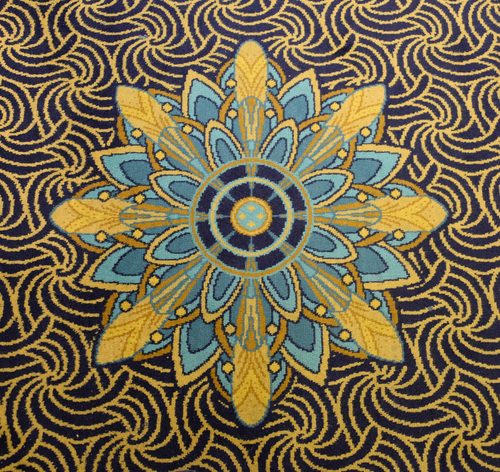

Art Deco was a glamorous, ornamental style built for luxury, while the Bauhaus was a design school built on the principle that form should follow function, stripping ornament away almost entirely. The Bauhaus opened in Weimar, Germany, in 1919, founded by architect Walter Gropius to unite fine art, craft, and industrial design in one curriculum aimed at clean, honest, mass-producible objects; it later moved to Dessau before closing under Nazi pressure in 1933. Art Deco developed in parallel in Paris through the 1920s and 1930s, reaching a wide public through skyscrapers, cinemas, and luxury goods finished in chrome, lacquer, and exotic materials. Both responded to the same modern world of machines and new cities, but the Bauhaus treated simplicity as a moral and functional principle, while Art Deco treated pattern and glamour as the whole point, decorating the machine age rather than paring it down.
Art Deco vs. Bauhaus at a glance
| Art Deco | Bauhaus | |
|---|---|---|
| Years | 1920–1939 | 1919–1933 |
| Origin | Paris, France | Weimar & Dessau, Germany |
| Guiding idea | Ornament and glamour as ends in themselves — decoration for luxury and spectacle. | Form follows function; ornament stripped away in favor of honest, useful design. |
| Institution | A broad decorative style with no central school, spread through designers and manufacturers. | A specific art and design school in Weimar and Dessau, Germany, founded by Walter Gropius. |
| Color & pattern | Bold, symmetrical pattern — zigzags, sunbursts, and jewel-toned contrast. | Restrained, often primary colors used sparingly on plain geometric forms. |
| Materials | Chrome, lacquer, glass, and exotic veneers chosen for luxury and shine. | Steel, glass, and concrete chosen for honesty of material and mass production. |
| Purpose | Luxury goods, cinema facades, and skyscraper lobbies meant to dazzle. | Everyday furniture, housing, and typography meant to be affordable and functional. |
| Attitude to industry | Used industry to manufacture ornament and glamour at scale. | Used industry to eliminate unnecessary ornament and standardize good design. |
How to tell them apart
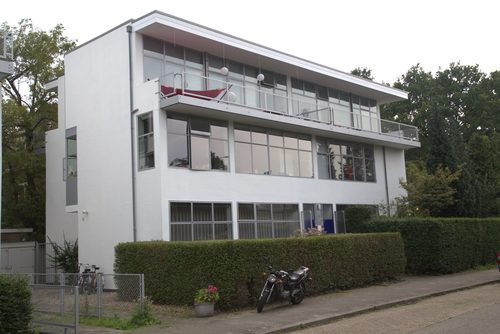
If a building or object is symmetrical, patterned, and clearly meant to look expensive — zigzag ironwork, chrome trim, jewel-toned glass — that's Art Deco. If instead it's plain, geometric, and almost bare, a tubular-steel chair or a flat-roofed white building with no ornament at all, that's Bauhaus. Art Deco wants to be noticed; Bauhaus wants to disappear into pure usefulness. A New York skyscraper lobby with sunburst patterns is Art Deco; an unadorned steel-and-leather chair is Bauhaus. Gold trim signals Deco; a bare white wall signals Bauhaus.
What they share
Both movements answered the same interwar moment of new industrial materials, mass production, and modern city life, and both rejected historical revival styles in favor of something visibly new. Both also treated design across many media — architecture, furniture, graphics — as a unified project rather than separate disciplines. Designers on both sides believed good design could be produced at scale, even though they disagreed sharply on how much ornament that design should carry.
Try both
Settle it yourself — generate the same subject in each style and compare the results.
Frequently asked questions
Is Art Deco the same as Bauhaus?
No. Art Deco is a decorative style built around glamour and pattern; the Bauhaus was a German design school built around functional simplicity and almost no ornament.
Which came first, Bauhaus or Art Deco?
The Bauhaus, founded in 1919 in Weimar, Germany. Art Deco developed in parallel through the 1920s and 1930s in Paris, so the two overlapped rather than following one after the other.
Why is Bauhaus furniture so plain compared to Art Deco?
Bauhaus designers believed form should follow function and rejected decoration as wasteful, while Art Deco designers treated bold pattern and luxury materials as central to the style's appeal.