 Art
Art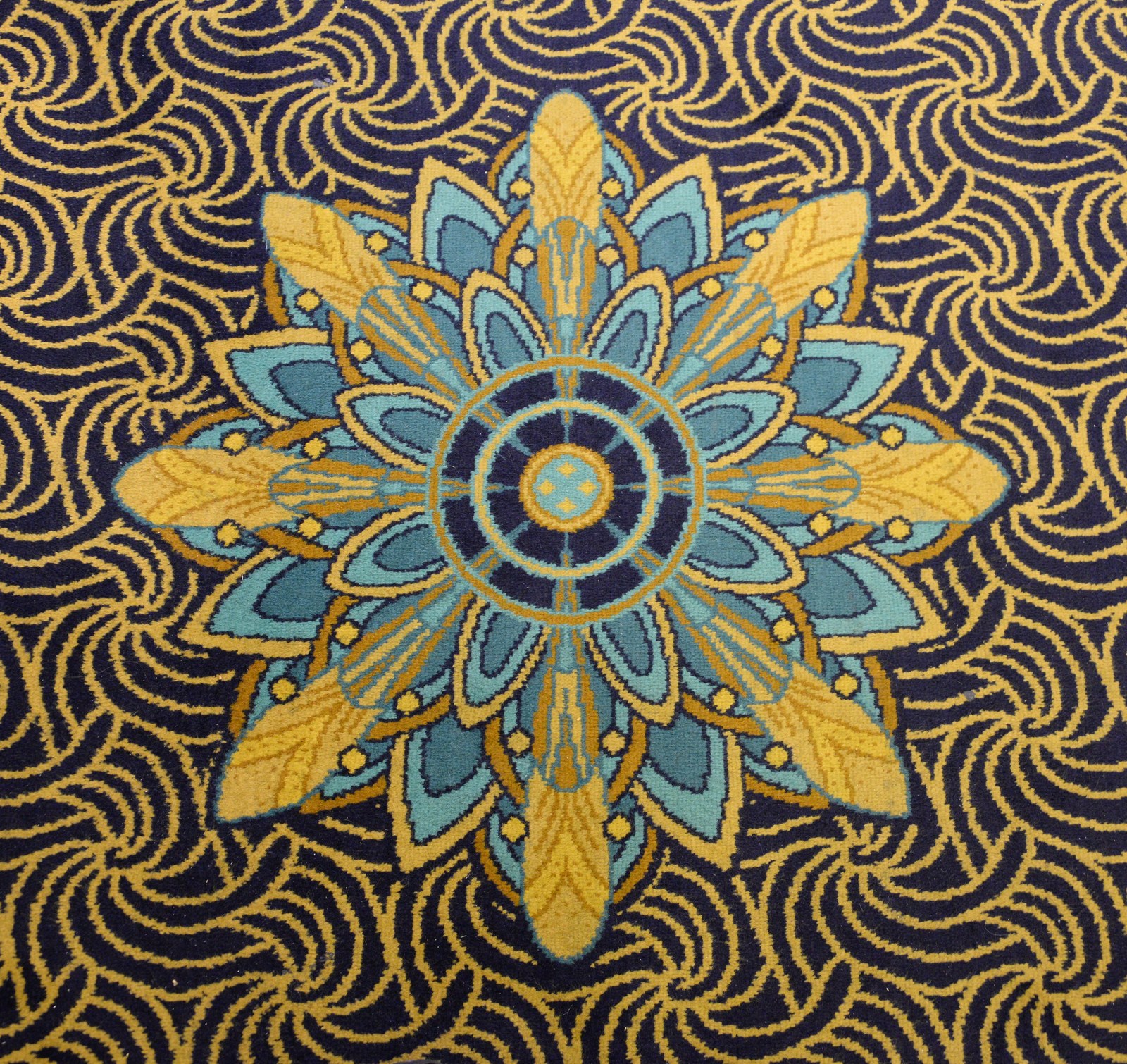
(1)Ritz Cinema-091. Image: Sardaka · CC BY-SA 4.0 · Wikimedia Commons, accessed 2026-08-04
Art Deco was the dominant decorative style of the 1920s and 1930s, a glamorous synthesis rather than a single artistic doctrine. It took the faceted geometry of Cubism, the exoticism of Sergei Diaghilev's Ballets Russes, motifs from ancient Egypt (fueled by the 1922 discovery of Tutankhamun's tomb), and stylized natural and machine forms, and fused them into a decorative vocabulary applied to everything from jewelry and furniture to skyscrapers and ocean liners. It took its name — retroactively, decades later — from the 1925 Exposition Internationale des Arts Décoratifs et Industriels Modernes in Paris, the exhibition that put the style before an international audience.
Visually, Art Deco favored symmetry, hard-edged geometric patterning — chevrons, sunbursts, zigzags, stepped "ziggurat" forms — and luxurious materials: lacquer, ivory, chrome, exotic inlaid woods, and polished stone. Unlike the flowing, plant-derived curves of the preceding Art Nouveau style, which it consciously rejected, Art Deco was crisp, symmetrical, and machine-precise, even as it remained committed to ornament and opulence rather than the austerity of contemporaries like the Bauhaus.
The style captured the optimism and speed of the Jazz Age and the machine age alike. Its later variant, Streamline Moderne, softened Deco's hard geometry into aerodynamic curves, applied to everything from toasters to locomotives, reflecting Depression-era fascination with speed and modernity even as luxury spending declined. Art Deco defined the great skyscrapers of interwar New York — the Chrysler Building, the Empire State Building, Rockefeller Center — as well as the resort architecture of Miami Beach and the interiors of transatlantic liners like the Normandie.
The style faded by the outbreak of World War II, giving way to wartime austerity and the rising dominance of stripped-down modernist functionalism. Its importance lies in how thoroughly it fused fine art, architecture, fashion, and industrial design into a single recognizable visual identity — arguably the first fully global style of mass-market glamour, and one whose imagery of luxury and speed still defines popular ideas of interwar sophistication.
What defines Art Deco
Geometric symmetry
Repeated chevrons, zigzags, sunbursts, and stepped ziggurat forms were arranged in strict, often bilaterally symmetrical compositions across furniture, façades, and graphic design.
Streamlined, machine-age curves
The later Streamline Moderne variant replaced hard angles with smooth, aerodynamic curves and polished metal surfaces, evoking the speed of ships, trains, and automobiles.
Luxury materials
Lacquer, ivory, chrome, exotic woods, and inlaid stone signaled opulence in furniture and decorative objects, distinguishing Deco from the plainer materials favored by contemporary functionalist design.
Exotic and ancient motifs
Egyptian, Aztec, and other non-European ornamental patterns entered the style following archaeological discoveries and colonial-era fascination with distant cultures.
Bold, high-contrast color
Black was frequently paired with gold, silver, or vivid jewel tones such as emerald and sapphire, producing a high-gloss, theatrical sense of glamour.
Stylized human figures
Posters, sculpture, and design objects favored elongated, idealized bodies, often shown in dynamic, dance-like poses that suggested energy and modern leisure.
History
Art Deco's roots reach back to pre-World War I Paris, where Paul Poiret's fashion designs and the 1909 arrival of Diaghilev's Ballets Russes introduced exotic color and pattern, while Cubism supplied a new geometric vocabulary. The style's development was interrupted by the war, then crystallized publicly at the 1925 Exposition Internationale des Arts Décoratifs et Industriels Modernes in Paris, a vast showcase of decorative and industrial arts that gave the movement its eventual name (the term "Art Deco" itself only came into general use in the 1960s, popularized in English by the historian Bevis Hillier's 1968 book after the 1966 Paris exhibition "Les Années 25: Art Déco").
Through the late 1920s and 1930s the style spread rapidly beyond France, especially to American architecture, where it defined the era's skyscraper boom: the Chrysler Building (1930), the Empire State Building (1931), and Rockefeller Center all translated Deco ornament into monumental urban form. A softer offshoot, Streamline Moderne, emerged in the 1930s as designers such as Raymond Loewy applied aerodynamic curves to everyday consumer goods, resonating with Depression-era fascination with speed and modernity even amid economic hardship. The style also flourished in resort architecture, notably Miami Beach's hotel district, and in the interiors of ocean liners like the Normandie and countless movie palaces built during the golden age of cinema.
Art Deco's dominance faded with the onset of World War II, as wartime austerity and the rise of stripped-down International Style modernism displaced its taste for ornament and luxury. It has since been repeatedly revived — in 1960s and 1980s design nostalgia, in film and television production design, and in contemporary luxury branding — cementing its status as shorthand for interwar glamour.
Key works
| Work | Artist | Year | Why it matters |
|---|---|---|---|
| Chrysler Building | William Van Alen | 1930 | Its stainless-steel sunburst crown and spire made it the defining icon of American Art Deco architecture. |
| Empire State Building | Shreve, Lamb & Harmon | 1931 | Its setback massing and geometric ornament epitomize the Deco skyscraper at monumental scale. |
| Autoportrait (Tamara in the Green Bugatti) | Tamara de Lempicka | 1929 | A sleek, machine-age self-portrait that became an emblem of Deco glamour and modern womanhood. |
| Nord Express poster | Cassandre | 1927 | A bold, geometric travel poster that defined the Art Deco advertising style. |
| Victoire (Spirit of the Wind) car mascot | René Lalique | 1928 | A molded glass hood ornament fusing decorative luxury glasswork with the era's automotive obsession. |
How to make art in this style
Palette: Combine black with metallics — gold, silver, chrome — and deep jewel tones such as emerald, sapphire, and ruby for maximum contrast and glamour. For the softer Streamline Moderne variant, shift toward pale creams, silvers, and cool blues.
Composition: Build compositions around strict symmetry and a strong central focal point. Use radiating sunburst patterns, stepped or ziggurat silhouettes, and repeated geometric borders (chevrons, zigzags) to frame the subject.
Technique: Keep edges crisp and hard, with flat, evenly applied color fields rather than blended tones. Aim for a polished, almost lacquered or metallic finish rather than visible brushwork — think of the surface as a designed object, not a loose sketch.
Subjects: Favor skyscrapers and monumental architecture, elegant figures caught mid-motion (dancers, travelers), machines associated with speed (automobiles, ocean liners, locomotives, aircraft), and stylized flora or fauna reduced to clean geometric silhouettes.
Practical tips: Study period travel posters and architectural ornament for reference — Deco's discipline lies in repetition and precision, so plan patterns on a grid before rendering. Reserve your most saturated color or brightest metallic accent for the composition's focal point, keeping the surrounding field more restrained so the geometry reads clearly at a glance.
Legacy
Art Deco left a lasting visual template for luxury and glamour that later design movements have repeatedly revived. Its geometric motifs and metallic finishes resurfaced strongly in 1980s postmodern design and continue to inform contemporary perfume bottles, hotel interiors, and jewelry lines seeking an association with interwar sophistication. Miami Beach's preserved Art Deco Historic District and New York's Rockefeller Center and Chrysler Building remain major tourist destinations, keeping the style in constant public view.
Film and television production design draws on Art Deco whenever a story needs to signal Jazz Age or interwar elegance, from period dramas to superhero franchises reimagining 1920s and 1930s cityscapes. Its stylized geometric figures and sunburst patterning also fed into mid-century graphic design and later into branding for anything wanting to evoke speed, luxury, or old-world glamour. As one of the few art movements to fully permeate architecture, fashion, product design, and graphic design simultaneously, Art Deco set an enduring precedent for style as a total, cross-disciplinary visual identity — a lesson contemporary luxury and lifestyle branding still follows closely.
Frequently asked questions
What is Art Deco?
Art Deco is a decorative style that flourished internationally between roughly 1920 and 1939, marked by geometric symmetry, streamlined forms, and luxurious materials. It touched architecture, furniture, jewelry, fashion, and graphic design.
When was Art Deco popular?
It emerged in Paris before World War I, became dominant through the 1920s and 1930s, and faded by the start of World War II as wartime austerity and stripped-down modernism took over.
What is the difference between Art Deco and Art Nouveau?
Art Nouveau, popular around 1890–1910, favored flowing, organic curves drawn from plant forms. Art Deco, which followed it, rejected those curves for hard-edged geometry, symmetry, and machine-age materials like chrome and lacquer.
What inspired Art Deco?
It drew on Cubism's geometric fragmentation, the exoticism of the Ballets Russes, ancient Egyptian motifs popularized after Tutankhamun's tomb was discovered in 1922, and the machine forms of contemporary industry and transportation.
Is Art Deco still used today?
Yes. Its geometric patterns and metallic luxury aesthetic are regularly revived in branding, jewelry, hotel and hospitality interiors, and period film and television production design.