 Art
Art
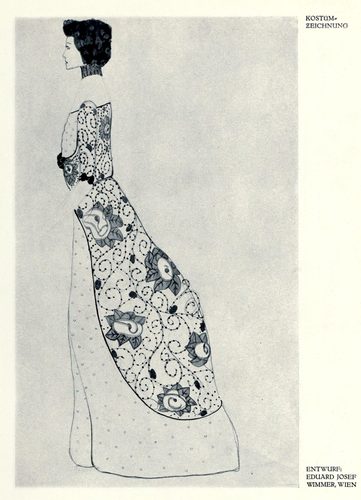
Vienna Secession is Austria's own branch of the international Art Nouveau moment, but it pulled the style toward geometric restraint instead of the sinuous curves associated with Paris and Brussels. Art Nouveau took shape in Brussels and Paris around 1890, prized flowing, plant-like line, and spread across Europe under different regional names. In 1897, a group of Vienna artists led by Gustav Klimt broke away from the city's conservative official artists' association to form the Secession, seeking the same freedom from historical revival styles that Art Nouveau designers wanted elsewhere. But where Franco-Belgian Art Nouveau leaned into whiplash curves and organic ornament, the Vienna Secession, absorbing influence from Scottish designer Charles Rennie Mackintosh, favored grids, squares, and gold-leaf flatness alongside its florals. It also built its own exhibition hall and journal, giving it an institutional identity that looser Art Nouveau, as a diffuse continental style, never really had.
Art Nouveau vs. Vienna Secession at a glance
| Art Nouveau | Vienna Secession | |
|---|---|---|
| Years | 1890–1910 | 1897–1920 |
| Origin | Brussels & Paris | Vienna, Austria |
| Line & geometry | Curving, asymmetrical, plant-inspired lines that avoid straight edges and right angles. | Grids, squares, and straight lines mixed with ornament, especially in Klimt's gold-leaf work. |
| Organization | A loose continental style spread through many independent designers and cities. | A formal, named group founded in 1897 with its own building and exhibitions. |
| Key figures | Designers like Hector Guimard and Alphonse Mucha, both working in Paris. | Painters and designers centered on Gustav Klimt and the Secession building in Vienna. |
| Typical output | Ironwork, glass, posters, and building facades covered in flowing floral ornament. | Paintings, graphic design, and an exhibition hall built explicitly to showcase the group's work. |
| Influences | Rooted in French and Belgian decorative traditions and Japanese print aesthetics. | Shaped by Charles Rennie Mackintosh's geometric restraint alongside Art Nouveau's floral ornament. |
| Motto & aims | No single manifesto; united mainly by a shared visual style across media. | Adopted a motto pairing art's freedom with truth to its own age, breaking from academic tradition. |
How to tell them apart
If ornament curves like vines with no straight line in sight, you're looking at Franco-Belgian Art Nouveau. If gold leaf, squares, and grid patterns sit next to stylized figures, or you're facing a boxy exhibition hall with a gilded dome, that's Vienna Secession. Guimard's Paris Métro entrances and Mucha's posters exemplify Art Nouveau's flowing curves. Klimt's gold-patterned portraits, with their flattened, geometric backgrounds, exemplify the Secession's cooler, more structured take on the same era's break from tradition. Repeating squares and straight-edged frames are a Secession signature; unbroken, whiplash curves are not.
What they share
Both movements rejected historical revival styles taught in official academies and pushed for a modern decorative language rooted in nature and ornament. Both treated architecture, painting, and craft as one unified project, and both flourished in the same narrow window around 1890 to 1910. Vienna Secession artists knew and admired Franco-Belgian Art Nouveau work, and both movements shared an interest in Japanese art and flattened, pattern-based composition.
Try both
Settle it yourself — generate the same subject in each style and compare the results.
Frequently asked questions
Is Vienna Secession the same as Art Nouveau?
They're closely related but not identical. Vienna Secession is Austria's own version of the same era's break from academic art, sharing Art Nouveau's spirit but favoring geometric restraint over flowing curves.
Which came first, Art Nouveau or Vienna Secession?
Art Nouveau, emerging around 1890 in Brussels and Paris. The Vienna Secession formed in 1897 when a group of Austrian artists broke from their city's official artists' association.
Why does Vienna Secession look more geometric than other Art Nouveau?
Its designers absorbed the straight-lined style of Scottish designer Charles Rennie Mackintosh, whose work the group exhibited in Vienna in 1900, blending it with Art Nouveau's floral ornament for a flatter, more structured look.