 Art
Art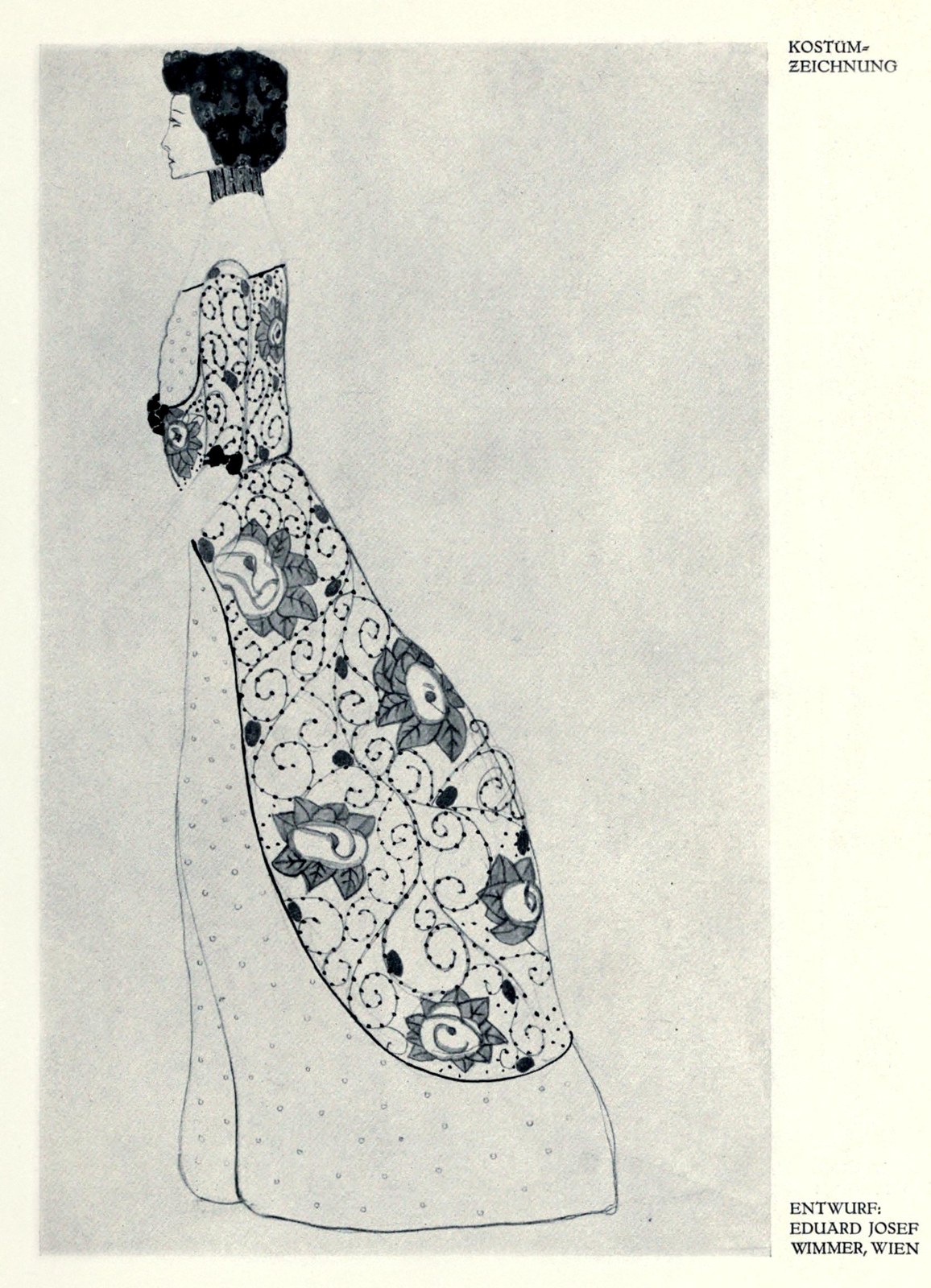
Costume Design by Eduard Josef Wimmer-Wisgrill. Image: Double-M · CC BY 2.0 · Wikimedia Commons, accessed 2026-08-04
In 1897, a group of Austrian artists led by the painter Gustav Klimt resigned from Vienna's official artists' association, the Künstlerhaus, to found their own exhibiting society: the Vienna Secession. Its motto, carved over the door of the new Secession Building, declared its purpose plainly — "To every age its art, to art its freedom." The group wanted Vienna, a city still dominated by academic history painting, to catch up with the modern art already reshaping Paris, Brussels, and Munich, and to give young, independent-minded artists a venue free of the Künstlerhaus's conservative jury.
The Secession Building itself, designed by architect Joseph Maria Olbrich in 1898 and topped with a gilded dome of laurel leaves that Viennese wits nicknamed "the golden cabbage," became the movement's headquarters and symbol. The group published its own journal, Ver Sacrum ("Sacred Spring"), and organized exhibitions that introduced Viennese audiences to Rodin, van Gogh, and the French Impressionists alongside its own members' work.
Visually, the Secession blended Symbolist subject matter — dreams, sexuality, mortality, allegory — with a highly ornamental, often geometric decorative surface, most famously in Klimt's "Golden Phase," where flat fields of gold leaf and mosaic-like pattern surround more naturalistically painted faces and bodies. The 1902 Beethoven Exhibition, built around Klimt's frieze honoring the composer, was the group's most ambitious statement of this fusion between painting, sculpture, and architecture as a single environment.
An allied design workshop, the Wiener Werkstätte, founded in 1903 by Koloman Moser and Josef Hoffmann with the financier Fritz Waerndorfer, extended the same aesthetic into furniture, textiles, and metalwork. Otto Wagner brought a related but more restrained, geometric modernism to Vienna's civic architecture. Tensions between painters and applied artists eventually split the group in 1905, when Klimt and his circle departed. The Secession matters because it forced a conservative capital to open itself to modern art, and because it produced, in Klimt's gold-leaf paintings, some of the most recognizable images in Western art.
What defines Vienna Secession
Gold Leaf and Ornamental Surface
Klimt's 'Golden Phase' paintings apply flat fields of gold leaf, mosaic-like pattern, and Byzantine-inspired ornament directly onto the canvas surface, flattening space around more naturalistically rendered faces and hands.
Symbolist Subject Matter
Themes of love, death, sexuality, and allegory recur throughout Secession work, treated with a decorative, often erotically charged frankness that unsettled conservative Viennese audiences.
Geometric Pattern and Ornament
Alongside organic Art Nouveau curves, Secession design favors squares, spirals, and repeating geometric motifs, especially in the applied arts produced by the Wiener Werkstätte.
Elongated, Psychologically Charged Figures
Especially in the work of Egon Schiele, figures are stretched, angular, and emotionally raw, turning portraiture and the nude into studies of psychological tension rather than idealized beauty.
Architecture as Manifesto
Buildings like the Secession Building and Otto Wagner's civic projects use clean geometric lines and restrained applied ornament to argue, in built form, for a modern Vienna.
Independent Exhibition Culture
The group staged its own thematic exhibitions outside the academic system, treating each show as a unified, designed environment rather than a simple hang of individual paintings.
History
The Vienna Secession formed in April 1897, when Gustav Klimt and a group of fellow artists resigned from the Künstlerhaus, Vienna's official exhibiting body, frustrated by its conservative jurying and resistance to international modern art. Klimt became the new group's first president. The following year, architect Joseph Maria Olbrich completed the Secession Building, a white cube-like exhibition hall crowned with a gilded openwork dome, which gave the movement a permanent public face in the center of Vienna. The group's journal, Ver Sacrum, and a rapid series of exhibitions — including shows introducing Viennese audiences to French Impressionism, Rodin, and Van Gogh — established Vienna as a serious node in the European modern art network within just a few years.
The movement's high point is usually dated to the 1902 Beethoven Exhibition, in which Klimt's frieze, wrapped around the gallery walls in gold leaf and abstract pattern, formed one element of a total decorative environment built around Max Klinger's polychrome sculpture of the composer. The applied-arts side of the movement crystallized in 1903 with the founding of the Wiener Werkstätte, a design workshop led by Koloman Moser and Josef Hoffmann that extended Secession aesthetics into furniture, jewelry, and textiles.
Internal disagreement over whether painting or applied art should lead the group caused a rupture in 1905, when Klimt and a number of painters left to exhibit independently. The Secession itself continued as an organization — and still exists today — but its era of defining Viennese modern art effectively closed before the First World War, as Klimt and younger Viennese artists such as Egon Schiele and Oskar Kokoschka pursued increasingly independent, psychologically intense paths that fed directly into Austrian Expressionism.
Key works
| Work | Artist | Year | Why it matters |
|---|---|---|---|
| The Kiss | Gustav Klimt | 1908 | The best-known painting of Klimt's Golden Phase, fusing decorative gold-leaf pattern with an intimate embrace. |
| Judith I | Gustav Klimt | 1901 | A gold-ground biblical femme fatale that helped define the Secession's blend of ornament and unsettling sexuality. |
| Beethoven Frieze | Gustav Klimt | 1902 | A monumental mural made for the 1902 Beethoven Exhibition, showing the Secession's ambition to merge painting, sculpture, and architecture into one environment. |
| Postsparkasse (Austrian Postal Savings Bank) | Otto Wagner | 1906 | A landmark of modern civic architecture that translated Secession ideals into a functional, geometric public building. |
| Death and the Maiden | Egon Schiele | 1915 | A raw, emotionally charged painting typical of the psychological intensity Schiele brought to the Secession's later, more expressionist phase. |
How to make art in this style
Creating Vienna Secession-Style Work Today
Palette: pair metallic gold (real gold leaf, gold paint, or metallic pigment) with a small set of saturated accent colors — deep crimson, dark teal or emerald, and black — against warm ivory skin tones. Restraint in the accent palette makes the gold read as luxurious rather than gaudy.
Composition: combine a naturalistically rendered face or figure with a flattened, densely patterned background or garment, so representation and abstraction sit side by side in the same image. Squares, spirals, concentric circles, and eye-like ovals are the era's signature geometric motifs — scatter them across drapery, borders, or backgrounds rather than confining pattern to a frame.
Technique: build up textured, mosaic-like surface in the flat areas — actual gold leaf, collaged paper, or dry-brushed metallic paint all work — while keeping faces and hands more smoothly modeled to create tension between flatness and depth. For a more Schiele-influenced approach, favor an angular, slightly distorted contour line and leave large areas of the ground unpainted around the figure.
Subjects: portraiture, allegorical or symbolic female figures, and psychologically charged nudes are the movement's central subjects. Treat ornament as structural rather than decorative — pattern should feel like it is generating the image, not sitting on top of it. Studying historical mosaic and Byzantine art alongside Secession work will sharpen the sense of how flat pattern and gold ground were originally used.
Legacy
Gustav Klimt's gold-leaf paintings, above all "The Kiss," rank among the most reproduced images in Western art, appearing on everything from museum posters to phone cases, and they cemented Vienna's reputation as a center of fin-de-siècle modernism. The Secession's core idea — that a movement should design its own exhibition space, publish its own journal, and treat painting, architecture, and craft as parts of one unified project — anticipated the twentieth century's broader total-design ambitions, later pursued differently by the Bauhaus. The Wiener Werkstätte's furniture and decorative objects remain influential touchstones in design history, prized by collectors and still studied for their integration of geometric restraint with luxurious materials.
Perhaps the Secession's deepest legacy runs through the younger artists who formed in its orbit: Egon Schiele's raw, angular figuration and Oskar Kokoschka's psychologically probing portraiture pushed directly toward Austrian and German Expressionism, carrying the group's interest in inner life past ornament and into open emotional rawness. Otto Wagner's stripped-down civic buildings anticipated architectural modernism's turn away from applied decoration altogether. Today, Klimt's gold ground and Schiele's tense line remain shorthand references across fashion, illustration, and design for a specifically Viennese, fin-de-siècle sensuality.
Frequently asked questions
What is the Vienna Secession?
The Vienna Secession was a group of Austrian artists, led by Gustav Klimt, who broke from Vienna's conservative academy in 1897 to promote modern art through their own exhibitions, journal, and purpose-built exhibition hall.
What is the difference between Art Nouveau and the Vienna Secession?
The Vienna Secession is often described as Austria's regional variant of Art Nouveau, but it leans more heavily on geometric pattern and gold ornament, and it developed as a formal, organized exhibiting society rather than a loose international style.
Who founded the Vienna Secession?
Gustav Klimt led the founding group in 1897, alongside artists and designers including Koloman Moser and the architect Joseph Maria Olbrich, who designed the movement's exhibition building.
What does 'Secession' mean in this context?
It refers to the group's formal secession, or withdrawal, from the Künstlerhaus, Vienna's official state-sanctioned artists' association, in protest of its conservative standards.
Are Klimt and Schiele part of the same movement?
Both exhibited with the Vienna Secession, but Klimt is closely tied to its ornamental Golden Phase while Schiele represents its later, rawer turn toward psychological Expressionism.