 Art
Art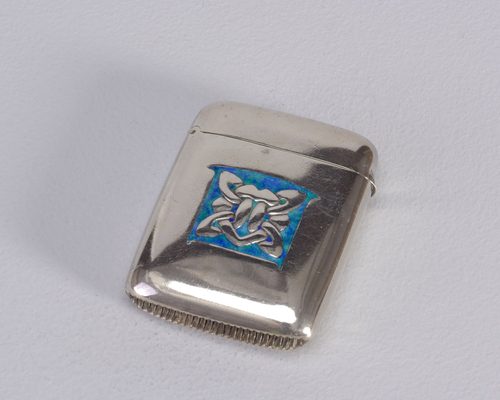

Arts and Crafts was a moral and social movement about how objects should be made — by hand, by skilled craftspeople, honestly — while Art Nouveau was chiefly a decorative style defined by sinuous, plant-like line, and it was far less troubled by machine production. Arts and Crafts began in England around 1860, led by figures like William Morris, as a reaction against shoddy industrial manufacturing and harsh factory conditions; it championed medieval-inspired guild craft, natural materials, and simple, sturdy forms. Art Nouveau emerged roughly a generation later, from the 1890s in Brussels and Paris, and absorbed Arts and Crafts' love of nature and unified design across furniture, architecture, and graphics. But Art Nouveau pushed those ideas toward theatrical curves, whiplash lines, and new materials like iron and glass, and its objects were often manufactured for a fashionable urban market rather than handcrafted on principle.
Arts and Crafts Movement vs. Art Nouveau at a glance
| Arts and Crafts Movement | Art Nouveau | |
|---|---|---|
| Years | 1860–1910 | 1890–1910 |
| Origin | England | Brussels & Paris |
| Core philosophy | A social reform movement: objects should be handmade by skilled workers, not factory machines. | Primarily a decorative style focused on appearance, with no fixed stance on machine production. |
| Line & form | Simple, sturdy, geometric forms inspired by medieval craft and honest joinery. | Sinuous, whiplash curves modeled on plant stems, vines, and flowing hair. |
| Materials | Natural materials worked by hand — oak, wrought iron, hand-woven textiles. | New industrial materials embraced openly, including cast iron, colored glass, and electroplated metal. |
| Attitude to industry | Skeptical of factories; wanted skilled labor and pre-industrial guild traditions restored. | Comfortable with industry, often using it to spread a fashionable look widely. |
| Typical output | Wallpaper, textiles, furniture, and books meant to feel sturdy and unpretentious. | Architecture, jewelry, posters, and glasswork designed to look glamorous and modern. |
| Geography & figures | Centered in England around William Morris and allied designer-craftsmen. | Centered in Brussels and Paris, later spreading across Europe under names like Jugendstil. |
How to tell them apart
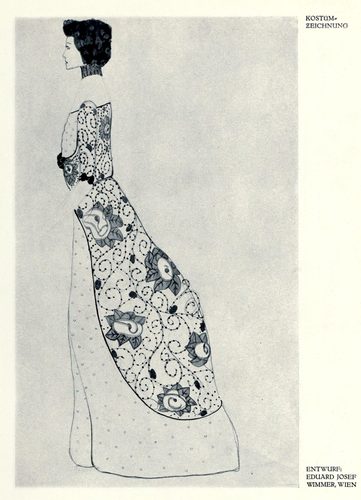
If the object looks sturdy, plain, and almost medieval — oak furniture, hand-blocked floral wallpaper, joinery you can see — that's Arts and Crafts. If instead the lines swirl like vines or hair, with iron gates twisting into stems and glass lamps blooming like flowers, you're looking at Art Nouveau. Arts and Crafts favors flat, repeating patterns and muted, natural colors. Art Nouveau favors asymmetry, curved silhouettes, and a theatrical sense of movement. Think Morris wallpaper versus a Paris Métro entrance.
What they share
Both movements reacted against mass-produced Victorian clutter and prized unified design, where furniture, wallpaper, and architecture all followed one visual idea. Both drew heavily on plant and natural forms, and both treated the decorative arts as equal to painting and sculpture. Art Nouveau designers openly admired Arts and Crafts figures like William Morris, and the two movements overlapped in Britain during the 1890s before Art Nouveau's more ornamental style pulled away.
Try both
Settle it yourself — generate the same subject in each style and compare the results.
Frequently asked questions
Is Art Nouveau part of the Arts and Crafts Movement?
No, though it grew out of similar ideas. Art Nouveau is a distinct decorative style that adopted Arts and Crafts' love of nature and unified design but dropped its anti-industrial, handmade philosophy.
Which came first, Arts and Crafts or Art Nouveau?
Arts and Crafts, starting around 1860 in England. Art Nouveau emerged about three decades later, in the 1890s, centered in Brussels and Paris.
Why do Arts and Crafts and Art Nouveau designs look so different?
Arts and Crafts valued plain, handmade honesty and geometric simplicity, while Art Nouveau prized flowing, ornamental curves and was happy to use new industrial materials and methods.