 Art
Art
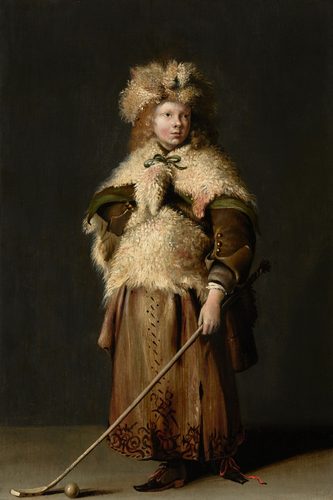
Baroque (centered in Rome, about 1600–1750) and Dutch Golden Age painting (Dutch Republic, about 1600–1680) are contemporaries shaped by opposite patrons: Baroque served the Catholic Church and absolutist courts, while Dutch Golden Age served a Protestant merchant republic with no royal court and little interest in religious imagery. Rome and Catholic Europe wanted vast, theatrical altarpieces and ceiling frescoes meant to overwhelm the faithful. The newly independent Dutch Republic, wealthy from trade and largely Calvinist, had no such demand — instead a broad middle class bought modest paintings for their own homes: portraits, still lifes, tavern scenes, and landscapes of the flat Dutch countryside. Dutch artists like Rembrandt and Vermeer absorbed Baroque's dramatic light and shadow but scaled it down and turned it toward everyday, intimate subjects rather than saints and gods. The two share a visual language of light and realism but almost opposite audiences, subjects, and ambitions.
Baroque vs. Dutch Golden Age at a glance
| Baroque | Dutch Golden Age | |
|---|---|---|
| Years | 1600–1750 | 1600–1680 |
| Origin | Rome, Italy | Dutch Republic |
| Subject matter | Religious and mythological drama — saints, martyrdoms, gods in action. | Everyday life — portraits, still lifes, taverns, domestic interiors, local landscapes. |
| Scale & purpose | Often vast, made to fill churches and palaces and overwhelm viewers. | Typically modest and made for the private homes of merchants and tradesmen. |
| Patronage | The Catholic Church, popes, and absolutist courts commissioning public spectacle. | A broad merchant middle class buying art directly for personal display. |
| Color & light | High-contrast chiaroscuro used for theatrical, larger-than-life drama. | Softer, more naturalistic light, often used to dignify ordinary moments. |
| Composition | Dynamic diagonals and dramatic staging built to be seen from a distance. | Quiet, intimate arrangements built to reward close, personal viewing. |
| Attitude | Grand and persuasive — art in service of faith and monarchy. | Observant and modest — art in service of everyday middle-class life. |
How to tell them apart
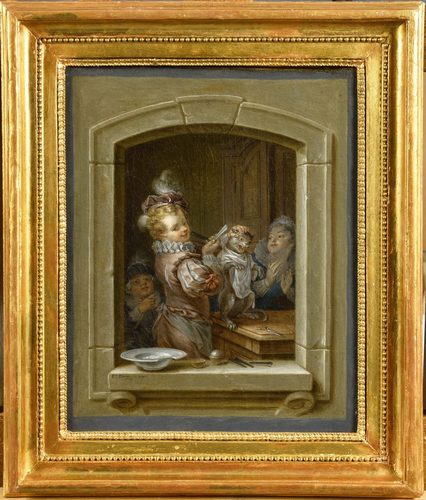
If the subject is a saint, martyr, or mythological figure caught in a dramatic, theatrical moment meant to be seen from across a church, you're looking at Baroque. If the subject is an ordinary room, a bowl of fruit, a woman reading a letter, or a tavern scene meant to hang in someone's parlor, that's Dutch Golden Age — Vermeer's quiet interiors, Rembrandt's intimate portraits. Baroque wants to overwhelm you from a distance; Dutch Golden Age rewards standing close and looking at small, everyday details.
What they share
Both traditions share a mastery of light and shadow, and Dutch painters like Rembrandt clearly absorbed Baroque's dramatic chiaroscuro even while redirecting it toward humble subjects. Both were painting at the same moment, in the same broadly Baroque century, and both valued close observation of the physical world over the flatter symbolism of earlier religious art.
Try both
Settle it yourself — generate the same subject in each style and compare the results.
Frequently asked questions
Is Dutch Golden Age a type of Baroque?
It's often classified as a regional, Protestant variant of Baroque, sharing the era's light and realism but applying them to secular, everyday subjects rather than the religious drama typical of Catholic Baroque in Rome.
Which came first, Baroque or Dutch Golden Age?
They began at essentially the same time, around 1600, in different places — Baroque in Rome, Dutch Golden Age in the newly independent Dutch Republic. Dutch Golden Age wound down earlier, by about 1680.
Why does Dutch Golden Age art look less dramatic than Italian Baroque?
The Dutch Republic was Protestant, mercantile, and had no royal court or church demanding grand religious spectacle. Middle-class buyers wanted modest paintings of their own world, so Dutch artists scaled Baroque techniques down to everyday scenes.