 Art
Art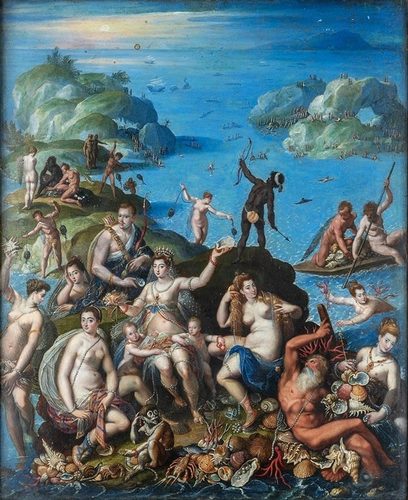
Mannerism (Italy, about 1520–1600) prized artificial elegance and intellectual complexity; Baroque (Rome, about 1600–1750) replaced that cool sophistication with raw emotional force, dramatic light, and direct physical impact. Both movements followed the High Renaissance, but where Mannerist artists elongated and complicated the figure for a knowing courtly audience, Baroque artists — Caravaggio foremost among them — wanted to grab an ordinary churchgoer by the collar. The Catholic Church's Counter-Reformation drove much of the shift: after the Council of Trent, religious art was expected to move viewers to faith immediately and viscerally, not entertain connoisseurs with clever poses. Baroque painting swapped Mannerism's crowded, ambiguous space for bold diagonals and theatrical spotlighting; Baroque sculpture, especially Bernini's, swapped elegant artifice for figures caught mid-action, as if surprised by the viewer. The result reads less like a refinement of Mannerism and more like a deliberate rebuke of it.
Mannerism vs. Baroque at a glance
| Mannerism | Baroque | |
|---|---|---|
| Years | 1520–1600 | 1600–1750 |
| Origin | Italy | Rome, Italy |
| Mood | Cool, cerebral, and knowing — art meant to be admired for its cleverness. | Hot, immediate, and emotional — art meant to overwhelm the senses at once. |
| Color & light | Acidic, artificial color harmonies with flat, evenly distributed lighting. | Deep shadow against sharp shafts of light (chiaroscuro), heightening drama and focus. |
| Composition | Crowded and ambiguous, deliberately hard to read at a glance. | Bold diagonals and strong focal points pulling the eye straight to the action. |
| Figures & anatomy | Elongated, serpentine, and impossibly elegant, posed for visual difficulty. | Robust, muscular, and caught mid-motion, as if surprised in a real moment. |
| Purpose | Made largely for courtly and aristocratic connoisseurs to admire technique. | Made largely for churches and public spaces to move ordinary worshippers to faith. |
| Attitude | Style and artifice valued for their own intellectual sake. | Emotional truth and physical presence valued over polished artifice. |
How to tell them apart
If figures are elegantly elongated, colors feel artificial, and the whole scene seems designed to be puzzled over by a sophisticated eye, you're looking at Mannerism. If a figure seems to burst out of deep shadow into a shaft of real light, muscles straining, caught mid-gesture, that's Baroque — Caravaggio's tavern-lit saints, Bernini's marble caught mid-breath. Mannerist paintings ask you to admire the artist's cleverness; Baroque paintings ask you to feel something immediately, often before you've consciously registered the subject.
What they share
Both movements inherited the High Renaissance's technical mastery of anatomy and composition and pushed it toward drama rather than calm balance — Baroque artists studied and absorbed Mannerist innovations even as they reacted against Mannerism's coolness. Both also relied heavily on powerful patrons, whether courtly collectors or the Catholic Church, to fund ambitious, technically demanding work.
Try both
Settle it yourself — generate the same subject in each style and compare the results.
Frequently asked questions
Is Baroque the same as Mannerism?
No. Baroque followed Mannerism and reacted against it — trading elegant artifice and crowded, ambiguous space for direct emotional drama, strong light-dark contrast, and figures caught in real, physical action.
Which came first, Mannerism or Baroque?
Mannerism, by about eighty years. It began around 1520; Baroque emerged around 1600, largely in Rome, as the Counter-Reformation Church wanted art that moved viewers immediately rather than impressed them intellectually.
Why did Baroque replace Mannerism?
The Counter-Reformation Catholic Church wanted religious art that stirred ordinary worshippers to faith, not clever puzzles for courtly connoisseurs. Caravaggio and others answered with dramatic light and raw physical presence instead of Mannerist artifice.