 Art
Art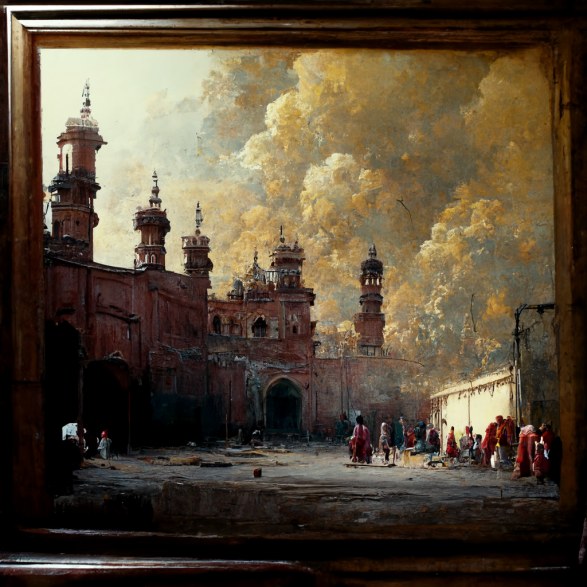
Baroque painting e8ccf3b7-1820-4125-a967-48b38a2d54df. Image: ZerePayat · CC BY-SA 4.0 · Wikimedia Commons, accessed 2026-08-04
Baroque art emerged in Rome around 1600 as the visual arm of the Catholic Counter-Reformation, and within decades it had become the dominant style of courts and churches across Europe. Where the preceding Mannerist style prized elegant artifice, elongated proportions, and intellectual puzzle-making, Baroque artists wanted immediate, physical, emotional impact. A painting or sculpture should not be admired at a cool distance; it should seize the viewer bodily, pulling them into the action through dramatic light, diagonal composition, and figures that seem to spill out of the frame.
The style's most recognizable device is tenebrism — the violent contrast of deep shadow and concentrated light, pioneered by Caravaggio, in which a single beam illuminates a hand, a face, a knife blade, while the rest of the scene dissolves into darkness. Rubens and Bernini pushed the drama outward instead, filling canvases and marble alike with muscular, twisting bodies caught mid-gesture, their draperies snapping as though animated by wind. Ceilings opened into painted heavens; church interiors fused architecture, sculpture, and fresco into single overwhelming environments designed to induce religious rapture.
Baroque art was, at its core, propaganda in the best and worst senses of the word. The papacy, embattled by the Protestant Reformation, needed art that could restate Catholic doctrine — the reality of miracles, the authority of saints, the drama of martyrdom — in terms so visceral that doubt felt impossible. Absolutist monarchs, above all Louis XIV, borrowed the same theatrical vocabulary to dramatize royal power at Versailles and beyond. Even the more intimate, secular Baroque painting of Spain and the Dutch Republic carried forward the same commitment to psychological truth and material presence, rendering flesh, fabric, and light with an intensity that made illusion feel like revelation.
The movement matters because it marks the moment European art stopped treating the picture plane as a stable, contemplative window and started treating it as a stage. Its command of light, gesture, and spatial illusion still underwrites how painters, photographers, and filmmakers direct a viewer's eye and emotion today.
What defines Baroque
Tenebrism and dramatic lighting
Baroque painters, following Caravaggio, plunged most of the canvas into darkness and let a single sharp light source pick out the essential action. This chiaroscuro heightened drama and directed the eye exactly where the artist wanted it, turning ordinary figures into charged, theatrical presences.
Dynamic, diagonal composition
Rather than the balanced, pyramidal arrangements favored by Renaissance painters, Baroque works are built on sweeping diagonals and spiraling movement. Figures twist, reach, and gesture across the canvas, creating a sense of motion frozen at its most intense instant.
Heightened emotion and physicality
Faces contort in ecstasy, grief, or terror, and bodies are rendered with muscular, almost sculptural weight. The goal was empathetic engagement — the viewer should feel the moment in their own body, not merely observe it.
Illusionistic scale and integration of the arts
Baroque ceilings and church interiors dissolved architectural boundaries with painted skies, false perspective, and gilded ornament, merging painting, sculpture, and architecture into a single immersive spectacle. The effect aimed to collapse the distance between the sacred scene and the worshipper's own space.
Rich, saturated color and luxurious surfaces
Deep reds, golds, and velvety blacks dominate Baroque palettes, applied with visible, confident brushwork that renders silk, flesh, and metal with tactile conviction. Rubens in particular built up glowing color through translucent glazes over a warm ground.
Naturalism grounded in observed life
Even at its most theatrical, Baroque painting insisted on physical truth — dirty feet, aged skin, real anatomical strain — drawn from live models rather than idealized formulas. This grounding in the observable world gave the drama its persuasive force.
History
Baroque art took shape in Rome in the final years of the sixteenth century, propelled by the Catholic Church's response to the Protestant Reformation. At the Council of Trent, church authorities had called for art that communicated religious narrative clearly and moved the faithful emotionally — a direct rejection of Mannerism's cerebral, elite artifice. Caravaggio answered first, arriving in Rome around 1592 and, within a decade, developing a raw, high-contrast naturalism that scandalized and electrified the city's patrons in equal measure. His influence spread rapidly through direct imitators, the so-called Caravaggisti, across Italy, Spain, France, and the Netherlands.
At the same time, the papal court and aristocratic families such as the Farnese commissioned Annibale Carracci, while the Borghese and later the Barberini backed Pietro da Cortona and Gian Lorenzo Bernini, filling Rome's churches and palaces with a more classically grounded, expansively theatrical style. Bernini, working across sculpture and architecture, became the era's defining figure, reshaping St. Peter's Basilica and its piazza into a single Baroque stage set.
The style traveled outward through trade networks, royal marriages, and the Catholic missionary orders. In Antwerp, Peter Paul Rubens fused Italian drama with Flemish color and energy, running a vast workshop that supplied courts across Europe. In Spain, Diego Velázquez brought Baroque naturalism into the service of the royal court in Madrid. Louis XIV's France adapted the style's grandeur for secular, absolutist purposes at Versailles, producing a more restrained, classicizing strand sometimes distinguished as French Baroque Classicism.
By the early eighteenth century, the style's excesses in France and Central Europe softened into the lighter, more intimate Rococo, while a parallel, more sober Baroque persisted in religious commissions well into the 1700s. Its techniques of light, movement, and illusion nonetheless remained foundational to Western painting long after the label fell out of fashion.
Key works
| Work | Artist | Year | Why it matters |
|---|---|---|---|
| The Calling of Saint Matthew | Caravaggio | 1600 | Established Caravaggio's tenebrism and psychological realism, influencing a generation of Baroque painters. |
| Ecstasy of Saint Teresa | Gian Lorenzo Bernini | 1652 | A marble sculpture fusing sculpture, architecture, and hidden lighting into a single theatrical spiritual vision. |
| The Descent from the Cross | Peter Paul Rubens | 1614 | Its diagonal composition and muscular figures show Rubens's dynamic, Counter-Reformation altarpiece style. |
| Las Meninas | Diego Velázquez | 1656 | A complex play of perspective and royal portraiture that has fascinated artists and theorists for centuries. |
| Judith Slaying Holofernes | Artemisia Gentileschi | 1620 | Visceral realism and physical force distinguish her interpretation from male contemporaries' versions of the same subject. |
How to make art in this style
Working in a Baroque Style
Palette: Build from a warm, dark ground — burnt umber or a deep reddish-brown — and let it show through thin passages of paint. Favor rich, saturated hues: deep reds, ochres, golds, and warm flesh tones, set against near-black shadow. Reserve pure white and bright color for the focal point only.
Composition: Arrange the scene on a diagonal rather than a static grid. Let one figure or gesture lead the eye into the picture, and use overlapping forms, foreshortening, and cropped edges to suggest that the action continues beyond the frame. Avoid symmetry; asymmetrical tension reads as more alive.
Light: Choose a single, identifiable light source and commit to it fully. Push most of the composition into shadow so that the lit areas — a face, a raised hand, a fold of fabric — carry maximum weight. Practice chiaroscuro drawing from a single directional lamp before working in paint, to internalize how form emerges from darkness rather than being outlined against it.
Brushwork and technique: Work from dark to light in layers, building form with successive glazes rather than flat color fields. Keep edges soft where light fades into shadow and sharper only at the point of highest contrast. Study anatomy and drapery from life; Baroque conviction depends on believable weight and movement, not decorative flattening.
Subjects: Choose a moment of maximum tension — a decision, a blow, a revelation — rather than a calm aftermath. Religious narrative, mythological drama, and psychologically charged portraiture all suit the mode; the subject should justify the emotional intensity of the treatment.
Legacy
Baroque's command of light and gesture became a permanent part of the painter's toolkit. Rembrandt, Vermeer, and the great eighteenth-century portraitists all inherited its chiaroscuro; academic history painting through the nineteenth century still staged its dramas in Baroque terms. Neoclassicism and Romanticism defined themselves partly by reacting against — and partly by borrowing from — Baroque's emotional intensity and compositional dynamism.
The style's deepest afterlife may be in image-making outside the museum. Studio photography, stage lighting, and cinema all descend from Baroque's central insight: that a single, controlled light source against darkness generates instant drama and directs attention. Film noir's shadowed interiors, chiaroscuro portrait photography, and the spotlighting used in theater and concert design all trace back to Caravaggio's tenebrism and Bernini's staged spectacle.
Baroque architecture and interior design also remain visible wherever grandeur is the goal — government buildings, opera houses, and cathedrals restored or built in a Baroque-revival spirit continue to use its language of gilded ornament and dramatic scale. In popular culture, the term baroque itself has come to mean any style of excessive, ornate complexity, a testament to how thoroughly the movement's visual vocabulary of drama and abundance entered everyday language.
Frequently asked questions
What defines Baroque art?
Baroque art is defined by dramatic contrasts of light and shadow, dynamic diagonal composition, intense emotion, and a theatrical sense of movement. It emerged around 1600 to serve the Catholic Church's Counter-Reformation and the grandeur of absolutist courts.
What's the difference between Baroque and Renaissance art?
Renaissance art favors calm, balanced compositions, even lighting, and idealized restraint, while Baroque art seeks dynamic movement, dramatic chiaroscuro, and heightened emotional intensity. Renaissance painting invites contemplation; Baroque painting aims to overwhelm the viewer in the moment.
Who started the Baroque movement?
Caravaggio is usually credited with launching Baroque painting in Rome around 1600 through his radical use of tenebrism and unidealized realism, alongside Annibale Carracci's more classicizing strand. Gian Lorenzo Bernini, a generation younger, went on to define the style's High Baroque vocabulary in sculpture and architecture.
What is tenebrism?
Tenebrism is an extreme form of chiaroscuro in which most of a composition is submerged in dark shadow, with a single, often dramatic beam of light illuminating the key figures or action. Caravaggio pioneered the technique, and it became a hallmark of early Baroque painting.
Where did Baroque art spread?
Baroque art began in Rome and spread through Italy, Spain, Flanders, France, and the Dutch Republic, adapting to local tastes — grandly theatrical in Catholic Italy and France, more intimate and secular in the Protestant Dutch Republic.
When did the Baroque period end?
Baroque art is generally dated from around 1600 to the mid-1700s, gradually giving way to the lighter, more playful Rococo style in France and Central Europe during the early eighteenth century.