 Art
Art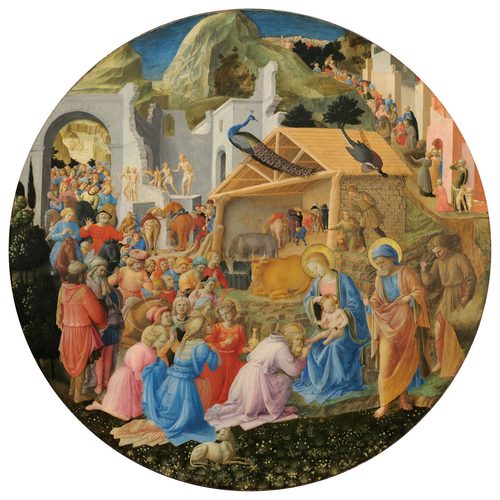
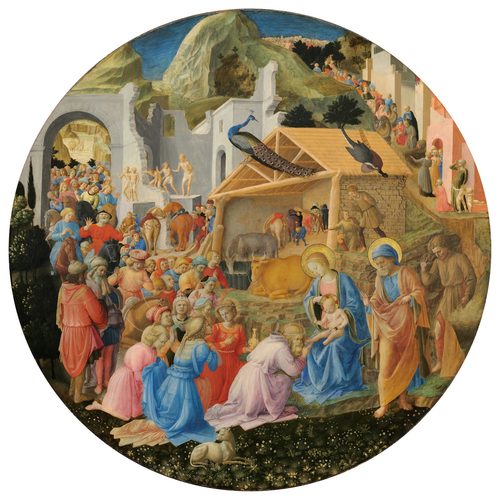
Early Renaissance is the decades-long rediscovery of classical form and perspective in Florence (about 1400–1490); High Renaissance is the short, intense peak — roughly 1490 to 1527 — when those discoveries fused into an effortless, monumental style centered on Leonardo, Michelangelo, and Raphael. Early Renaissance artists were solving problems in public: Masaccio put Brunelleschi's perspective into paint, Donatello studied anatomy in bronze, Botticelli refined elegant, linear contour. The results are precise but sometimes stiff, more diagram than illusion. Florence's wool-trade wealth and Medici patronage made this experimentation possible, turning the city into a laboratory for geometry, antiquity, and the human body. High Renaissance painters, trained in that Florentine toolkit but drawn increasingly to Rome and papal commissions, stopped showing their working: perspective, anatomy, and idealized beauty became seamless rather than demonstrated. The difference is less a style war than a maturation — one generation cracked the code, the next let it disappear into grace.
Early Renaissance vs. High Renaissance at a glance
| Early Renaissance | High Renaissance | |
|---|---|---|
| Years | 1400–1490 | 1490–1527 |
| Origin | Florence, Italy | Italy |
| Mood | Earnest and exploratory, sometimes awkward as artists work out new problems in full view. | Confident and serene; problems are already solved, so figures move with unforced grace. |
| Figures & anatomy | Bodies are carefully observed but can look posed or linear, like anatomy studied in stages. | Bodies are idealized and fully three-dimensional, weight and musculature rendered as if breathing. |
| Composition | Often additive — figures arranged in a row or shallow, stage-like space. | Pyramidal and unified, with every figure locked into one balanced, monumental design. |
| Color & light | Clear, even light and bright local color, with edges kept crisp and linear. | Softer transitions (sfumato) blend tone into tone, dissolving hard outlines into atmosphere. |
| Patronage | Funded largely by Florentine wool guilds, merchant families, and the Medici. | Funded increasingly by popes and Roman cardinals rebuilding the city as a Christian capital. |
| Scale & purpose | Modest altarpieces, chapel frescoes, and civic sculpture for a single city. | Vast papal commissions — the Sistine ceiling, Vatican rooms — built to awe all of Christendom. |
How to tell them apart
If figures look slightly stiff, outlines are crisp, and the composition reads like a careful diagram, you're looking at Early Renaissance — think Botticelli's linear grace or Masaccio's newly cracked perspective. If the figures seem to breathe, edges melt into shadow, and everything locks into one grand pyramidal design, that's High Renaissance — Leonardo's smoky sfumato, Michelangelo's colossal anatomy, Raphael's effortless balance. Early Renaissance work often stays in Florence: modest altarpieces, civic statues, chapel walls. High Renaissance work tends to be monumental and Roman — ceilings and papal apartments built to overwhelm a viewer standing in St. Peter's orbit, not a guild chapel.
What they share
Both movements share the same DNA: classical antiquity, linear perspective, and the conviction that art should represent the world truthfully rather than symbolically, as medieval art had. High Renaissance artists were trained directly in Early Renaissance workshops and techniques — Leonardo apprenticed under Verrocchio, a product of that Florentine system. Neither movement rejects the other; High Renaissance simply inherited Early Renaissance's toolkit and used it with less visible effort.
Try both
Settle it yourself — generate the same subject in each style and compare the results.
Frequently asked questions
Is High Renaissance just later Early Renaissance?
Essentially, yes — High Renaissance grew directly out of Early Renaissance techniques and ideas. It's not a break or rebellion, more a culmination: the same pursuit of perspective, anatomy, and classical beauty, refined until it looked effortless.
Which came first, Early Renaissance or High Renaissance?
Early Renaissance, by about ninety years. It began around 1400 in Florence; High Renaissance didn't emerge until about 1490, and lasted only a few decades before Mannerism and the 1527 Sack of Rome brought it to a close.
Why is High Renaissance so short compared to Early Renaissance?
It represents a peak, not a phase — a narrow window where technical mastery, major patrons, and a handful of extraordinary artists aligned in Rome and Florence at once. Such alignments are hard to sustain.