 Art
Art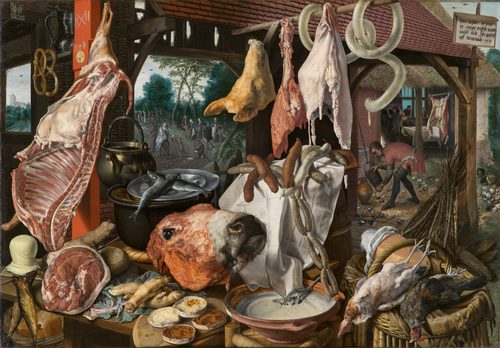
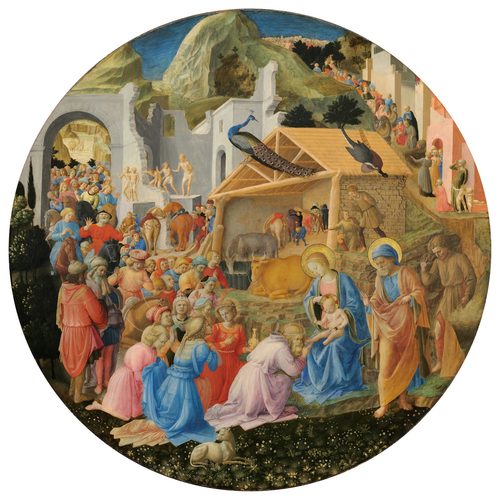
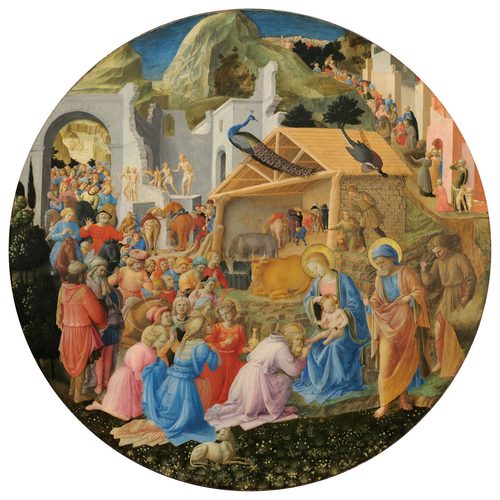
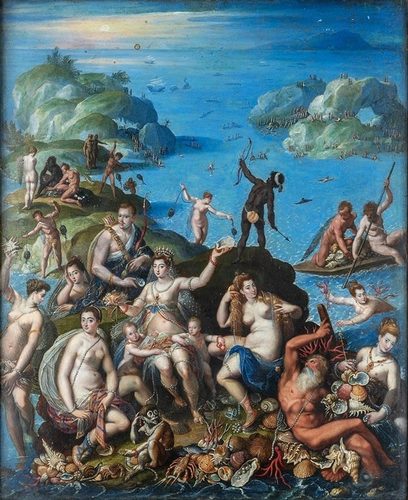
Northern Renaissance and High Renaissance are parallel movements, not sequential ones: Northern Renaissance unfolded across the Low Countries and Germany from about 1430 to 1580, while High Renaissance was a short Italian peak from roughly 1490 to 1527. The core difference is method and worldview. Northern painters — Jan van Eyck, Albrecht Dürer, Hans Holbein — worked in oil to build up microscopic, almost obsessive detail: individual hairs, cracked knuckles, glinting metal, rendered with a merchant class's love of the tangible object. Italian High Renaissance painters pursued idealized form instead, using classical proportion and mathematical perspective to construct bodies and spaces more beautiful than nature. Northern art grew out of Gothic manuscript tradition and prosperous trading cities; Italian art grew out of humanist scholarship and antique sculpture. Each region knew the other's work, and by the Northern Renaissance's later decades Italian influence had crept north — but the founding impulses stayed distinct.
Northern Renaissance vs. High Renaissance at a glance
| Northern Renaissance | High Renaissance | |
|---|---|---|
| Years | 1430–1580 | 1490–1527 |
| Origin | Low Countries & Germany | Italy |
| Technique | Oil glazes built up in thin, patient layers to capture exact texture and surface detail. | Fresco and panel painting emphasizing idealized drawing, anatomy, and mathematical perspective. |
| Subject matter | Domestic interiors, merchant portraits, and densely symbolic religious scenes packed with objects. | Grand religious and mythological subjects — Madonnas, saints, gods — rendered as noble ideals. |
| Color & light | Sharp, jewel-like color and raking light that reveals every fold and reflection. | Softer, blended light (sfumato) that unifies form and dissolves hard edges. |
| Composition | Crowded, detail-dense scenes where every object can carry hidden meaning. | Spare, monumental, and geometrically balanced, with figures given room to breathe. |
| Patronage | Wealthy merchants, guilds, and burghers commissioning portraits and altarpieces for private devotion. | Popes and Italian courts commissioning vast works to project spiritual and civic power. |
| Attitude | Values observed truth — the world exactly as the eye and oil paint see it. | Values idealized truth — the world improved and perfected through classical proportion. |
How to tell them apart
If you can count individual hairs, see a fleck of light on a metal jug, or notice a mirror reflecting the whole room, you're looking at Northern Renaissance — Van Eyck and Dürer painted the world as forensically as oil paint allowed. If the figures look more beautiful than any real person, arranged in calm pyramids with softened edges, that's High Renaissance — Raphael's Madonnas, Leonardo's smoky shadows. Northern works tend to be smaller, panel-based, and dense with symbolic household objects. Italian High Renaissance works tend to be larger, sparer, and built around a single idealized human form.
What they share
Both movements share a humanist curiosity about the observed world and a technical leap forward — the North perfected oil painting, Italy perfected linear perspective, and each tradition absorbed the other's innovations within decades. Northern and Italian painters were aware of and traded influence with one another; Dürer traveled to Italy specifically to study Italian methods, while Italian collectors prized Netherlandish panels for their uncanny detail.
Try both
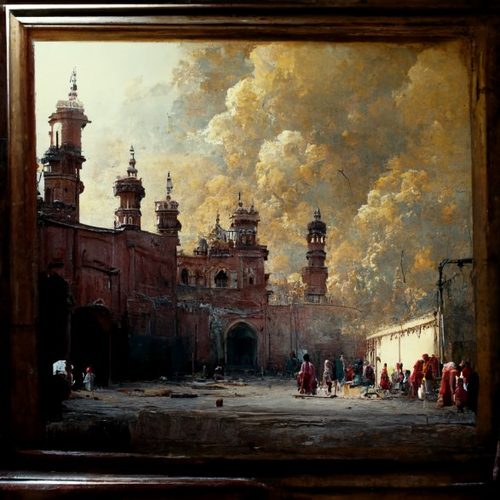
Settle it yourself — generate the same subject in each style and compare the results.
Frequently asked questions
Is Northern Renaissance the same as High Renaissance?
No — they're parallel, not identical. Northern Renaissance is a regional movement centered in the Low Countries and Germany; High Renaissance is a short Italian peak. Both happened around the same decades but grew from different techniques and priorities.
Which came first, Northern Renaissance or High Renaissance?
Northern Renaissance started earlier, around 1430 with painters like Jan van Eyck, while Italian High Renaissance didn't begin until about 1490. Northern Renaissance also ran much longer, continuing to roughly 1580.
Did Northern and Italian Renaissance artists influence each other?
Yes. Albrecht Dürer studied in Italy to learn perspective and proportion, and Italian collectors prized Netherlandish oil panels for their detail. The exchange went both directions, even though the movements kept distinct regional character.