 Art
Art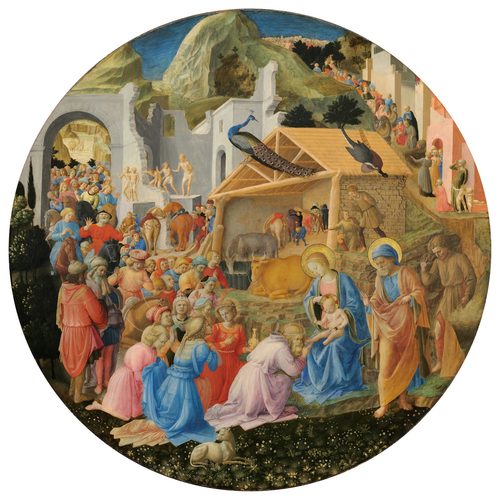
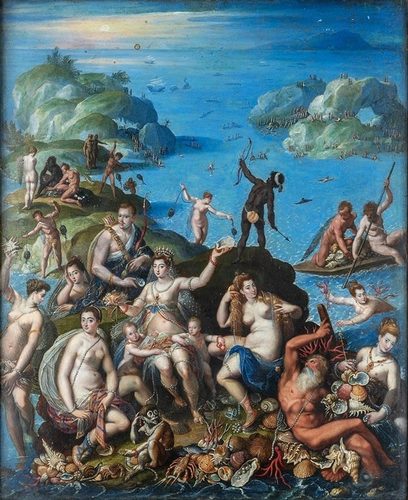
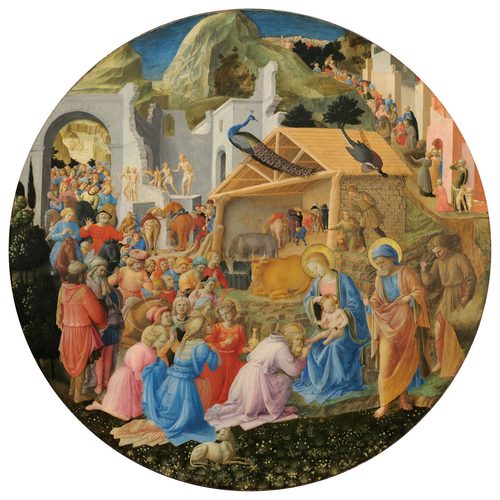
High Renaissance (Italy, about 1490–1527) prized natural balance and idealized beauty; Mannerism (Italy, about 1520–1600) deliberately broke that balance, stretching, twisting, and complicating the same vocabulary for tension and virtuosity instead of harmony. The two overlap by design — Mannerism grew directly out of High Renaissance workshops, especially Michelangelo's late style, as younger artists faced the problem of following an act as complete as Raphael's or Leonardo's. Rather than repeat perfected harmony, they pushed it: elongated limbs, crowded and ambiguous space, acid or unnatural color, poses so contorted they seem to defy anatomy rather than celebrate it. The 1527 Sack of Rome, which scattered High Renaissance artists and shook confidence in a stable, ordered world, is often cited alongside this shift. Where High Renaissance art looks inevitable and calm, Mannerist art looks knowing, restless, and a little anxious — beauty pursued for its own sophisticated sake rather than as a mirror of natural order.
High Renaissance vs. Mannerism at a glance
| High Renaissance | Mannerism | |
|---|---|---|
| Years | 1490–1527 | 1520–1600 |
| Origin | Italy | Italy |
| Mood | Calm, stable, and inevitable — nothing strains, nothing competes for attention. | Restless and theatrical, full of tension, artifice, and self-conscious sophistication. |
| Figures & anatomy | Idealized but anatomically believable, weight settled naturally onto both feet. | Elongated, twisted, and impossibly graceful, with small heads and serpentine poses. |
| Composition | Balanced and pyramidal, with a clear focal point the eye settles into. | Crowded, ambiguous, and off-center, deliberately unsettling where the eye should rest. |
| Color & light | Naturalistic and harmonious, light modeling form the way it actually falls. | Acidic, artificial color combinations and lighting used for mood, not realism. |
| Scale & purpose | Grand public commissions meant to project stability and divine order. | Often courtly and intellectual, made to impress connoisseurs with cleverness. |
| Attitude | Nature perfected — art as the natural world made ideal. | Nature outdone — art as invention, artifice, and technical bravura for its own sake. |
How to tell them apart
If bodies stand naturally, the composition settles into one clear pyramid, and everything feels inevitable and calm, you're looking at High Renaissance — Raphael's balanced Madonnas, Leonardo's serene groupings. If necks and limbs stretch improbably, space feels crowded or ambiguous, and colors clash in unnatural, almost acid combinations, that's Mannerism — Parmigianino's swan-necked figures, Pontormo's jarring palette. High Renaissance figures look like they could stand up and walk off the wall naturally; Mannerist figures look like they're performing a difficult pose for an audience that appreciates the difficulty.
What they share
Mannerism is not a rejection of High Renaissance but its direct heir — many Mannerists trained in the same Florentine and Roman workshops, and Michelangelo's own late work bridges both. Both movements share reverence for the idealized human figure and technical virtuosity as the measure of skill. The difference is emphasis: High Renaissance sought harmony, Mannerism sought to complicate and elaborate on that same achieved harmony.
Try both
Settle it yourself — generate the same subject in each style and compare the results.
Frequently asked questions
Is Mannerism a style within High Renaissance?
No — it's the movement that followed and reacted to it. Mannerism grew out of High Renaissance training but deliberately exaggerated and complicated that style's balance, so it's usually treated as a distinct, later movement, roughly 1520 to 1600.
Which came first, High Renaissance or Mannerism?
High Renaissance, by about thirty years. It ran roughly 1490 to 1527; Mannerism began around 1520, overlapping briefly before becoming the dominant Italian style through the rest of the sixteenth century.
Why did Mannerism reject High Renaissance harmony?
Partly generational: younger artists faced the near-impossible task of following Raphael and Leonardo, so they pursued difficulty and invention instead of repeating perfected balance. Instability after the 1527 Sack of Rome is often cited as a contributing mood.