 Art
Art
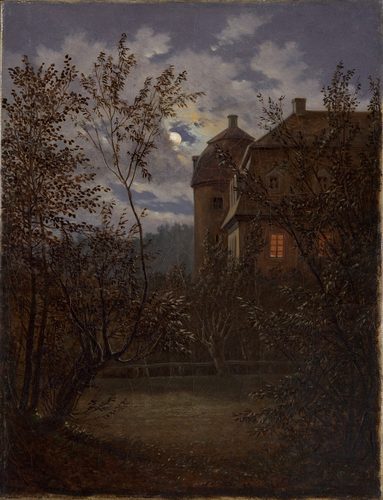
Neoclassicism prizes reason, order, and the ideals of Greece and Rome; Romanticism prizes emotion, imagination, and the individual's inner experience. Neoclassicism emerged in Rome and Paris around 1760, fueled by excavations at Pompeii and Herculaneum and a reaction against the frivolity of Rococo — artists like Jacques-Louis David turned to clean lines, moral clarity, and stories of civic virtue drawn from antiquity. Romanticism arose around 1800 across Europe partly as a revolt against Neoclassicism's cool rationalism, prizing the sublime, the exotic, the medieval, and raw feeling over rule-bound composition. The two overlapped for decades — David's own pupil Antoine-Jean Gros pushed toward Romantic drama within a Neoclassical structure — and some artists moved between both languages across a single career. Where Neoclassicism looks back to marble and measured symmetry, Romanticism looks inward and outward to storms, ruins, and the untamed.
Neoclassicism vs. Romanticism at a glance
| Neoclassicism | Romanticism | |
|---|---|---|
| Years | 1760–1830 | 1800–1850 |
| Origin | Rome & Paris | Europe |
| Mood | Calm, restrained, morally uplifting, dignified. | Turbulent, emotional, dramatic, driven by passion and awe. |
| Subject matter | Classical mythology, Roman history, civic virtue, heroic self-sacrifice. | Nature's power, the exotic, medieval legend, personal suffering and imagination. |
| Color & light | Even, controlled lighting; local color kept clear and legible. | Dramatic contrasts, moody atmosphere, color used to stir feeling. |
| Composition | Balanced, frieze-like arrangements, figures posed like sculpture. | Dynamic diagonals, swirling motion, asymmetry that pulls the eye. |
| Line & brushwork | Crisp, precise contours; brushwork hidden beneath a smooth finish. | Looser, expressive brushwork; visible texture and energy over polish. |
| Attitude toward antiquity | Antiquity treated as a model to imitate exactly. | Antiquity treated as one inspiration among many, freely reimagined. |
How to tell them apart
If the figures look like they've stepped off a Roman frieze — smooth skin, togas, poses copied from ancient sculpture, and a story about duty or sacrifice — you're looking at Neoclassicism. Think David's Oath of the Horatii: crisp edges, even light, nothing left to chance. If instead the canvas shows a shipwreck, a stormy cliff, a lone figure staring into fog, or a scene from medieval legend rendered with loose, urgent brushwork, that's Romanticism. Watch the emotional temperature: Neoclassicism stays composed even in tragedy, while Romanticism wants you to feel the wind and the danger. Dignified stillness signals one; turbulent skies and visible brushstrokes signal the other.
What they share
Both movements reacted against what came before — Neoclassicism against Rococo excess, Romanticism against Neoclassical restraint — and both treated painting as a vehicle for serious ideas rather than decoration. Many artists trained in Neoclassical studios before pushing toward Romantic subjects, and the two shared an interest in history, heroism, and grand narrative painting, even while disagreeing sharply about how much feeling belonged on the canvas.
Try both
Settle it yourself — generate the same subject in each style and compare the results.
Frequently asked questions
Is Romanticism the opposite of Neoclassicism?
Largely, yes — Romanticism developed partly as a reaction against Neoclassicism's emphasis on reason and classical form, favoring emotion, imagination, and nature instead. Some artists blended both approaches, but the movements represent opposing artistic instincts.
Which came first, Neoclassicism or Romanticism?
Neoclassicism, emerging around 1760 in Rome and Paris. Romanticism followed around 1800, overlapping with late Neoclassicism for decades before eclipsing it as the dominant sensibility in early 19th-century painting.
Did any artists work in both styles?
Yes. Painters trained in Neoclassical technique, like Antoine-Jean Gros, incorporated Romantic drama and emotion into otherwise structured compositions, showing how fluid the boundary between the two could be.