 Art
Art
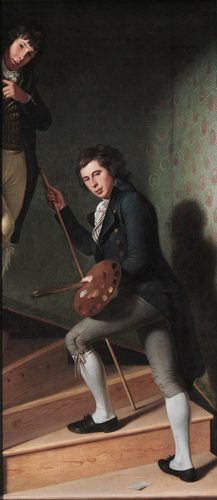
Romanticism chases emotion, imagination, and dramatic subjects like storms and legends; Realism insists on depicting ordinary, contemporary life exactly as it looks, without heroic embellishment. Romanticism swept across Europe from around 1800, prizing the sublime and the individual's inner world. Realism emerged in France around 1840 as a direct rebuttal — Gustave Courbet and his peers rejected Romantic drama and Neoclassical idealism alike, turning instead to peasants, laborers, and unglamorous daily scenes rendered with blunt honesty. Where Romantic painters staged shipwrecks and medieval battles to stir feeling, Realists painted stonebreakers and burial gatherings to record fact. The shift also tracked social change: industrialization, photography's rise, and growing interest in ordinary people's lives pushed art away from myth and toward observation. Realism kept Romanticism's seriousness of purpose but stripped away its taste for the extraordinary, insisting that truth itself was worth painting.
Romanticism vs. Realism at a glance
| Romanticism | Realism | |
|---|---|---|
| Years | 1800–1850 | 1840–1880 |
| Origin | Europe | France |
| Mood | Intense, dramatic, emotionally charged, often melancholic or awe-struck. | Sober, matter-of-fact, unsentimental, deliberately unglamorous. |
| Subject matter | Storms, shipwrecks, exotic locales, medieval and literary legend. | Peasants, laborers, city streets, everyday domestic and rural life. |
| Idealization | Figures often heroic, beautiful, or larger than life. | Figures shown plainly, flaws and fatigue included without flattery. |
| Setting | Distant, imagined, or historical places favored over the present. | Contemporary, local, recognizable settings favored over fantasy. |
| Color & light | Moody, atmospheric, often theatrical lighting for drama. | Flat, natural light; color kept muted and true to life. |
| Purpose | To move the viewer emotionally, to astonish or unsettle. | To document social reality, sometimes with quiet political intent. |
How to tell them apart
Shipwrecks, crumbling castles, wild animals, or a lone figure staring into a storm — that's Romanticism, painted to make you feel something big. Stonebreakers, wheat gleaners, a village funeral, or laborers caught mid-task — that's Realism, painted to show you something true. Romanticism often reaches for the exotic or historical; Realism stays stubbornly local and present-tense. If the brushwork feels theatrical and the subject is extraordinary, think Romanticism. If the scene feels ordinary almost to the point of being unremarkable, and nobody looks heroic, you're looking at Realism.
What they share
Both movements rejected academic idealism and insisted painting should engage with real human experience rather than polished classical formulas. Realism inherited Romanticism's seriousness and its interest in ordinary suffering, simply redirecting that intensity from imagined drama toward observed fact. Some Realist painters began under Romantic influence before stripping away its theatricality in favor of plain, direct observation.
Try both
Settle it yourself — generate the same subject in each style and compare the results.
Frequently asked questions
Is Realism a reaction against Romanticism?
Yes. Realism, led by Gustave Courbet in 1840s France, deliberately rejected Romanticism's drama and idealization in favor of depicting ordinary contemporary life exactly as observed, without heroic or emotional exaggeration.
Which came first, Romanticism or Realism?
Romanticism, emerging around 1800 across Europe. Realism followed roughly four decades later, taking shape in France around 1840 partly in direct opposition to Romantic idealism and drama.
Do Romanticism and Realism ever overlap?
Some artists moved from one to the other over their careers, and both share an interest in emotional truth. But their core aims diverge: Romanticism idealizes and dramatizes, while Realism deliberately avoids both.