 Art
Art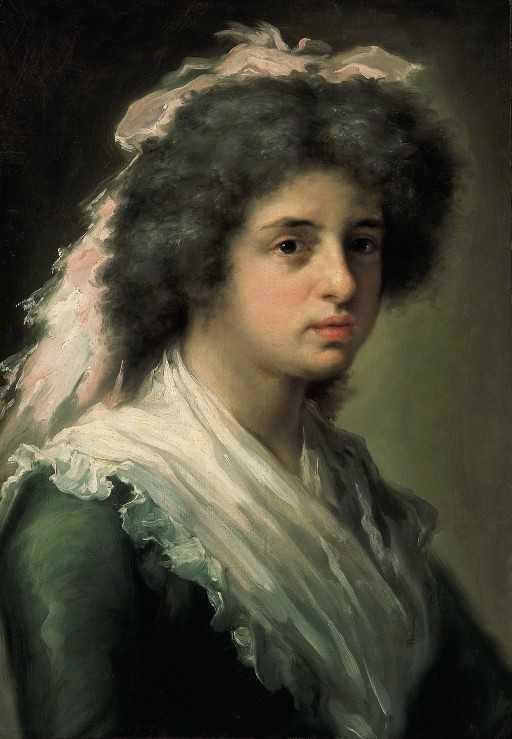
Spanish: Retrato de Feliciana Bayeu, hija del pintor. Image: Francisco Bayeu · Public domain · Wikimedia Commons, accessed 2026-08-04
Neoclassicism arose in the second half of the eighteenth century as a deliberate rejection of Rococo's pastel frivolity and, more broadly, as the visual expression of Enlightenment rationalism. Where Rococo prized ornament, curve, and private pleasure, Neoclassical artists pursued clarity, order, and moral instruction, looking directly to ancient Greek and Roman art and architecture as models of ideal form and civic virtue.
The style's rise was fueled by real archaeology: the mid-eighteenth-century excavations of Herculaneum and Pompeii, alongside the influential writings of the German scholar Johann Joachim Winckelmann, gave artists and patrons unprecedented direct access to and enthusiasm for the ancient world. Grand Tour travel through Italy and Greece further spread classical taste through Europe's educated elite, and academies increasingly held antique sculpture up as the standard against which contemporary art should be measured.
Visually, Neoclassical painting favors crisp, precise contour lines over painterly texture, cool and restrained color, and clear, legible composition often arranged like a shallow relief or theatrical frieze. Figures draw on classical statuary for their poses and drapery, and settings frequently reference Greco-Roman architecture and dress. Subjects turn to Greek and Roman history and mythology, especially episodes illustrating self-sacrifice, civic duty, and stoic moral resolve, positioned as models for contemporary virtue.
Jacques-Louis David became the style's defining painter, using austere classical form first to critique the excesses of the French monarchy and then to serve the French Revolution and, later, Napoleon's empire directly. Jean-Auguste-Dominique Ingres extended Neoclassicism's linear precision into the nineteenth century, applying it to more sensuous, exoticized subjects even as Romanticism rose around him.
Neoclassicism matters because it fused aesthetics explicitly with politics and ethics: its return to antiquity was never merely decorative but argued that ancient civic virtue offered a template for reforming, and eventually revolutionizing, contemporary society. It shaped not only painting and sculpture but architecture, furniture, and fashion across Europe and the young United States, whose founders consciously modeled republican institutions and their visual trappings on the same classical ideals.
What defines Neoclassicism
Crisp linear contour
Neoclassical painters prized precise, controlled outlines over loose brushwork, giving figures a sculptural, almost engraved clarity. This linearity was seen as a mark of intellectual discipline, distinguishing Neoclassicism from the painterly looseness of Rococo and Baroque.
Cool, restrained color
Palettes favor clear, controlled hues, often with a marble-like coolness in flesh tones, over the warm saturation of Baroque or the pastel sweetness of Rococo. Color serves form and legibility rather than sensory indulgence.
Classical subject matter
Scenes are drawn from Greek and Roman history, mythology, and literature, frequently chosen to illustrate self-sacrifice, patriotism, or moral resolve. Contemporary events were sometimes staged in classicizing terms to lend them historical weight.
Frieze-like, shallow composition
Figures are often arranged parallel to the picture plane in a shallow pictorial space, echoing ancient relief sculpture, with clear gestures and legible groupings rather than deep Baroque diagonals. The effect reads almost like a theatrical tableau.
Statuesque figures and classical dress
Poses derive from studied antique sculpture, with figures often draped in togas, chitons, or armor rather than contemporary clothing. Anatomy is idealized toward a Greco-Roman standard of proportion and calm dignity.
Moral and didactic purpose
Neoclassical works were frequently intended to teach a civic or ethical lesson, aligning aesthetic ideals with Enlightenment beliefs about reason, virtue, and the improvement of society through exemplary art.
History
Neoclassicism took shape from the 1750s onward as a reaction against Rococo, driven by a convergence of archaeology, philosophy, and politics. The systematic excavation of Herculaneum from 1738 and Pompeii from 1748 exposed Europe to an unprecedented volume of authentic ancient art and daily life, while Johann Joachim Winckelmann's writings, particularly his 1764 History of the Art of Antiquity, argued that Greek art represented an unmatched ideal of noble simplicity and calm grandeur that modern artists should emulate directly rather than through Renaissance or Baroque intermediaries.
Rome became the movement's international training ground, drawing artists, architects, and Grand Tour travelers from across Europe to study antique sculpture and ruins firsthand. The French Academy in Rome played a central role in training painters like Jacques-Louis David, whose 1784 Oath of the Horatii crystallized the new style's austere clarity and civic seriousness, and quickly became associated with revolutionary politics even before the French Revolution began in 1789.
David went on to serve the Revolution directly, both as a political figure and as its de facto state painter, before becoming Napoleon's official painter and adapting Neoclassical grandeur to imperial propaganda. His students, including Jean-Auguste-Dominique Ingres, carried the style's linear discipline into the nineteenth century, even as Ingres's more sensuous, exoticizing subjects pulled against strict classical austerity.
Neoclassicism also shaped architecture, sculpture, furniture, and fashion across Europe and reached the young United States, where it informed the classical civic architecture of the new republic. By the 1820s, the rising Romantic movement, prizing emotion and individual imagination over classical restraint, had displaced Neoclassicism as the dominant avant-garde style, though academic institutions continued teaching its principles well into the nineteenth century.
Key works
| Work | Artist | Year | Why it matters |
|---|---|---|---|
| Oath of the Horatii | Jacques-Louis David | 1784 | Its crisp linearity and civic-virtue theme became a manifesto for Neoclassical painting. |
| The Death of Marat | Jacques-Louis David | 1793 | A stark, austere composition transforming a political assassination into secular martyrdom. |
| La Grande Odalisque | Jean-Auguste-Dominique Ingres | 1814 | An idealized, elongated nude that demonstrates Neoclassicism's cool line and exoticized subject matter. |
| Psyche Revived by Cupid's Kiss | Antonio Canova | 1793 | A marble sculpture combining Neoclassical restraint with tender emotional narrative. |
| Napoleon Crossing the Alps | Jacques-Louis David | 1801 | A propagandistic equestrian portrait fusing Neoclassical idealism with contemporary politics. |
How to make art in this style
Working in a Neoclassical Style
Palette: Use a controlled, cool palette — marble whites, muted blues, restrained reds and ochres — avoiding the warm saturation of Baroque or the pastel sweetness of Rococo. Flesh tones should read as calm and even rather than dramatically lit.
Composition: Arrange figures in a shallow, frieze-like space, parallel to the picture plane, echoing ancient relief sculpture. Favor clear, legible groupings with strong central gestures over deep diagonal recession or crowded, overlapping figures.
Drawing and technique: Prioritize precise, confident contour lines over visible, painterly brushwork; the discipline of drawing should be evident even in the finished painting. Study classical sculpture directly, if possible, to internalize idealized proportion, calm gesture, and drapery that clings and falls with geometric logic.
Subjects: Choose subjects with moral or civic weight — an act of sacrifice, an oath, a moment of stoic resolve — drawn from classical history or mythology, or from contemporary events staged with comparable gravity. Avoid frivolous or purely decorative themes; Neoclassicism's power comes from treating the image as an ethical statement.
Details: Dress figures in classical drapery, armor, or simplified contemporary clothing rendered with sculptural clarity. Keep backgrounds architecturally spare — columns, plain walls, minimal props — so nothing distracts from the central figures and their gesture.
Legacy
Neoclassicism's insistence that art could embody civic virtue and moral seriousness shaped academic art education throughout the nineteenth century, even as successive movements — Romanticism, Realism, Impressionism — defined themselves partly in opposition to its restraint. Ingres's linear precision remained a reference point for later artists interested in pure contour, admired for its draftsmanship independent of subject matter.
Beyond painting, Neoclassicism's architectural and design legacy is enormous and still highly visible: government buildings, museums, banks, and university campuses across Europe and the Americas continue to use its vocabulary of columns, pediments, and symmetrical façades to signal authority, permanence, and rational order. The founding generation of the United States drew explicitly on Neoclassical and Roman republican imagery for its architecture, seals, and civic iconography, a visual language that still frames American institutional identity.
The style's core idea — that returning to a disciplined, ordered ideal can serve as ethical and political argument, not mere decoration — recurs whenever later movements invoke classicism, from twentieth-century state art to contemporary architecture's periodic classical revivals.
Frequently asked questions
What is Neoclassicism in art?
Neoclassicism is a late eighteenth and early nineteenth-century style that revived the forms and subjects of ancient Greece and Rome, using clear lines, restrained color, and classical themes to express Enlightenment ideals of reason and civic virtue.
What's the difference between Neoclassicism and Romanticism?
Neoclassicism emphasizes reason, restraint, and clear classical form, while Romanticism, which followed it, prizes emotion, imagination, and dramatic individual experience. The two movements often overlapped chronologically but represented opposing artistic values.
Who is the most famous Neoclassical painter?
Jacques-Louis David is the movement's defining figure, known for works like Oath of the Horatii and his role as official painter first to the French Revolution and then to Napoleon.
What inspired Neoclassicism?
The style was inspired by the archaeological excavations at Herculaneum and Pompeii, the writings of scholar Johann Joachim Winckelmann on ancient Greek art, and Enlightenment philosophy's emphasis on reason and civic morality.
When did Neoclassicism begin and end?
Neoclassicism emerged around the 1760s and remained a dominant style into the 1820s and 1830s, gradually giving way to Romanticism, though its influence on academic art and architecture persisted much longer.