 Art
Art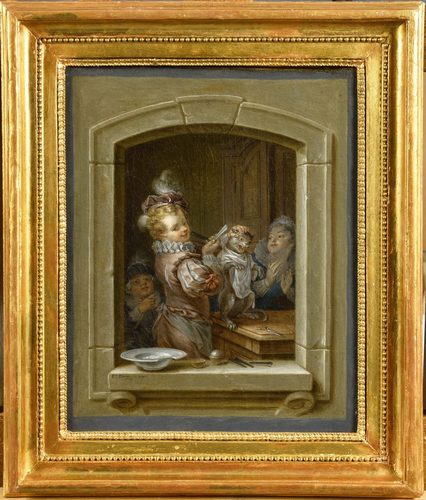
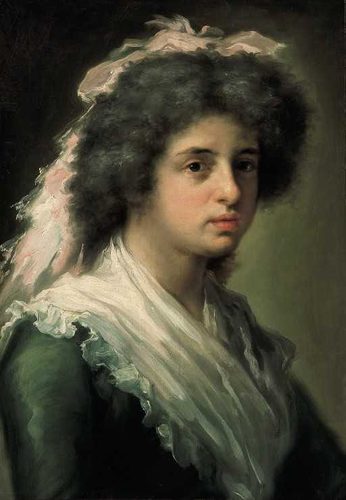
Rococo (Paris, about 1720–1780) is playful, ornamental, and aristocratic; Neoclassicism (Rome and Paris, about 1760–1830) is severe, moralizing, and consciously anti-Rococo, and the two overlapped for two decades as a direct backlash took shape. Rococo's pastel courtship scenes and gilded curves came to be seen, especially after excavations at Herculaneum and Pompeii revived interest in ancient Rome, as frivolous and morally empty — decoration for a decadent aristocracy. Neoclassical artists like Jacques-Louis David responded with hard-edged drawing, sober color, and subjects drawn from Roman history and civic virtue: sacrifice, duty, stoic resolve. Rococo favored curves, asymmetry, and intimate scale; Neoclassicism favored straight lines, symmetry, and public grandeur modeled on antique sculpture and architecture. The shift tracked politics as much as taste — Neoclassicism's austerity became the visual language of Enlightenment reform and, soon after, the French Revolution.
Rococo vs. Neoclassicism at a glance
| Rococo | Neoclassicism | |
|---|---|---|
| Years | 1720–1780 | 1760–1830 |
| Origin | Paris, France | Rome & Paris |
| Mood | Light, flirtatious, and pleasure-seeking, made to charm rather than instruct. | Sober, moralizing, and severe, made to instruct in virtue and duty. |
| Color & light | Soft pastels — pink, blue, cream — with gentle, diffused light. | Cooler, more restrained color with clear, even, sculptural light. |
| Subject matter | Courtship, mythology as romance, and aristocratic leisure. | Roman history, civic virtue, sacrifice, and stoic moral example. |
| Composition | Curving, asymmetrical, and ornamental (rocaille), built for delicate charm. | Symmetrical, frieze-like, and geometric, built for clarity and gravity. |
| Technique | Loose, feathery brushwork blending forms softly together. | Crisp, precise drawing (disegno) with smooth, nearly invisible brushwork. |
| Attitude | Art as private pleasure for a wealthy, leisured aristocracy. | Art as public moral lesson for citizens of a rational, virtuous state. |
How to tell them apart
If a scene shows flirtatious figures in a garden, curling gilded frames, and soft pastel color, you're looking at Rococo — Fragonard's swings, Boucher's mythological romances. If the scene shows toga-clad Romans making a solemn oath, arranged like a sculpted frieze in crisp, cool light, that's Neoclassicism — David's Oath of the Horatii. Rococo rooms feel like a private party thrown for a handful of aristocrats; Neoclassical paintings feel like a public lesson in civic duty, staged with the flat, sober gravity of ancient sculpture and meant to be read as moral instruction.
What they share
Both movements draw on classical mythology and share French roots, and many Neoclassical artists trained within the same Parisian academic system that had produced Rococo painters before them. Both also relied on elite patronage — aristocratic collectors for Rococo, and increasingly the state and Enlightenment reformers for Neoclassicism — even though their moral tone points in opposite directions.
Try both
Settle it yourself — generate the same subject in each style and compare the results.
Frequently asked questions
Is Neoclassicism a reaction against Rococo?
Yes, directly. Neoclassical artists and critics saw Rococo's pastel courtship scenes as frivolous and morally empty, and responded with sober subjects from Roman history, hard-edged drawing, and a deliberate rejection of Rococo's decorative excess.
Which came first, Rococo or Neoclassicism?
Rococo, by about forty years. It began around 1720 in Paris; Neoclassicism emerged around 1760, overlapping briefly before becoming the dominant style through the French Revolution and beyond.
What triggered the shift from Rococo to Neoclassicism?
Archaeological excavations at Herculaneum and Pompeii renewed fascination with ancient Rome, while Enlightenment thinkers increasingly criticized Rococo as decadent. Together they pushed taste toward Neoclassicism's severe, morally serious classical revival.