 Art
Art
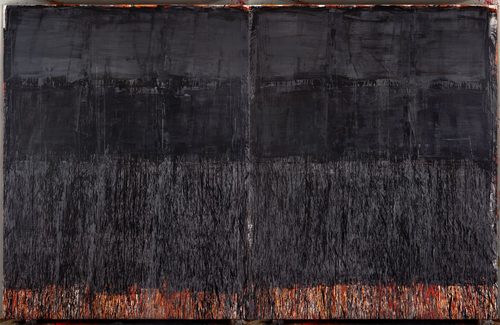
Neo-Expressionism was a late-1970s revival of Expressionism's raw, emotionally charged figurative painting, returning to gestural, distorted imagery after decades of cooler conceptual and minimal art. Expressionism began in Germany and Austria around 1905, when groups like Die Brucke and, later, Der Blaue Reiter rejected polished naturalism in favor of jagged forms, unnatural color, and visible brushwork meant to convey inner emotional states rather than outward appearance, often as a response to anxiety about industrial, urban modern life. By the 1930s, the movement had faded, partly suppressed by the Nazi regime, which condemned it as degenerate art. Neo-Expressionism emerged separately, starting around 1978 in Germany, Italy, and the United States, as painters including Georg Baselitz, Anselm Kiefer, and Julian Schnabel reacted against the dominant cool detachment of Minimalism and Conceptual Art by returning to large-scale, emotionally raw, figurative painting, deliberately echoing the earlier movement's rough energy.
Expressionism vs. Neo-Expressionism at a glance
| Expressionism | Neo-Expressionism | |
|---|---|---|
| Years | 1905–1930 | 1978–1990 |
| Origin | Germany & Austria | Germany, Italy & United States |
| Era & context | Rose amid early-1900s industrial anxiety in Germany and Austria, largely suppressed by the 1930s. | Rose in the late 1970s as a reaction against cool Minimalism and Conceptual Art. |
| Scale | Paintings and prints often modest in size, rooted in intimate studio and print traditions. | Often large, aggressive canvases meant to command gallery walls and demand attention. |
| Historical weight | Reflected pre-war anxiety and the shock of rapid industrial, urban change. | Often grappled directly with postwar German history, memory, and national identity. |
| Key figures | Ernst Ludwig Kirchner and Wassily Kandinsky led its two major groups. | Georg Baselitz, Anselm Kiefer, and Julian Schnabel led its major national strands. |
| Market context | Circulated through small dealer galleries, with no booming market behind it. | Emerged alongside a booming 1980s art market eager for bold, sellable painting. |
| Attitude | Earnestly emotional, treating distortion as sincere expression of inner turmoil. | Emotionally raw but often self-aware, referencing art history and past movements knowingly. |
How to tell them apart
If the painting is smaller in scale, uses jagged, angular distortion and unnatural color, and feels tied to early-1900s anxieties about the modern city, that's Expressionism, Kirchner's street scenes are a good reference point. If instead you see a large, aggressive canvas with thick, raw brushwork, sometimes an upside-down figure or scorched, layered surface referencing German history, that's Neo-Expressionism, Baselitz and Kiefer are good reference points. Neo-Expressionist works often feel bigger, more market-savvy, and more historically self-conscious, sometimes quoting older Expressionist imagery, while original Expressionism feels rawer and more directly, urgently emotional.
What they share
Both movements share a core commitment: distorted, gestural, emotionally intense figurative painting that rejects cool detachment and prizes raw feeling over polished technique. Neo-Expressionism directly and knowingly drew on the earlier movement's visual vocabulary, jagged forms, unnatural color, visible brushwork, as a deliberate revival. Both also emerged as reactions against a preceding dominant style, industrial-age academic naturalism in one case, Minimalism and Conceptualism in the other.
Try both
Settle it yourself — generate the same subject in each style and compare the results.
Frequently asked questions
Is Neo-Expressionism the same as Expressionism?
No, though the name is deliberate. Neo-Expressionism, which began around 1978, consciously revived Expressionism's raw, distorted, emotionally charged figurative style after decades of cooler abstract and conceptual art, but it responded to different historical circumstances more than seven decades later.
Which came first, Expressionism or Neo-Expressionism?
Expressionism came first, emerging in Germany and Austria around 1905. Neo-Expressionism followed more than seventy years later, starting around 1978.
Why did Neo-Expressionism emerge when it did?
Painters in the late 1970s reacted against the cool detachment of Minimalism and Conceptual Art, returning to large-scale, emotionally raw figurative painting and deliberately echoing earlier Expressionist energy and technique.