 Art
Art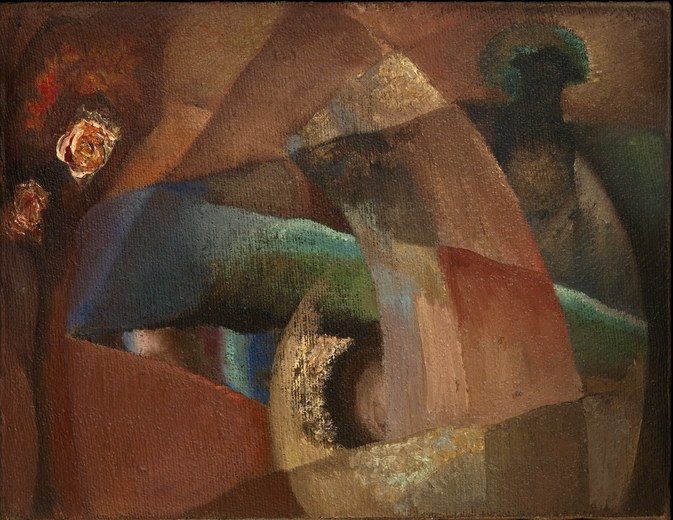
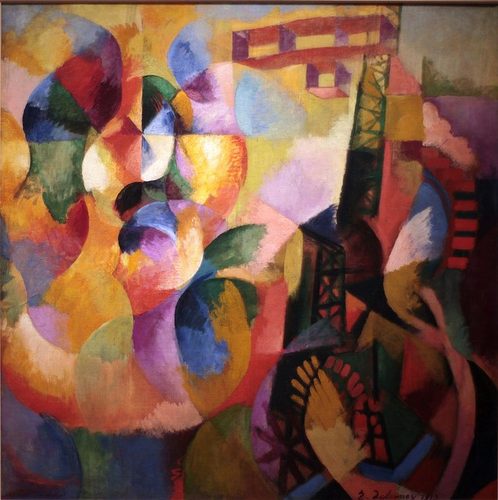
1. ЕКДИШМАН. холст, масло. Image: Максим Рыбников · CC BY-SA 3.0 · Wikimedia Commons, accessed 2026-08-04
Expressionism was a broad, emotionally charged movement that dominated German and Austrian art from roughly 1905 to 1930, built on the conviction that painting should express subjective inner experience rather than record objective outward appearance. Where Impressionism had tried to capture the fleeting effects of light on the eye, Expressionist painters distorted form, exaggerated color, and compressed space to externalize feeling — anxiety, ecstasy, alienation, spiritual longing — turning the canvas into something closer to a psychological record than a visual description.
The movement drew directly on Vincent van Gogh's emotionally loaded brushwork and Edvard Munch's psychologically charged imagery — Munch's 1893 painting "The Scream" is widely treated as the movement's foundational proto-Expressionist statement — as well as on the liberated, non-naturalistic color that French Fauvism had just demonstrated. Two influential groups anchored the German scene: Die Brücke, founded in Dresden in 1905, which favored raw, angular figuration and a revived interest in woodcut printmaking, and Der Blaue Reiter, founded in Munich in 1911 around Wassily Kandinsky and Franz Marc, which pushed further toward spiritual abstraction. In Vienna, Egon Schiele and Oskar Kokoschka developed a related but distinct, more explicitly psychological and sexually frank version of Expressionist figuration.
Visually, Expressionist work favors jagged, urgent linework; intense, often symbolically charged color unmoored from natural appearance; angular, exaggerated figures; and compressed, unstable pictorial space. The First World War deepened the movement's darker register considerably — several younger members, including Franz Marc and August Macke, were killed in combat, and survivors' postwar work grew harsher and more disillusioned, feeding into the related but more socially critical Neue Sachlichkeit (New Objectivity) movement of the 1920s.
Expressionism matters because it insisted that art's job was to render inner truth rather than outer likeness, a shift that reshaped painting, printmaking, theater, and film across the twentieth century. The movement's history also carries a dark historical weight: the Nazi regime branded Expressionist and other modern art "degenerate" in the 1930s, confiscating thousands of works and driving many of its artists into exile, silence, or worse, effectively ending the movement's active life in Germany.
What defines Expressionism
Distorted, Exaggerated Form
Bodies, faces, and landscapes are stretched, angled, or compressed away from naturalistic proportion in order to communicate emotional intensity rather than physical accuracy.
Intense, Symbolic Color
Color is chosen for its psychological charge rather than its descriptive accuracy — a sky might turn blood-red, a face sickly green — functioning as a direct signal of mood.
Jagged, Urgent Linework
Angular, restless contour lines and agitated brushwork give Expressionist figures and scenes a sense of nervous energy and instability.
Revival of Woodcut Printmaking
Many Expressionist artists, especially in the Die Brücke circle, returned to the stark black-and-white contrast of woodcut, prizing its raw, hand-carved directness over refined printmaking technique.
Themes of Anxiety and Alienation
Urban unease, isolation, sexuality, and spiritual crisis recur as subject matter, reflecting the psychological pressures of rapid modernization and, later, wartime trauma.
Subjective, Compressed Space
Perspective and spatial depth are frequently flattened, tilted, or compressed, so that the picture's space feels psychologically claustrophobic rather than naturalistically coherent.
History
Expressionism's roots reach back to Edvard Munch's psychologically intense paintings of the 1890s, particularly "The Scream" (1893), and to Vincent van Gogh's emotionally charged brushwork, both of which German and Austrian artists studied closely around the turn of the century. The movement gained organized form in 1905, when four architecture students in Dresden — Ernst Ludwig Kirchner, Erich Heckel, Karl Schmidt-Rottluff, and Fritz Bleyl — founded the group Die Brücke, seeking a raw, communal path toward a new German art. Emil Nolde joined the group the following year, bringing his own intense, visionary color sense.
A second major current emerged in Munich in 1911 with Der Blaue Reiter, formed around Wassily Kandinsky and Franz Marc, which shared Expressionism's interest in emotional and spiritual content but pushed it further toward abstraction and symbolic color theory. In Vienna, Egon Schiele and Oskar Kokoschka developed a parallel, more explicitly psychological strand of Expressionist figuration, emerging from the Klimt circle's Kunstschau exhibitions and pushing past the ornamental idiom of the Secession generation.
The First World War struck the movement hard: Franz Marc and August Macke were both killed in action, and surviving artists, including Kirchner, emerged from the war years with darker, more fractured work, exemplified by Kirchner's own anguished self-portraits as a soldier. In the war's aftermath, a related but harder-edged and more socially critical movement, Neue Sachlichkeit (New Objectivity), emerged among artists like Otto Dix and George Grosz, often read as both an extension of and a reaction against Expressionist subjectivity.
The movement's active life in Germany ended abruptly with the rise of the Nazi regime, which in 1933 began branding modern art, including Expressionism, as "degenerate," culminating in the notorious 1937 Entartete Kunst exhibition and the mass confiscation of thousands of works. Many Expressionist artists were forced into exile, forbidden to work, or driven to despair — Kirchner took his own life in 1938 — bringing the movement's original German chapter to a close.
Key works
| Work | Artist | Year | Why it matters |
|---|---|---|---|
| The Scream | Edvard Munch | 1893 | Painted over a decade before the movement's formal emergence, it is widely treated as Expressionism's founding, most recognizable image of psychological anguish. |
| Street, Dresden | Ernst Ludwig Kirchner | 1908 | A jagged, acid-colored street scene that exemplifies Die Brücke's anxious vision of modern urban crowds. |
| Self-Portrait as a Soldier | Ernst Ludwig Kirchner | 1915 | A harrowing wartime self-portrait showing the psychological toll of World War I on the Expressionist generation. |
| Self-Portrait on Sixth Wedding Anniversary | Paula Modersohn-Becker | 1906 | A pioneering nude self-portrait notable for its frank, unidealized directness ahead of the wider Expressionist movement. |
| Self-Portrait with Physalis | Egon Schiele | 1912 | A characteristic example of Schiele's raw, angular self-scrutiny within Vienna's Expressionist current. |
How to make art in this style
Creating Expressionist-Style Work Today
Palette: choose color for psychological effect rather than accuracy — a face can be green, a sky can be blood-red, a shadow can be violet — and don't hesitate to push saturation and contrast well past naturalism. Sickly greens and yellows, deep blood reds, and stormy blues and blacks are typical of the movement's more anxious register.
Composition: exaggerate and distort proportion and perspective to heighten emotional tension — elongate limbs, tilt a floor, compress a room — and let the picture's space feel unstable or claustrophobic rather than coherently three-dimensional. Crowded, cropped compositions work well for urban or crowd subjects; isolated, off-center figures work well for portraits of psychological unease.
Technique: use jagged, urgent linework and visible, unblended brushstrokes rather than smooth finish. Consider working in woodcut or a woodcut-inspired graphic technique — bold black shapes, visible carved marks, stark contrast — since it was central to how the original movement achieved its raw directness; a similar effect can be approached in other media by favoring high-contrast value and rough, decisive edges over refinement.
Subjects: portraiture and self-portraiture that probes psychological state, urban crowd scenes suggesting alienation or overstimulation, and figures set against unstable or symbolic backgrounds are all core Expressionist territory. Throughout, the working question should be what a scene feels like from the inside, not what it looks like from the outside — every formal choice, from color to line to composition, should serve that inner truth.
Legacy
Expressionism's influence radiates through much of twentieth-century art and culture. Its name and emotional urgency fed directly into Abstract Expressionism in mid-century America, even as that movement's abstraction differed sharply from German Expressionism's figuration. West German painters of the 1980s, notably Georg Baselitz and Anselm Kiefer, revived and reworked Expressionist intensity as Neo-Expressionism, deliberately confronting Germany's difficult twentieth-century history through a related raw, gestural language. German Expressionist cinema of the 1920s, with its distorted sets and stark shadow, shaped the visual grammar of horror and film noir for decades afterward.
The movement's revival of woodcut printmaking left a lasting mark on graphic design and illustration, wherever high-contrast, hand-carved imagery is used for emotional or political impact. More broadly, Expressionism's core premise — that distortion and exaggeration can communicate psychological truth more powerfully than accurate representation — remains a foundational idea for any artist working in a raw, emotionally direct visual language, from underground comics to contemporary painting. The Nazi campaign against the movement, rather than erasing its reputation, has instead made Expressionism's history a widely taught case study in art's vulnerability to political suppression, and its rediscovered works now rank among the most valued in modern museum collections.
Frequently asked questions
What is Expressionism?
Expressionism is an early-twentieth-century movement, centered in Germany and Austria, that distorted color, form, and space to convey subjective inner feeling — anxiety, alienation, ecstasy — rather than objective outward appearance.
What is the difference between Expressionism and Fauvism?
Fauvism, centered in France, used intense color mainly toward decorative and joyful ends, while German Expressionism, which it directly influenced, pushed similarly bold color and distorted form toward darker, more psychologically anxious territory.
What is the difference between Die Brücke and Der Blaue Reiter?
Die Brücke, founded in Dresden in 1905, favored raw, angular figuration and woodcut printmaking, while Der Blaue Reiter, founded in Munich in 1911, leaned further toward spiritual, symbolic, and near-abstract imagery.
Is Edvard Munch an Expressionist?
Munch painted before the Expressionist movement formally existed, but his psychologically intense work, especially 'The Scream,' is considered a direct precursor and foundational influence on German and Austrian Expressionism.
Why was Expressionism suppressed in Nazi Germany?
The Nazi regime branded Expressionism and other modern art 'degenerate' in the 1930s, confiscating thousands of works and staging the 1937 Entartete Kunst exhibition to publicly discredit it, forcing many artists into exile or silence.

![Cats (rayist percep.[tion] in rose, black, and yellow) — Rayonism](https://media.artmovements.com/encyclopedia/rayonism/commons-0-thumb.jpg)