 Art
Art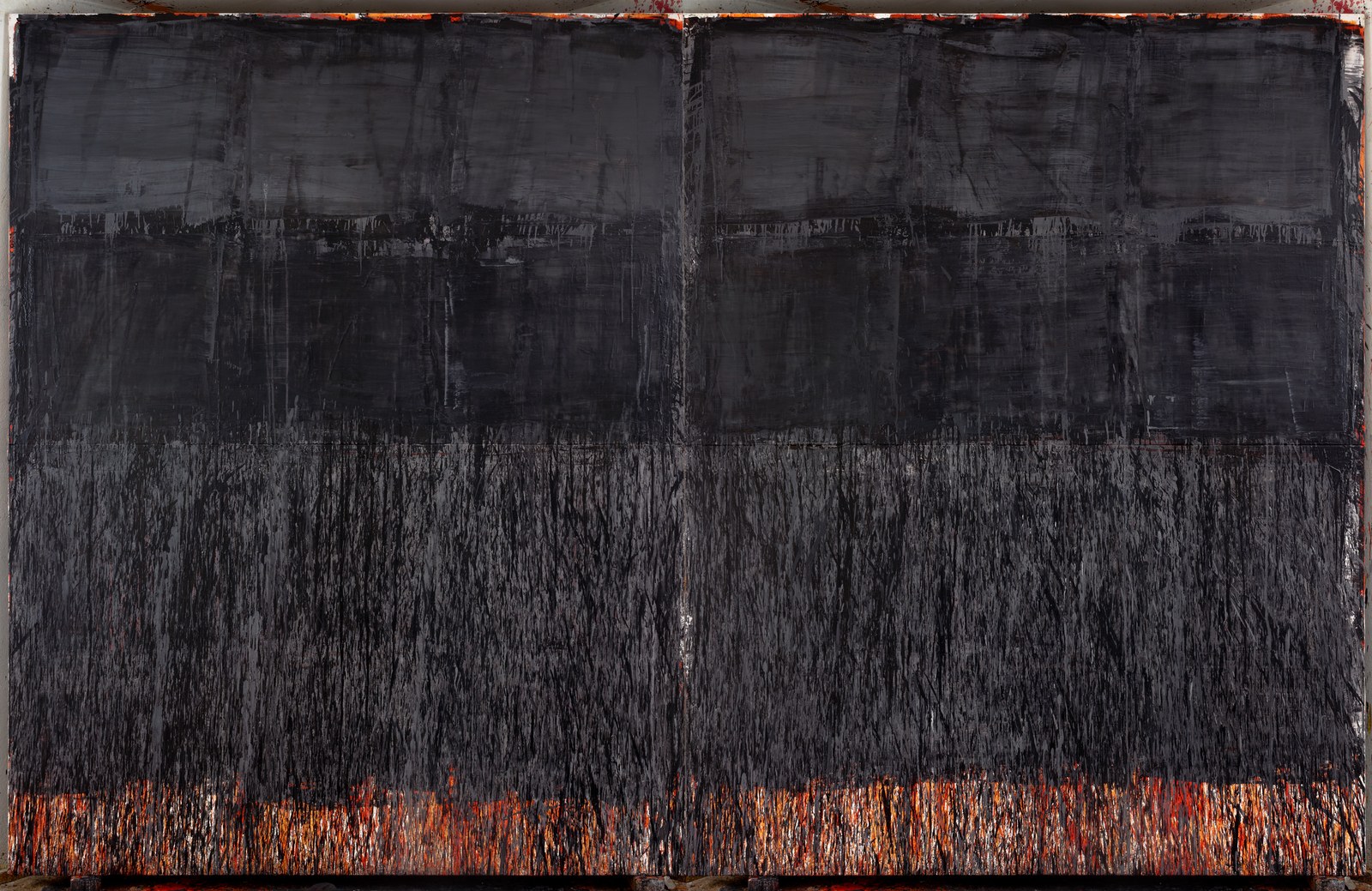
Back To Your River. Image: Henrikas Cerapas · CC BY-SA 4.0 · Wikimedia Commons, accessed 2026-08-04
Neo-Expressionism was an international revival of gestural, emotionally charged figurative painting that broke over the art world in the late 1970s and dominated much of the 1980s. It was less a single coherent style than a shared mood shared across several national scenes: German painters confronting the trauma and iconography of their country's twentieth-century history, Italian painters (grouped separately as Transavanguardia) reviving myth and personal symbolism, and American painters, working amid New York's downtown gallery and street-art scene, fusing raw figuration with graffiti, pop, and popular culture.
Visually, the work is large, loud, and deliberately rough. Paint is applied thickly and gesturally, often with visible drips, scraping, and unresolved passages left intentionally crude rather than polished. Color tends toward intense, sometimes discordant combinations. Subject matter draws on myth, national history, personal biography, and urban experience, frequently rendered with a directness bordering on aggression. Some artists incorporated unconventional materials directly into the paint surface — straw, lead, ash, sand — to give the work physical weight and historical charge beyond pigment alone.
The movement rebelled explicitly against the preceding decade's dominant tendencies: Minimalism's reductive geometry, Conceptual Art's dematerialized emphasis on idea over object, and the general critical suspicion that painting itself, and especially expressive, emotionally direct painting, had become exhausted or even reactionary. Neo-Expressionist painters reasserted painting's centrality, its capacity for raw personal and historical expression, and its market viability, at a moment when many critics had declared the medium finished.
Neo-Expressionism matters both artistically and historically. Artistically, it reopened figurative, expressive painting as a legitimate contemporary mode after two decades of its being sidelined, paving the way for the diverse figurative and narrative painting that followed. Historically, it also became a case study in the 1980s art market boom, as galleries and collectors drove prices and demand for large-scale, dramatically authored canvases to unprecedented heights, a dynamic that shaped how the movement was received, criticized, and eventually seen as symptomatic of the decade's commercial excess as much as of any purely aesthetic development.
What defines Neo-Expressionism
Large-scale figurative canvases
Works were typically monumental in scale, filling walls with the human figure or mythic imagery rendered at a size meant to physically overwhelm the viewer.
Rough, gestural brushwork and thick paint
Paint was applied with visible urgency, scraping, dripping, and impasto, leaving the process of making legible on the surface rather than smoothing it away.
Mythic, historical, and autobiographical subject matter
German painters often confronted national trauma and Wagnerian or folkloric imagery directly, while American painters drew on street life, pop culture, and personal biography.
Intense, often clashing color
Palettes favored bold, sometimes deliberately discordant color relationships over harmonious tonal control, reinforcing the work's emotional rawness.
Deliberate crudeness against polish
Awkward proportion, unfinished passages, and visible revision were embraced rather than corrected, signaling authenticity and immediacy over academic technique.
Unconventional materials embedded in the surface
Some artists worked straw, lead, ash, sand, or found objects directly into the paint layer, giving individual works physical weight tied to their historical or symbolic content.
History
Neo-Expressionism emerged around 1978-80 as a loosely simultaneous reaction across several countries against the preceding decade's dominant Minimalist and Conceptual tendencies. In West Germany, painters including Georg Baselitz, Anselm Kiefer, A.R. Penck, and Jörg Immendorff confronted German history and identity directly, including material still uncomfortable in postwar culture. In Italy, a parallel movement labeled Transavanguardia by critic Achille Bonito Oliva pursued related concerns with myth and personal symbolism. In the United States, artists including Jean-Michel Basquiat, Julian Schnabel, and David Salle developed related raw, expressive figuration shaped by New York's downtown scene, street art, and media culture.
Major international exhibitions gave the movement critical momentum and cohesion, notably "A New Spirit in Painting" in London (1981) and "Zeitgeist" in Berlin (1982), which presented German, Italian, and American painters together as evidence of a broad international return to expressive figuration. The movement coincided with, and was substantially fueled by, an art market boom through the early-to-mid 1980s, in which galleries and collectors paid escalating prices for large, dramatically authored canvases, making several Neo-Expressionist painters, especially Basquiat and Schnabel, into art-world celebrities.
By the late 1980s, critical opinion turned sharply against the movement, with many critics arguing its commercial success had outpaced its artistic substance and that its embrace of expressive gesture was itself a market-driven pose rather than authentic feeling. The stock market downturn of 1987 and the broader art-market correction that followed accelerated the movement's decline. By 1990, Neo-Expressionism's organized critical moment had effectively ended, though several of its central figures, particularly Baselitz and Kiefer, continued major careers well beyond the movement's original timeframe, and its influence persisted in subsequent figurative and neo-figurative painting.
Key works
| Work | Artist | Year | Why it matters |
|---|---|---|---|
| Untitled | Jean-Michel Basquiat | 1982 | A large skull-imagery painting exemplifying Basquiat's raw, graffiti-inflected figuration and among the most valuable Neo-Expressionist works ever sold. |
| Model for a Sculpture | Georg Baselitz | 1980 | A carved wooden figure with a raised arm, shown at the Venice Biennale and controversial for its perceived echo of a Nazi salute, exemplifying Neo-Expressionism's confrontation with difficult German history. |
| Margarethe | Anselm Kiefer | 1981 | A large canvas incorporating straw into thick paint, referencing Paul Celan's Holocaust poem "Todesfuge" and typifying Kiefer's use of unconventional materials to carry historical weight. |
| Nigredo | Anselm Kiefer | 1984 | A vast, ash-toned landscape painting drawing on alchemical symbolism, characteristic of Kiefer's mythic and historically charged scale. |
How to make art in this style
Working in a Neo-Expressionist sensibility today
Begin with the human figure or a mythic/historical motif at large, wall-filling scale, and let the process of painting remain visible rather than resolving it into a polished finish.
Palette. Favor intense, sometimes deliberately clashing color — deep reds, ochres, blacks, and mustard yellows work well together — over harmonious, controlled tonal relationships. Let color carry emotional charge rather than strict naturalism.
Brushwork and technique. Apply paint thickly and quickly, allowing drips, scraping, and visible revision to remain on the surface. Resist the impulse to smooth over awkward passages; the movement's authenticity comes partly from its refusal of academic polish. Working at speed, on canvas laid on the floor or leaned against a wall, helps produce the physical urgency characteristic of the style.
Materials. Consider incorporating unconventional materials directly into the paint surface — sand, ash, straw, or found objects — to give specific passages physical weight tied to the work's subject.
Composition. Push the figure or central motif to a scale that dominates the canvas, often cropped or distorted rather than naturalistically proportioned. Avoid tidy, balanced compositions in favor of raw, sometimes awkward figure placement that reads as urgent rather than composed.
Subjects. Personal history, national or collective trauma, myth, and urban life are traditional Neo-Expressionist territory. Approach subject matter directly and without ironic distance; the movement's power comes from apparent sincerity, however constructed.
Legacy
Neo-Expressionism reopened large-scale, emotionally direct figurative painting as viable contemporary practice after two decades in which Minimalism and Conceptual Art had pushed painting toward the margins of critical seriousness. Its insistence that painting could still carry personal and historical urgency influenced the diverse figurative and narrative painting movements that followed through the 1990s and 2000s.
The movement's most enduring individual legacies belong to a handful of its central figures: Basquiat's fusion of graffiti, text, and expressive figuration remains a touchstone across street art, contemporary painting, and popular visual culture, while Kiefer's monumental, materially dense confrontations with history continue to shape how large-scale painting can address collective trauma. Neo-Expressionism is also remembered as a defining case study of the 1980s art market boom, illustrating how commercial demand can accelerate a movement's visibility, and its later critical reassessment shaped ongoing debates about the relationship between market success and artistic substance. Its raw, unpolished, emotionally direct visual language continues to echo in contemporary figurative painting, illustration, and album and poster art that favor gestural immediacy over refinement.
Frequently asked questions
What is Neo-Expressionism in art?
It is an international painting movement of the late 1970s through 1980s that returned to large-scale, emotionally raw figuration with thick, gestural paint handling, after two decades of Minimalist and Conceptual Art's dominance.
What is the difference between Expressionism and Neo-Expressionism?
Expressionism was an early-twentieth-century movement centered in Germany and Austria, while Neo-Expressionism was its late-1970s revival, sharing emotional intensity and gestural handling but responding to a different historical moment and often working at larger scale.
Who are the key Neo-Expressionist artists?
Central figures include Jean-Michel Basquiat, Georg Baselitz, and Anselm Kiefer, working across the American and German strands of the movement, alongside related Italian painters grouped as Transavanguardia.
Why did Neo-Expressionism become controversial?
Critics argued its commercial success during the 1980s art market boom outpaced its artistic substance, with some suggesting the movement's expressive gesture was a marketable pose rather than authentic emotional content.
How is Neo-Expressionism related to Transavanguardia?
Transavanguardia was the Italian branch of the same broad international return to expressive figurative painting, sharing Neo-Expressionism's rejection of Minimalism and Conceptual Art but developing its own emphasis on myth and personal symbolism.
When did Neo-Expressionism end?
Its organized critical and commercial moment ran roughly from 1978 to 1990, declining after the 1987 market downturn, though key figures like Baselitz and Kiefer continued major careers well beyond that period.