 Art
Art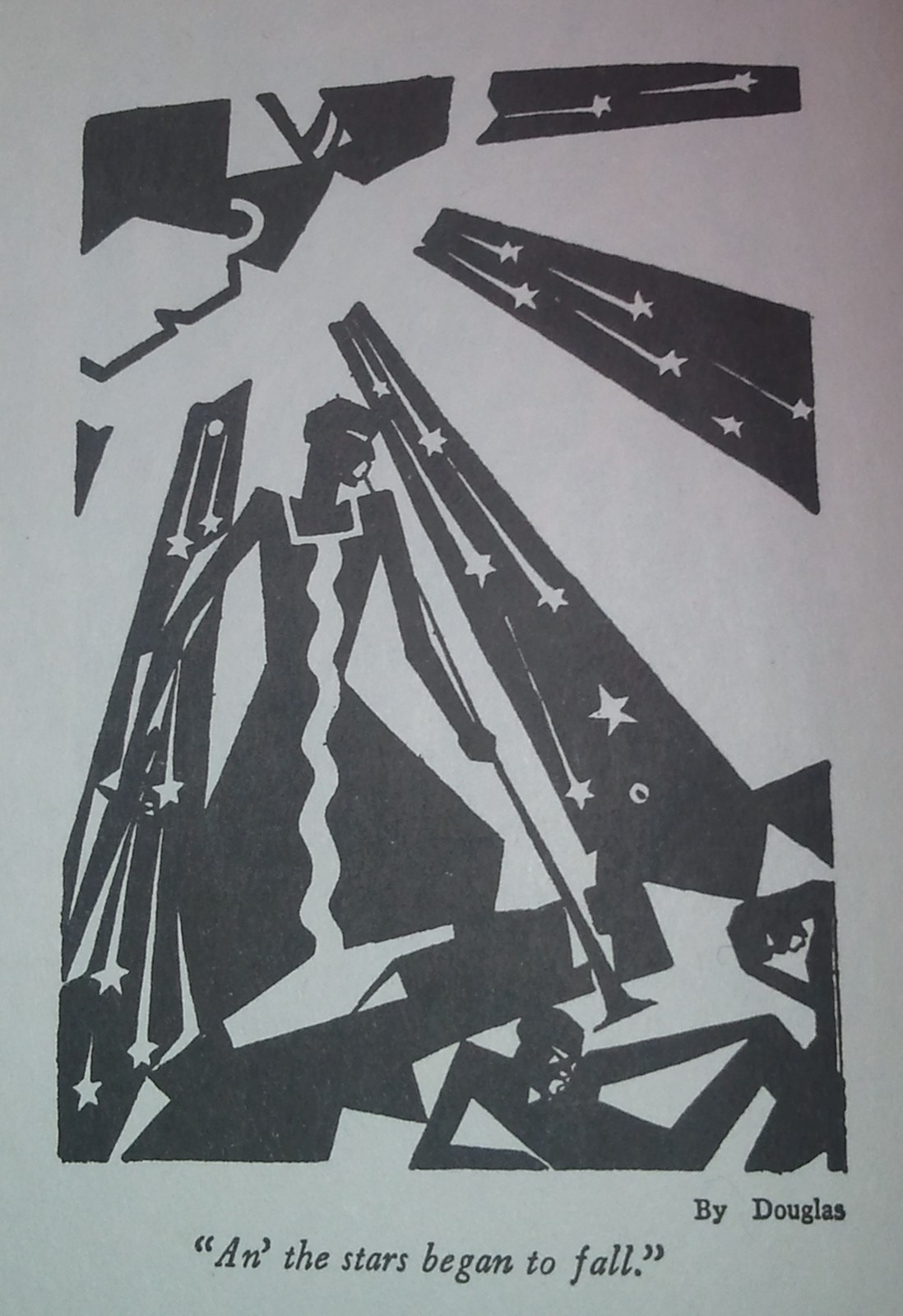
"An' the stars began to fall." by Aaron Douglas. Image: Aaron Douglas · Public domain · Wikimedia Commons, accessed 2026-08-04
The Harlem Renaissance, also called the New Negro Movement, was a flowering of African American literature, music, and visual art centered in Harlem, New York, roughly from 1918 to 1937. Fueled by the Great Migration, which brought hundreds of thousands of Black Americans from the rural South to Northern cities, Harlem became a concentrated hub of Black intellectual and artistic life. In the visual arts, painters, sculptors, and illustrators worked to define a modern Black identity on its own terms — rejecting the demeaning caricature that had long dominated depictions of Black Americans in mainstream art and asserting instead dignity, complexity, and connection to African heritage.
Aaron Douglas became the movement's most identifiable visual voice, developing a style that fused Art Deco geometry, flattened silhouette figures, and imagery drawn from ancient Egypt to link contemporary Black experience to a deep ancestral past. Archibald Motley painted the era's nightlife — jazz clubs, dance halls, crowded streets — in saturated, rhythmic color. Augusta Savage worked in sculpture, producing sensitive portrait busts while also fighting, through litigation and teaching, for Black artists' access to training and opportunity that had long been denied them. Palmer Hayden and others painted scenes of everyday Black life and labor.
The movement rebelled against a visual culture that had reduced Black subjects to minstrel stereotypes, and against the assumption that Black artists could not produce serious, modern work. Philosopher and critic Alain Locke's 1925 anthology The New Negro gave the movement its intellectual manifesto, arguing for a self-assured, unapologetic Black modernism.
The Harlem Renaissance matters because it established Black American artists as central, not peripheral, figures in American modernism, at a moment when mainstream museums and galleries largely excluded them. Its combination of ancestral pride, urban jazz-age energy, and formal innovation produced some of the most visually distinctive American art of the interwar decades, and its influence on later Black visual culture — from the WPA years through the Black Arts Movement of the 1960s and beyond — has been continuous.
What defines Harlem Renaissance
Flattened silhouettes and geometric patterning
Aaron Douglas's signature style used hard-edged, flattened figures set within concentric bands of color and Art Deco geometry, drawing on Egyptian imagery to link Black modernity to ancestral history.
Vibrant urban nightlife scenes
Archibald Motley painted jazz clubs, dance halls, and crowded city streets in saturated, syncopated color, capturing the rhythm and energy of Black urban social life.
Dignified, individualized portraiture
Artists deliberately countered minstrel-style caricature with sensitive, particularized portrayals of Black subjects, asserting humanity and interiority rather than stereotype.
African heritage and Egyptian motifs
Many artists incorporated African masks, patterns, and ancient Egyptian imagery to reclaim ancestral connection and situate Black American identity within a much longer history.
Great Migration and labor themes
Paintings and sculpture frequently depicted the movement of Black families from the rural South to Northern cities, and the everyday labor and community life that followed.
Mixed media across painting, sculpture, and print
The movement spanned oil painting, sculpture (notably Augusta Savage), and illustration for magazines like *The Crisis* and *Opportunity*, which served as key venues for visual art alongside literature.
History
The Harlem Renaissance grew out of the Great Migration, as Black Southerners moved north in large numbers during and after World War I, transforming Harlem into a dense center of Black cultural and intellectual life by the late 1910s. Philosopher Alain Locke's 1925 anthology The New Negro became the movement's foundational text, arguing for a confident, self-determined Black modern identity in literature and art alike.
Visual artists found relatively few mainstream galleries or museums open to them, so the Harmon Foundation, which began sponsoring exhibitions of work by Black artists in 1928, became a crucial venue. Magazines associated with civil rights organizations, especially W. E. B. Du Bois's The Crisis and the National Urban League's Opportunity, published illustrations and reproductions that gave visual artists wide exposure. Aaron Douglas illustrated Locke's anthology and produced murals, including the celebrated Aspects of Negro Life cycle for a New York Public Library branch, tracing Black history from Africa through slavery to the urban present. Augusta Savage, denied entry to a summer art program in France because of her race, became an influential sculptor and teacher, later directing the Harlem Community Art Center under the WPA.
As the Great Depression deepened in the 1930s, private patronage dried up, though New Deal programs such as the WPA Federal Art Project provided some artists with continued employment and public commissions. By the late 1930s the concentrated cultural energy that had defined the movement had dispersed, and the Harlem Renaissance is generally considered to have wound down by 1937, even as many of its artists continued working for decades afterward. Its ideas — self-representation, ancestral pride, and the demand for Black artists' full inclusion in American art institutions — resurfaced explicitly decades later in the Black Arts Movement of the 1960s and 1970s.
Key works
| Work | Artist | Year | Why it matters |
|---|---|---|---|
| Aspects of Negro Life | Aaron Douglas | 1934 | A four-panel mural cycle tracing Black history from Africa through slavery, Reconstruction, and the urban North, made for a New York Public Library branch. |
| Gamin | Augusta Savage | 1929 | A sensitive sculpted portrait bust of a young Harlem boy, among Savage's best-known works and a landmark of Black American sculpture. |
| Blues | Archibald Motley | 1929 | A vibrant, rhythmically composed nightclub scene exemplifying Motley's saturated color and jazz-age energy. |
How to make art in this style
Palette. For nightlife and street scenes, use saturated, jewel-toned color — deep blues, purples, burnt orange, and gold — to capture the electric, syncopated energy Motley favored. For Douglas-style symbolic compositions, work instead in flattened, layered bands of a few muted, closely related hues, often silhouetted in deep blue or black against warmer tones.
Composition. Flatten forms into clean, simplified silhouettes rather than modeling volume with light and shadow. Arrange figures rhythmically, echoing musical syncopation — repeating shapes, concentric circles, or diagonal bands of color can suggest movement and rhythm without literal motion lines.
Technique. Favor bold, confident outlines and flat, even color fields over painterly blending. Incorporate geometric patterning inspired by Art Deco design and African and ancient Egyptian visual motifs — profile figures, stylized eyes, and repeating decorative bands are characteristic devices.
Subjects. Draw on Black urban life: jazz clubs, dance halls, city streets, church and community gatherings. Balance these contemporary scenes with imagery honoring African heritage and the historical arc of the Great Migration. Above all, portray subjects with individualized dignity rather than type or caricature — a specific face, a specific gesture, a specific mood.
Mood. Aim for a combination of pride, energy, and gravity — the visual equivalent of jazz's mix of joy and depth. The best work of this style holds celebration and historical weight in the same frame.
Legacy
The Harlem Renaissance established Black artists as central, not marginal, figures within American modernism, at a time when most museums and galleries excluded them outright. Its insistence on dignity, self-representation, and connection to African heritage set a template that later generations of Black artists returned to explicitly — most directly the Black Arts Movement of the 1960s and 1970s, which invoked the Renaissance's legacy while pushing its politics further.
Institutions built around Black art history, including the Studio Museum in Harlem, trace their lineage to the ground this generation broke. Aaron Douglas's fusion of Art Deco geometry with African and Egyptian imagery continues to influence graphic design, illustration, and mural art addressing Black identity. Archibald Motley's electric depictions of nightlife anticipate later generations of artists chronicling Black urban culture in vivid color.
Beyond visual art, the movement's cross-disciplinary energy — where painters, writers, and musicians worked in close proximity and mutual influence — remains a model frequently cited for how concentrated cultural communities can produce disproportionate creative output. The Harlem Renaissance's combination of jazz-age modernity, ancestral pride, and unapologetic Black self-definition remains a reference point for artists addressing race and identity in American art today.
Frequently asked questions
What is the Harlem Renaissance?
The Harlem Renaissance was a flowering of African American literature, music, and visual art centered in Harlem, New York, roughly from 1918 to 1937, asserting a confident, self-defined Black modern identity.
Who were the key visual artists of the Harlem Renaissance?
Leading visual artists included Aaron Douglas, known for his flattened Art Deco silhouettes; Archibald Motley, celebrated for his vibrant nightlife scenes; and sculptor Augusta Savage. Palmer Hayden was also prominent, painting scenes of everyday Black life and labor.
Is the Harlem Renaissance the same as the New Negro Movement?
Yes. "New Negro Movement" was the contemporary term for the era, popularized by Alain Locke's 1925 anthology The New Negro. "Harlem Renaissance" became the more common name in later usage.
Why did the Harlem Renaissance decline?
The Great Depression sharply reduced the private patronage that had supported many artists and writers, and the concentrated cultural energy of 1920s Harlem gradually dispersed by the late 1930s, though many artists' careers continued for decades.
Was the Harlem Renaissance only a literary movement?
No. Although often remembered for writers like Langston Hughes and Zora Neale Hurston, it spanned visual art, sculpture, music, and theater, with painters and sculptors playing a central role in defining its visual identity.