 Art
Art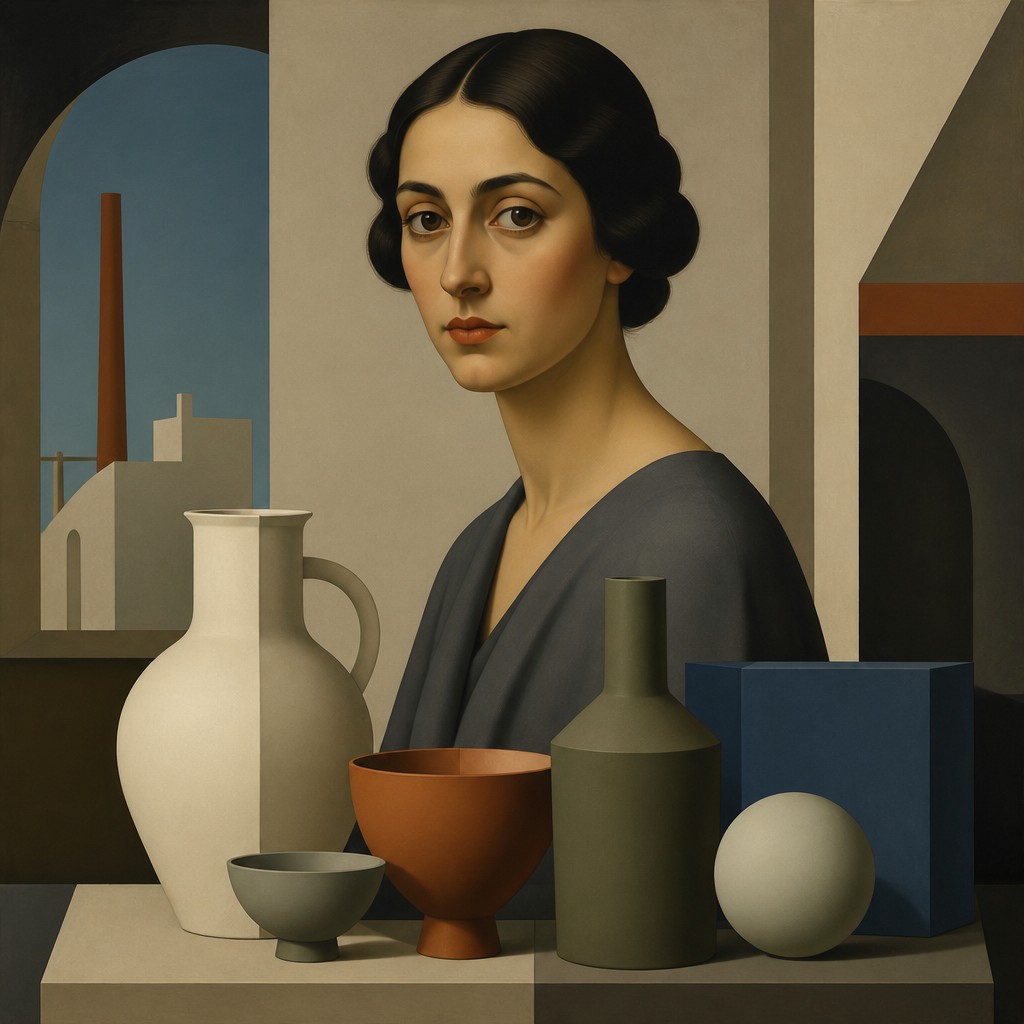 AI-generated
 AI-generated
 AI-generated
Purism was founded in Paris in 1918 by the architect Charles-Édouard Jeanneret, who would later become famous as Le Corbusier, and the painter Amédée Ozenfant. The two published a manifesto titled "Après le Cubisme" ("After Cubism"), arguing that Cubism, which had begun as a rigorous analytical investigation of form, had by the war's end degenerated into decorative, arbitrary ornamentation practiced by too many followers without real understanding of its founding principles. Purism proposed a corrective: a return to clarity, precision, and universal, easily legible forms drawn from the standardized, mass-produced objects of modern industrial life.
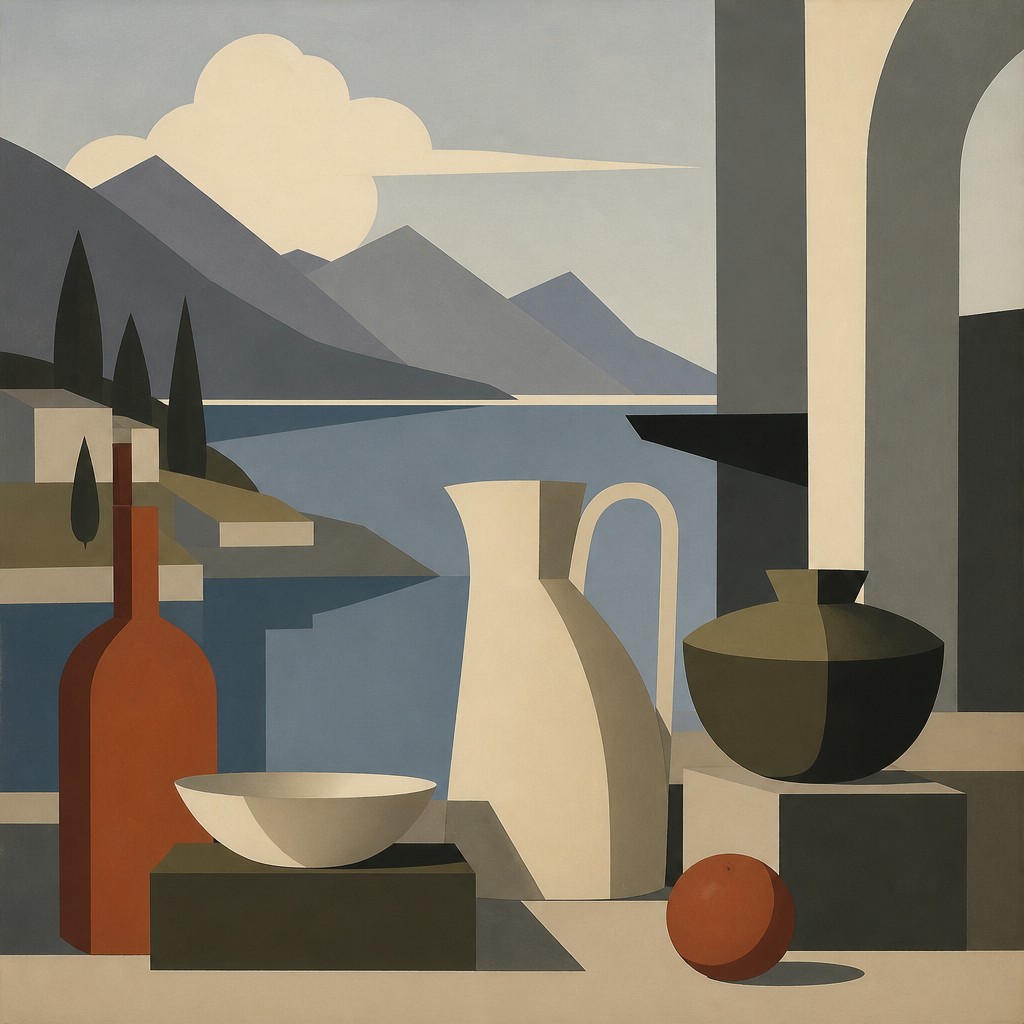
Purist paintings are typically still lifes composed of simple, everyday manufactured objects — bottles, glasses, carafes, pipes, guitars — rendered with crisp, precise contours and layered in flattened, overlapping arrangements reminiscent of Cubism's structural logic but without its fragmentation or multiple viewpoints. Forms are simplified toward their most essential, almost geometric silhouettes, and the palette is deliberately restrained: muted ochres, greys, browns, and soft blues rather than the bright decorative color some Purists associated with lesser Cubist imitators. The overall effect is calm, orderly, and legible, closer to careful architectural drawing than to expressive painting.
Purism rebelled specifically against what Jeanneret and Ozenfant saw as Cubism's late decline into surface decoration and arbitrary distortion for its own sake, and more broadly against artistic subjectivity and improvisation. In their view, true modern art should aspire to the same standardized clarity and functional precision found in well-designed machine-made objects — a chair, a bottle, an engine part — each shaped by function into an economical, universally legible form. This conviction that visual order should mirror industrial standardization directly shaped Jeanneret's parallel architectural theory, which he was developing simultaneously and which would soon make him, as Le Corbusier, one of the most influential architects of the twentieth century.
Purism matters less for the number of paintings it produced, which was relatively small, than for its role as a conceptual bridge between Cubism and the machine-age functionalism of International Style architecture. Its insistence that visual clarity, standardization, and object-based order could serve as a foundation for modern design anticipated core principles of twentieth-century architecture, industrial design, and functionalist visual culture more broadly.
What defines Purism
Everyday manufactured objects
Purist still lifes depict simple, mass-produced objects — bottles, glasses, carafes, pipes — chosen because their standardized, functional forms exemplified the clarity and economy the Purists valued in modern design.
Crisp, simplified contours
Forms are rendered with clean, precise outlines rather than fragmented Cubist facets, reducing each object to its most legible, near-geometric silhouette.
Flattened, overlapping arrangement
Objects are layered and overlapped across a shallow pictorial space, retaining some of Cubism's structural compression but without its multiple simultaneous viewpoints or violent fragmentation.
Muted, restrained palette
Purist paintings favor subdued ochres, browns, greys, and soft blues rather than bright or decorative color, reinforcing the movement's emphasis on order and sobriety over expressive display.
Machine-inspired precision
The careful, almost architectural rendering of each object reflects the Purists' admiration for the precision of industrially manufactured goods, treating painted objects with the same clarity as engineering drawings.
Rejection of ornament
Purism deliberately avoided decorative flourish, arbitrary distortion, or expressive brushwork, insisting that beauty in the modern age should arise from function and economy of form rather than embellishment.
History
Purism began in Paris in 1918, when Charles-Édouard Jeanneret and Amédée Ozenfant, who had met the previous year, published their manifesto "Après le Cubisme," criticizing what they viewed as the decorative decline of late Cubism and proposing a return to clarity, order, and universally legible form. The two staged a joint exhibition of Purist paintings shortly after, presenting their still lifes of bottles, glasses, and other standardized objects as an alternative to what they considered the arbitrary ornamentation of Cubist imitators active in Paris at the time.
Through the early 1920s, Jeanneret and Ozenfant developed their ideas jointly, painting parallel still lifes and co-editing the journal "L'Esprit Nouveau" (The New Spirit), which promoted Purist aesthetic theory alongside Jeanneret's emerging architectural ideas about standardization, functionalism, and machine-age design. It was through this period that Jeanneret adopted the pseudonym Le Corbusier for his architectural and design work, increasingly channeling Purist principles of clarity and object-based order into building design, urban planning theory, and furniture, rather than continuing primarily as a painter.
The close working partnership between Jeanneret and Ozenfant began to fray in the mid-1920s, as Jeanneret's architectural career, under the Le Corbusier name, increasingly overshadowed and eventually absorbed his painting practice, and as the two artists' aesthetic priorities diverged. By around 1925, Purism as an organized joint movement had effectively dissolved; Ozenfant continued painting in a related style for some years afterward, while Le Corbusier's energy shifted almost entirely to architecture, where Purist ideas about standardized, functional clarity found their fullest and most influential expression.
Although short-lived and limited to a small circle centered on its two founders, Purism is remembered as a crucial hinge point in Le Corbusier's development, articulating the aesthetic and theoretical principles, clarity, standardization, and function-driven form, that he would carry forward into some of the twentieth century's most influential architecture and urban design theory.
Key works
| Work | Artist | Year | Why it matters |
|---|---|---|---|
| Nature morte à la pile d'assiettes (Still Life with Pile of Plates) | Le Corbusier | 1920 | One of Le Corbusier's early Purist paintings, applying the movement's precise, standardized-object aesthetic that would later inform his architectural theory. |
How to make art in this style
Working in a Purist style
Palette: Keep the color range muted and restrained — ochres, warm greys, soft browns, and pale blues, avoiding bright or decorative hues. The palette should feel sober and architectural rather than expressive, supporting the sense of calm order the style aims for.
Composition: Choose a small group of simple, standardized, everyday objects — bottles, glasses, jugs, books, pipes — and arrange them in a shallow, layered space where forms overlap cleanly. Avoid deep perspective or dramatic spatial recession; the objects should feel compressed into a flat, orderly plane, similar to Cubism's spatial compression but without fragmenting the objects themselves.
Technique: Render each object with crisp, precise contours and minimal surface texture or visible brushwork. Simplify each form toward its most essential, near-geometric silhouette, the way an engineering or architectural drawing reduces an object to its clearest defining lines, rather than rendering incidental surface detail.
Subjects: Favor mass-produced, standardized objects over unique or organic ones — the movement specifically valued the clarity and universality of manufactured forms. Avoid ornamental or decorative elements; every object included should feel functionally justified within the composition rather than added for visual interest alone.
Practical tip: Before painting, try arranging the actual objects (or references to them) and squinting to check that their silhouettes read clearly and simply against one another — Purism's discipline lies in legibility and restraint, so if a composition starts to feel busy or decorative, simplify further rather than adding detail.
Legacy
Purism's direct output was small and its organized life brief, but its influence traveled forward primarily through Le Corbusier's architecture, where the movement's core convictions, clarity of form, standardization, and function-driven design, became foundational principles of twentieth-century modernist building. Concepts Jeanneret first articulated through Purist painting and writing, including his belief that everyday manufactured objects modeled an ideal of economical, universally legible form, directly informed his later architectural theories about standardized housing, modular design, and the "machine for living."
Purism is generally treated by art historians less as a major independent movement than as an important transitional chapter — a bridge between the analytical rigor of early Cubism and the machine-age functionalism that would come to dominate International Style architecture and industrial design through the mid-twentieth century. Its emphasis on clean, legible, standardized form also anticipated aesthetic values that would later resurface in mid-century modernist product design and in the restrained, object-focused clarity valued in some strains of later realist and precisionist painting.
While Purism itself is not widely practiced or referenced today outside specialist art-historical contexts, its underlying idea, that visual and functional clarity can itself be a source of modern beauty, remains deeply embedded in contemporary architecture, industrial design, and minimalist visual culture, even where its specific painterly vocabulary of bottles and glasses has long since receded from view.
Frequently asked questions
What is Purism in art?
Purism is a Paris-based art movement founded in 1918 by Charles-Édouard Jeanneret (later known as Le Corbusier) and Amédée Ozenfant, which reacted against the decorative decline of late Cubism by proposing clean, precisely rendered still lifes of standardized everyday objects.
Who founded Purism?
Purism was founded jointly by the architect Charles-Édouard Jeanneret, who would later become famous as Le Corbusier, and the painter Amédée Ozenfant, who published their founding manifesto "Après le Cubisme" in 1918.
Purism vs Cubism: what's the difference?
Purism grew directly out of Cubism but rejected what its founders saw as Cubism's late decorative excess and fragmentation, favoring instead simplified, precisely outlined objects in shallow, orderly compositions with a muted, restrained palette.
How is Purism connected to Le Corbusier?
Purism's co-founder Charles-Édouard Jeanneret adopted the pseudonym Le Corbusier while developing the movement, and the clarity, standardization, and functional order central to Purist painting directly shaped his later, highly influential architectural theory.
How long did Purism last?
Purism was active as an organized joint movement from roughly 1918 to the mid-1920s, after which Le Corbusier's attention shifted almost entirely to architecture and Ozenfant continued painting in a related style independently.