 Art
Art AI-generated
 AI-generated
 AI-generated
Nouveau Réalisme, or New Realism, was a loose association of artists working in Paris around 1960 who declared their work a set of "new perceptual approaches to reality." Rather than depicting the world through paint, its members incorporated the world directly: torn street posters, compressed automobiles, accumulated consumer objects, and even fire and gunfire became artistic media. The movement positioned itself as a French answer to the gestural excesses of Art Informel and Tachisme, the dominant School of Paris abstraction of the 1950s, while running in close parallel to American Neo-Dada and early Pop Art, which were making similar moves toward the object and the readymade on the other side of the Atlantic.
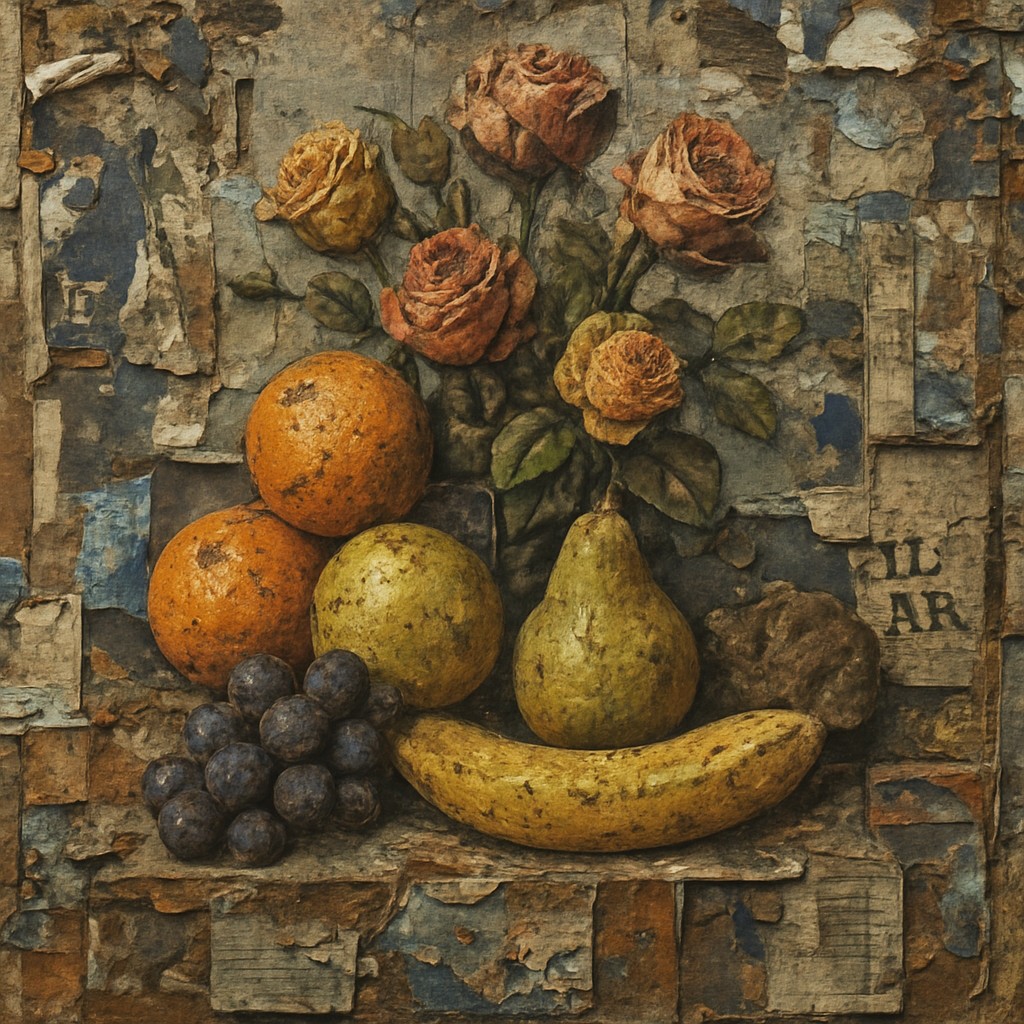
Visually, Nouveau Réalisme had no single style — its unity was conceptual and material rather than formal. Raymond Hains and Jacques Villeglé tore layers of advertising posters from Parisian walls and presented the resulting décollages as finished works. Arman filled galleries and glass cases with accumulations of identical objects, from clock parts to gas masks. César crushed automobiles into cubes of scrap metal. Yves Klein, the group's most famous member, painted with a self-developed ultramarine formula he registered as International Klein Blue, used nude models as "living brushes," and staged a photographed leap from a building as performance-as-artwork. Jean Tinguely built self-destructing kinetic machines from junkyard parts, and Niki de Saint Phalle fired a rifle at paint-filled plaster reliefs to let pigment bleed across the surface.
The group rebelled against the idea that painting alone could register a world reshaped by mass production, advertising, and consumer abundance. Where Abstract Expressionism and Informel prized the artist's inner gesture, Nouveau Réalisme prized the object as it already existed in the street, the factory, and the dump. It matters because it helped shift European art away from painterly introspection toward assemblage, appropriation, and performance — strategies that would define much of the following decades. Restany's manifesto, signed in October 1960, gave the movement a founding date and a critical vocabulary that linked Paris to the wider international turn toward the "art of the real."
What defines Nouveau Réalisme
Found and appropriated objects
Everyday consumer goods, machine parts, and urban debris were incorporated whole into the work rather than depicted. Assemblage and accumulation replaced painted illusion as the primary technique.
Décollage (torn posters)
Layers of street advertising posters were torn back to reveal fragments of text and color beneath, then mounted as finished compositions. The technique treated the city's own visual noise as raw material.
Compression and destruction
Artists compacted, burned, shot, or exploded materials as part of the creative act, making destruction itself a form of composition. César's crushed cars and Niki de Saint Phalle's shooting paintings turned violence into method.
Monochrome and the immaterial
Yves Klein reduced painting to a single saturated hue, arguing that pure color could carry spiritual and immaterial content beyond depiction. His International Klein Blue became a signature of the group's more metaphysical wing.
Kinetic assemblage
Jean Tinguely welded scrap metal and salvaged machine parts into motorized sculptures that moved, clattered, and sometimes destroyed themselves. Motion and mechanical noise became sculptural elements in their own right.
Accumulation and seriality
Arman packed identical or related objects — bottles, dolls, tools — into dense clusters or transparent cases, turning repetition and quantity into subject matter. The strategy echoed the glut of consumer goods flooding postwar Europe.
History
Nouveau Réalisme took shape in Paris in the spring of 1960, when critic Pierre Restany and painter Yves Klein began gathering artists who shared a disillusionment with the reigning gestural abstraction of the School of Paris. On October 27, 1960, at Klein's Paris apartment, Restany drafted a founding declaration signed by nine artists — Arman, Klein, François Dufrêne, Raymond Hains, Martial Raysse, Daniel Spoerri, Jean Tinguely, Jacques Villeglé, and Restany himself as theorist — announcing "new perceptual approaches to reality." The group soon expanded to include César, Gérard Deschamps, the Italian décollagiste Mimmo Rotella, and Niki de Saint Phalle, who joined in 1961 as its only prominent woman member.
The artists exhibited together in Milan and Paris in 1960 and 1961, and gained international attention through provocative public actions: Arman's 1960 piece "Le Plein" (Full Up) filled the Iris Clert Gallery floor to ceiling with garbage, directly answering Klein's earlier "Le Vide" (The Void), an empty white gallery shown at the same space in 1958. Tinguely's self-destructing sculpture "Homage to New York" detonated itself in the garden of the Museum of Modern Art in 1960, drawing transatlantic press coverage and underlining the group's kinship with American Neo-Dada.
Nouveau Réalisme never issued a unified visual style, and its members pursued increasingly individual paths through the 1960s — Klein toward mysticism and the immaterial before his early death in 1962, Raysse toward brighter Pop-inflected imagery, Saint Phalle toward her monumental "Nanas" figures. Restany continued to organize group exhibitions and anniversaries into the later 1960s, but by 1970 the movement had effectively dissolved as a coherent grouping, even as its individual members remained active and influential for decades. Its legacy endured chiefly through its role in establishing assemblage, appropriation, and object-based art as legitimate European counterparts to American postwar developments.
Key works
| Work | Artist | Year | Why it matters |
|---|---|---|---|
| Leap into the Void | Yves Klein | 1960 | A staged photograph of the artist appearing to dive from a wall, blurring performance, sculpture, and fiction. |
| Le Plein (Full Up) | Arman | 1960 | Filled an entire Paris gallery with accumulated garbage and refuse, directly answering Klein's earlier empty-gallery piece. |
| Homage to New York | Jean Tinguely | 1960 | A motorized sculpture built to destroy itself, staged in the garden of the Museum of Modern Art. |
| Tirs (Shooting Paintings) | Niki de Saint Phalle | 1961 | Rifle shots ruptured paint-filled pouches embedded in plaster reliefs, letting pigment bleed across the surface as the act of painting. |
| Compression | César | 1960 | A crushed automobile presented as sculpture, treating industrial destruction as an act of formal composition. |
| Anthropometry | Yves Klein | 1960 | Nude models coated in blue paint were used as 'living brushes' to imprint their bodies directly onto canvas. |
How to make art in this style
Working in a Nouveau Réalisme Spirit
Start with objects, not paint. The core move of this movement was substitution: instead of depicting a chair, a car, or a poster, the artist presented the thing itself, altered or recombined. Collect real materials — packaging, hardware, torn signage, broken tools — rather than reaching first for a brush.
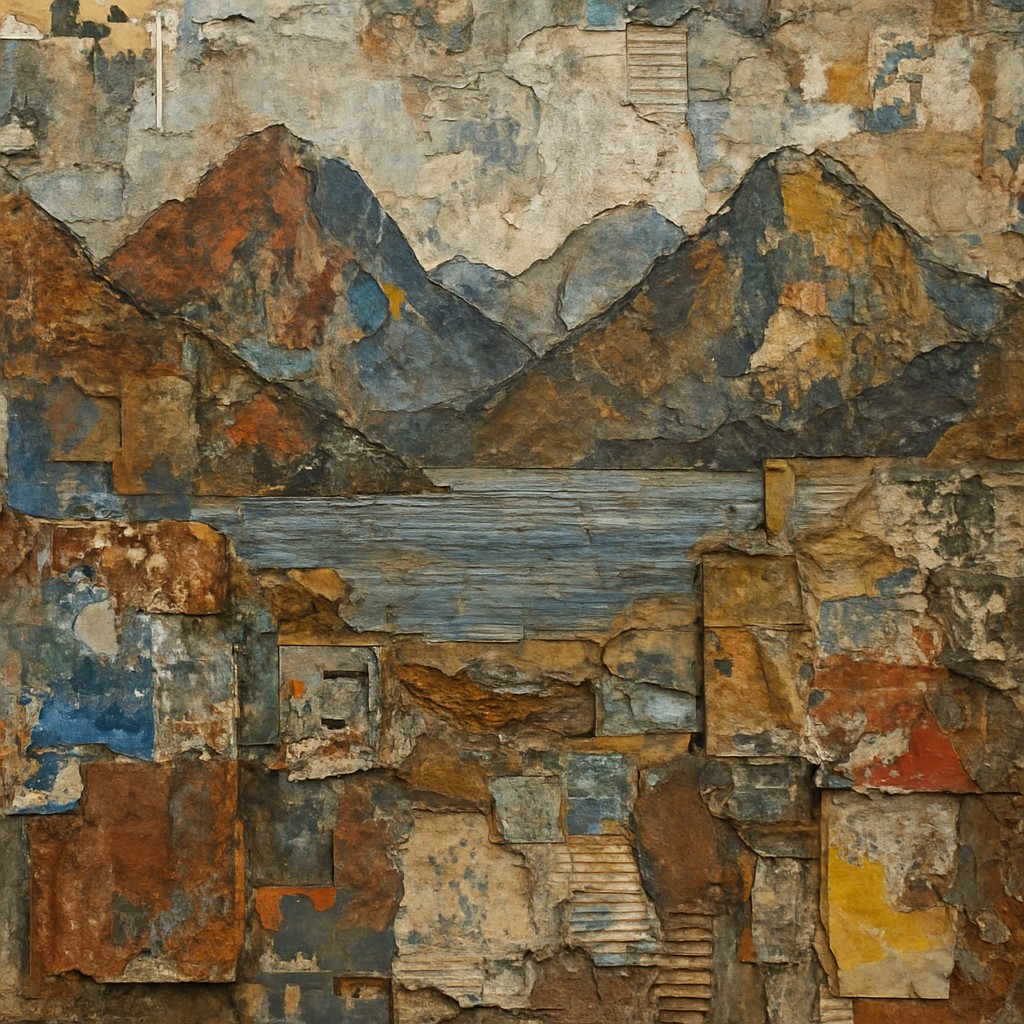
Let the city supply your surface. Torn posters, layered advertising, and weathered public surfaces were treated as ready-made compositions. Peeling back layers of paper, or photographing and mounting fragments of urban surfaces, recreates the décollage approach without requiring paint at all.
Use accumulation as composition. Group many identical or related objects — bottles, keys, toy parts, tools — into dense clusters, grids, or transparent containers. Quantity and repetition do the compositional work that line and color usually perform.
Treat destruction as a technique. Compression, burning, shattering, or shooting materials can stand in for brushwork. If working with paint, consider unconventional application — flinging, exploding, or puncturing pigment-filled vessels rather than applying color with a brush.
Keep a restrained, industrial palette. Favor raw materials in their natural colors — metal grey, cardboard brown, poster inks — punctuated by one saturated signature hue, as Klein did with his ultramarine blue.
Document the act. Because process and gesture were as important as the finished object, photograph or record the making itself — the compression, the tear, the shot — as part of the work, not merely as evidence of it.
Legacy
Nouveau Réalisme's insistence that the object itself could be art — rather than its painted image — helped establish assemblage, accumulation, and appropriation as durable strategies across later European and American art. Its members' embrace of consumer detritus and mass media imagery ran parallel to, and reinforced, the rise of Pop Art, while its performative and destructive gestures anticipated Happenings, Fluxus, and later installation and performance practice. Arman's accumulations prefigured the object-glut aesthetics of much contemporary sculpture, and César's crushed-car compressions remain a reference point whenever artists use industrial destruction as process. Yves Klein's monochrome experiments and his patented blue continue to circulate widely in design, fashion, and popular culture, making International Klein Blue one of the most recognizable colors associated with any twentieth-century artist. Niki de Saint Phalle's shooting paintings and later "Nanas" opened space for a female voice within a movement otherwise dominated by men, and her subsequent public sculpture had lasting influence on art in public space. Today, Nouveau Réalisme is remembered less as a unified style than as a decisive moment when European artists turned decisively toward the real object, the urban surface, and the theatrical gesture — groundwork for much of the object- and process-based art that followed.
Frequently asked questions
What is Nouveau Réalisme?
Nouveau Réalisme (New Realism) was a Paris-based art movement founded in 1960 by critic Pierre Restany and artist Yves Klein, in which artists incorporated real objects, urban debris, and industrial materials directly into their work rather than depicting them through painting.
How does Nouveau Réalisme differ from Pop Art?
Both movements turned toward consumer culture and everyday imagery around the same time, but Pop Art largely remained a painted and printed medium depicting mass-produced imagery, while Nouveau Réalisme artists physically incorporated actual objects, posters, and debris into assemblage and sculpture.
Who founded Nouveau Réalisme?
Critic Pierre Restany drafted the group's founding declaration in October 1960, signed at Yves Klein's Paris apartment by nine artists including Klein, Arman, Jean Tinguely, and Daniel Spoerri.
What is International Klein Blue?
International Klein Blue is a saturated ultramarine formula Yves Klein developed in the mid-1950s and first showed in monochromes from 1957; in 1960 he registered the recipe in France with a Soleau envelope, a dated proof-of-authorship deposit rather than a patent, and used it in his monochrome paintings, sculptures, and body-print works as a signature color associated with immateriality and the void.
Why did César crush cars?
César's compressed-automobile sculptures treated industrial destruction as a sculptural process, transforming discarded consumer machinery into dense geometric blocks that commented on postwar mass production and waste.