 Art
Art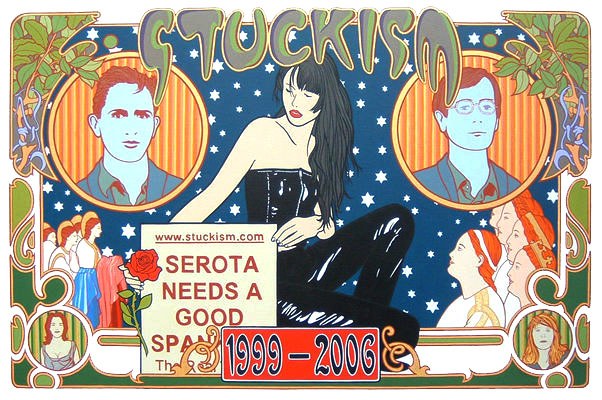
Paul Harvey, Stuckism 1999-2006. Image: Unknown · CC BY-SA 3.0 · Wikimedia Commons, accessed 2026-08-04
Stuckism is a figurative painting movement founded in London in 1999 by artists Billy Childish and Charles Thomson, defined less by a single visual style than by an explicit, published rejection of conceptual art's dominance over the contemporary art world—particularly the installation- and idea-driven work of the Young British Artists. The movement's name reportedly originated when Tracey Emin, Childish's former partner, dismissed his paintings as "stuck, stuck, stuck," a jab the two founders reclaimed as a badge of identity, arguing that painting itself had been unfairly declared obsolete by the conceptual art establishment.
Stuckism artists typically work in a raw, expressive, deliberately unpolished figurative mode, using bold color, simplified drawing, and visible, energetic brushwork closer to Expressionism, folk art, or outsider art than to slick academic technique. Subject matter tends toward direct emotional or narrative content—portraits, domestic scenes, personal relationships—presented without conceptual distance or irony. The group formalized its position through published manifestos, beginning with the founding "Stuckists" statement in 1999 and followed by the broader "Remodernism" manifesto in 2000, which called for a return to spiritual and emotional sincerity in art after what its authors characterized as postmodernism's exhausted irony.
The movement explicitly rebelled against the institutional and market dominance of conceptual and installation art in Britain during the 1990s, singling out the Turner Prize, Tate, and prominent YBA figures as symbols of an art establishment it considered self-referential, media-obsessed, and hostile to traditional painterly skill. Stuckists became known for staging costumed protests, often dressed as clowns, outside Tate during Turner Prize ceremonies, treating public spectacle as a tool of critique rather than an exception to it.
Stuckism matters as one of the most organized and durable oppositional responses to the conceptual art establishment of the late twentieth century, and as a case study in how a movement can build identity and reach primarily through manifesto-writing, public protest, and international franchising of its name rather than through a single dominant gallery or market. Groups identifying as Stuckist have since formed in cities across the world, loosely united by the founding commitment to figurative painting and manifesto-based advocacy.
What defines Stuckism
Commitment to Figurative Painting
Stuckist work is consistently representational, depicting recognizable people, places, and objects rather than pursuing abstraction, installation, or conceptual gesture, which the movement's manifestos explicitly reject as exhausted.
Raw, Expressive Brushwork
Paint is applied energetically and often roughly, with visible strokes and a deliberately unrefined, sometimes naive quality that favors emotional directness over technical polish or illusionistic finish.
Bold, Non-Naturalistic Color
Palettes frequently depart from observed local color in favor of heightened, clashing, or symbolic hues, recalling German Expressionism and folk-art traditions more than academic realism.
Manifesto-Driven Identity
The movement defines itself explicitly through published written statements—the founding Stuckists manifesto and the later Remodernism manifesto—making text as central to group identity as any shared visual formula.
Anti-Institutional Public Protest
Stuckists regularly stage costumed demonstrations, notably dressing as clowns outside Tate during Turner Prize announcements, treating public spectacle as an extension of their critique of conceptual art's institutional dominance.
Emotional and Autobiographical Subject Matter
Portraits, relationships, and personal experience recur as subjects, presented with direct sincerity rather than ironic distance, in deliberate contrast to the detached strategies the movement associates with its YBA rivals.
History
Stuckism was founded in London in August 1999 by painters Billy Childish and Charles Thomson, who drafted a founding manifesto asserting figurative painting's continued relevance against what they saw as the art establishment's uncritical embrace of conceptual and installation art. The name derived from a remark by artist Tracey Emin, once Childish's partner, who had told him his paintings were "stuck"; Childish and Thomson adopted the word defiantly as the movement's title.
The founders quickly expanded their position into a broader philosophical program with the "Remodernism" manifesto of 2000, co-written by Thomson and Childish, which argued for a return to spiritual and emotional authenticity in art following what it characterized as postmodernism's exhausted irony and cynicism. The group grew rapidly through self-organization rather than gallery patronage: independent Stuckist groups formed in cities across Britain and internationally, each affiliating with the founding manifestos while working in their own local variations of figurative painting.
Stuckism gained wider public visibility through repeated, media-friendly protests outside Tate galleries during the annual Turner Prize, where members often appeared in clown costumes to satirize what they viewed as the prize's bias toward conceptual and installation art over painting. The movement received a significant institutional acknowledgment with the 2004 group exhibition "The Stuckists Punk Victorian" at the Walker Art Gallery in Liverpool, a major publicly funded museum, which lent the previously outsider movement a degree of mainstream recognition.
Charles Thomson has remained the movement's most visible spokesman, continuing to organize exhibitions and issue statements under the Stuckism name, while Billy Childish largely stepped back from formal involvement with the Stuckism label in the 2000s to focus on his painting, music, and writing under his own name. The movement remains active today, still organized primarily around its founding manifestos, continued figurative painting practice, and periodic public protest against the institutions it originally opposed.
Key works
| Work | Artist | Year | Why it matters |
|---|---|---|---|
| The Stuckists (Founding Manifesto) | Billy Childish and Charles Thomson | 1999 | The movement's founding statement declared painting's continued relevance against the conceptual art establishment, launching Stuckism as an organized position. |
| Remodernism | Charles Thomson and Billy Childish | 2000 | An expanded philosophical manifesto calling for a return to spiritual and emotional sincerity in art, positioning Stuckism against postmodern irony broadly. |
| Sir Nicholas Serota Makes an Acquisitional Decision | Charles Thomson | 2000 | A satirical figurative painting lampooning Tate's director and its embrace of conceptual art, widely reproduced as an emblem of the movement's public protests. |
| The Stuckists Punk Victorian | The Stuckists | 2004 | A major touring group exhibition at the Walker Art Gallery, Liverpool, that gave the previously outsider movement significant institutional recognition. |
How to make art in this style
Working in a Stuckist Style
Palette: Use bold, often non-naturalistic color—saturated reds, mustard yellows, deep teals—applied more for emotional charge than observed accuracy. Clashing or heightened combinations are preferable to a harmonized, tasteful palette.
Composition: Keep compositions direct and legible: a single figure, a domestic interior, a close portrait. Avoid elaborate conceptual staging or multi-panel installation; the movement's core commitment is to the single figurative painting as a complete statement.
Brushwork and technique: Work quickly and expressively, leaving visible, energetic brushstrokes rather than smoothing or blending. A degree of deliberate roughness or "naive" drawing is welcome—technical polish is secondary to emotional and gestural honesty. Traditional media on canvas or board suit the movement's painting-first identity.
Subjects: Draw on personal and immediate experience—self-portraits, friends, domestic scenes, relationships—and treat public or well-known figures with pointed, sometimes satirical directness rather than neutrality. Avoid ironic distance; sincerity, even when combined with humor, is central to the movement's stated values.
Framing and presentation: Consider pairing the painting with a short accompanying statement or title that asserts a clear position, echoing the movement's manifesto-driven identity. Presenting work outside conventional gallery hierarchies is itself consistent with Stuckist practice.
Tone: Aim for emotional directness and conviction over cleverness; the style rewards work that reads as genuinely felt rather than knowingly ironic.
Legacy
Stuckism's most lasting influence lies less in a specific visual style than in its model of organized opposition: a movement built deliberately around published manifestos, public protest, and a defiantly unfashionable commitment to painting at a moment when installation and conceptual work dominated critical and market attention. That model has been echoed by later groups and individual artists who position figurative or traditional media as a considered stance rather than a simple absence of contemporary ambition.
The movement also helped keep debates about painting's relevance alive within contemporary art discourse through the 2000s and beyond, pushing back against any assumption that conceptual and installation practice had rendered representational painting obsolete. Its international network, coordinated loosely from London, demonstrates how a movement can propagate through shared principle and branding rather than a single geographic center or gallery system, a structure since echoed by various grassroots art networks online.
While Stuckism has never approached the market visibility of the YBAs it defined itself against, its persistence—continuing to exhibit, publish manifestos, and protest decades after its founding—stands as a case study in sustaining an oppositional art identity over the long term, and its core argument for figurative painting's continued seriousness remains a live position within contemporary art.
Frequently asked questions
What is Stuckism?
Stuckism is a figurative painting movement founded in London in 1999 by Billy Childish and Charles Thomson, built around published manifestos rejecting conceptual art in favor of emotionally direct, representational painting.
Where does the name "Stuckism" come from?
The name originated when artist Tracey Emin told her former partner Billy Childish that his paintings were "stuck, stuck, stuck"; Childish and co-founder Charles Thomson adopted the word as the movement's defiant title.
What is Stuckism opposed to?
Stuckism was founded specifically in opposition to conceptual and installation art, particularly the Young British Artists and institutions like Tate and the Turner Prize, which its manifestos characterize as having wrongly sidelined figurative painting.
Is Stuckism still active today?
Yes—Stuckism continues as an international network of affiliated groups coordinated through Stuckism International, still organized around its founding manifestos, ongoing figurative painting practice, and periodic public protest.
What is "Remodernism"?
Remodernism is the broader philosophical manifesto Charles Thomson and Billy Childish published in 2000, extending Stuckism's original argument into a general call for spiritual and emotional sincerity in art after postmodern irony.