 Art
Art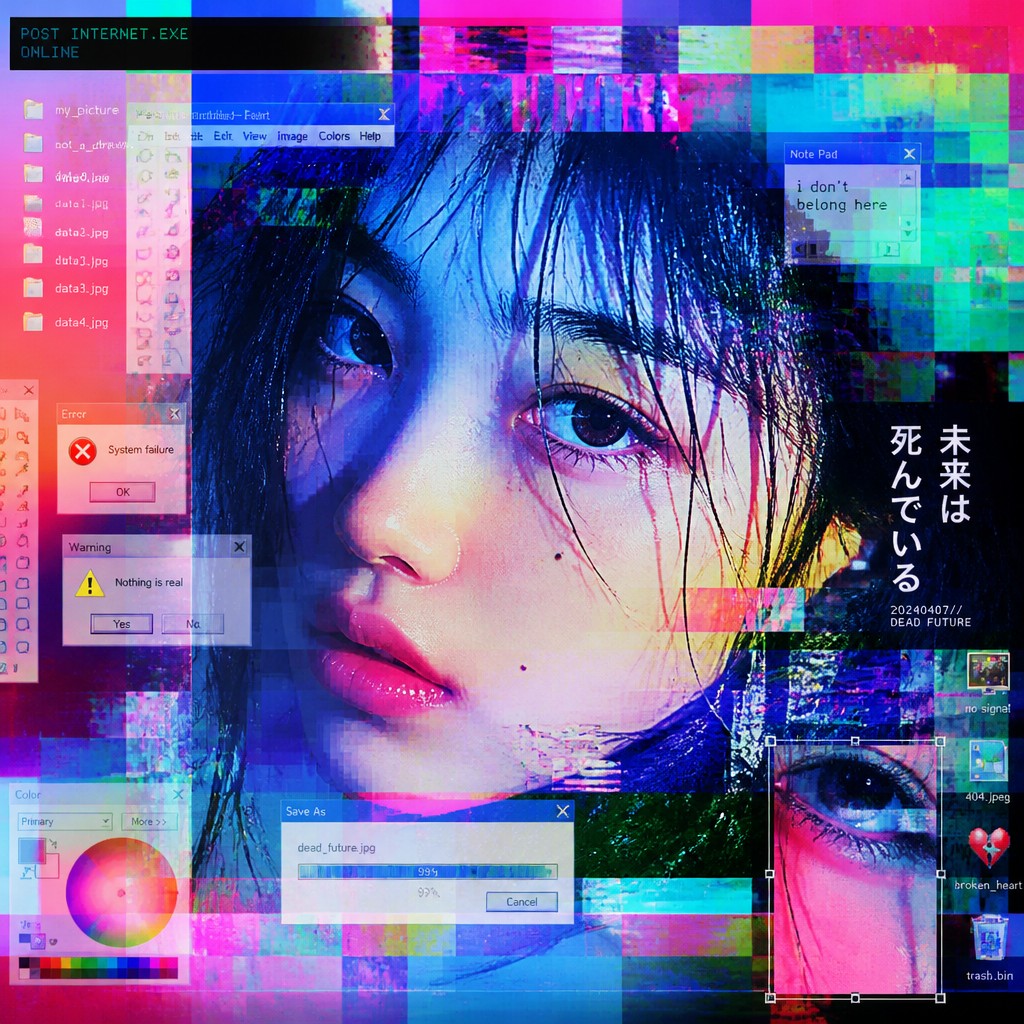 AI-generated
 AI-generated
 AI-generated
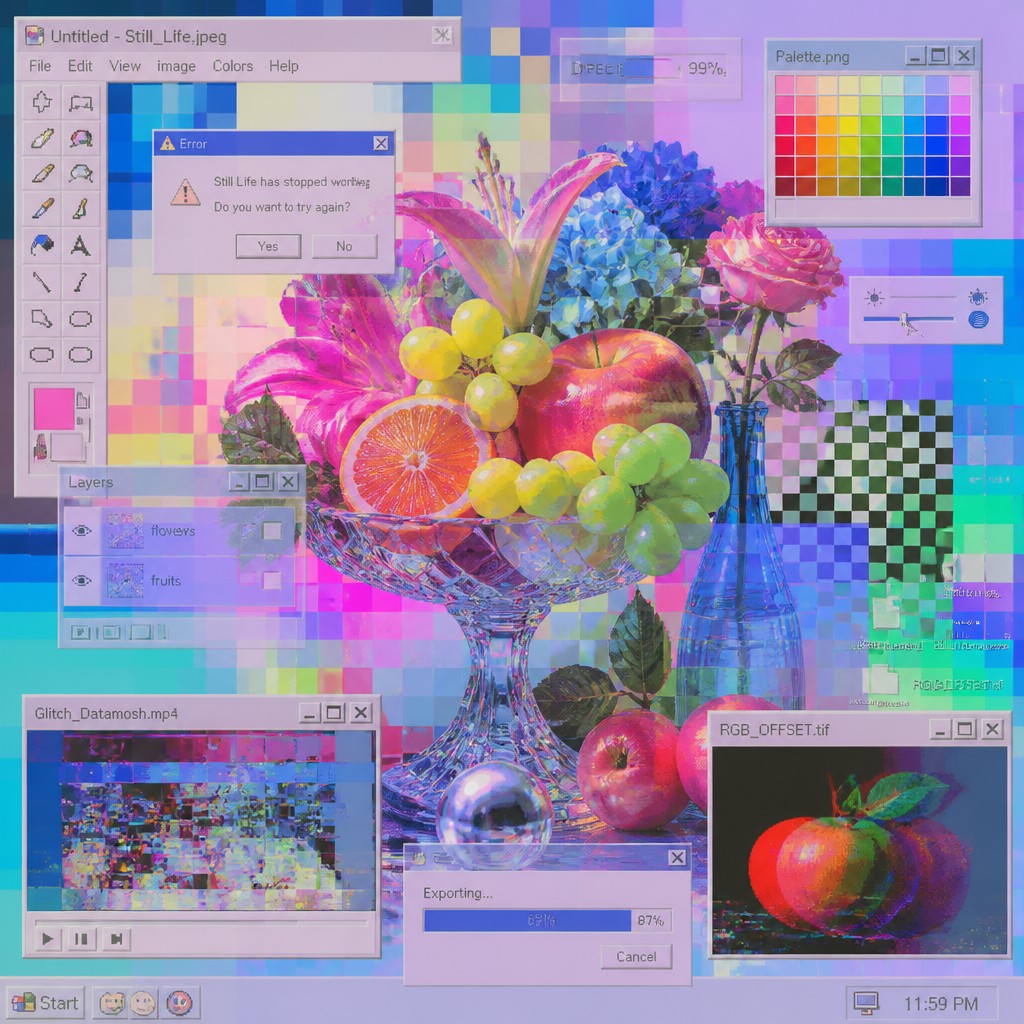
Post-Internet Art describes work made with the assumption that the internet is no longer a novel technology or separate space but an ordinary, saturating condition of contemporary life—as unremarkable and inescapable as electricity. Rather than depicting the internet as subject matter, post-internet artists make physical and digital objects that already carry the internet's visual habits, distribution logic, and image culture inside them, regardless of whether the finished piece is a sculpture, a painting, a video, or a social media post.
Visually, the work often borrows the look of stock photography, product renders, glossy corporate design, screen glare, gradient fills, and the compressed, slightly degraded quality of images that have been copied and recirculated many times online. A post-internet sculpture might sit in a gallery designed to photograph well for social media; a painting might reproduce the aesthetic of a computer rendering; an installation might exist simultaneously as a physical object and as a set of images engineered for online circulation, with the documentation treated as equally important as the object itself.
The term emerged in the mid-to-late 2000s, credited largely to critic and artist Marisa Olson, and gained wider theoretical shape through writers and artists including Artie Vierkant, whose 2010 essay helped define the sensibility for a broader audience. It followed and responded to "net art" of the 1990s, which had made websites and browsers the actual site of the artwork; post-internet art, by contrast, often exists primarily as physical objects in physical galleries, but objects unmistakably shaped by internet-native visual habits.
Post-Internet Art rebelled against the earlier assumption—common through the 1990s and early 2000s—that "internet art" needed to exist only online, separate from traditional gallery space, and that digital culture was a specialized subject rather than the default condition of everyday life. It matters because it captured, with unusual precision, the moment when networked digital life stopped being a novelty subject for art and became simply the water artists, and everyone else, swim in, a shift that continues to shape how contemporary art is made, displayed, and circulated as images long before or after anyone sees the physical work.
What defines Post-Internet Art
Internet as Backdrop, Not Subject
The internet appears not as an explicit topic but as an assumed condition shaping the work's surfaces, references, and distribution, much the way earlier art assumed the existence of print media or television without depicting them directly.
Glossy, Rendered Visual Language
Works frequently borrow the look of product photography, 3D renders, stock imagery, and corporate design software—smooth gradients, screen glare, clean vector shapes—rather than painterly or handmade textures.
Objects Built to Be Photographed
Physical works are often designed with their eventual online documentation in mind, treating the photographed or screenshotted version of the piece as equally valid, and sometimes more widely seen, than the object itself in the gallery.
Circulation and Copies as Content
The work frequently addresses how images move, degrade, and multiply across platforms—appropriated screenshots, compressed files, and recirculated found images become source material in their own right.
Cross-Media Objects
A single body of work might move fluidly between sculpture, painting, video, and social media post, treating medium as flexible rather than fixed, in keeping with how images actually travel online across formats.
Everyday, Consumer-Grade Materials
Artists often use ordinary consumer and corporate materials—vinyl printing, laminate, plastic, foam—that echo the mass-produced, disposable look of e-commerce and advertising imagery rather than traditional fine-art materials.
History
Post-Internet Art's roots lie in the 1990s "net.art" scene, when artists including Vuk Ćosić, Olia Lialina, and the collective JODI built work that lived directly on websites, treating the browser itself as the exhibition space. Through the 1990s and early 2000s, internet art remained largely distinct from gallery-based practice, understood as a specialized, technical field.
The term "post-internet" began circulating in the mid-to-late 2000s; critic and artist Marisa Olson is widely credited with early use of the phrase to describe art made after, and in full awareness of, ubiquitous internet access, rather than art about the internet as a novel technology. Artist and writer Artie Vierkant helped further define and popularize the concept, notably through his 2010 essay "The Image Object Post-Internet," which described artworks designed to circulate as much through digital documentation as through physical exhibition.
Through the early 2010s, a loose international group of artists—including Petra Cortright, Jon Rafman, Amalia Ulman, and others—produced work spanning video, sculpture, painting, and performance that shared this sensibility, gaining visibility through gallery exhibitions, art fairs, and coverage in art publications that tried to define the emerging tendency. Amalia Ulman's "Excellences & Perfections" (2014), an extended Instagram performance later revealed as fiction, became one of the most widely discussed examples of the sensibility applied to social media specifically.
By the mid-to-late 2010s, some critics and artists argued the term had become less useful, since its core premise—that internet life is simply ordinary life—had become true for essentially all contemporary art, dissolving "post-internet" as a distinct category even as its visual habits persisted broadly. The movement did not end so much as diffuse into the mainstream of contemporary practice, with its concerns absorbed into subsequent conversations around social media, crypto art, and AI-generated imagery.
Key works
| Work | Artist | Year | Why it matters |
|---|---|---|---|
| VVEBCAM | Petra Cortright | 2007 | A webcam performance video with digital effects and filters, uploaded to YouTube, an early example of the movement's screen-native aesthetic. |
| Nine Eyes of Google Street View | Jon Rafman | 2008 | An ongoing curated collection of found Google Street View screenshots, treating an algorithmic camera's byproducts as fine-art photography. |
| Image Objects | Artie Vierkant | 2011 | A series of sculptural works engineered to exist equally as physical objects and as digitally altered documentation images circulated online. |
| Excellences & Perfections | Amalia Ulman | 2014 | A months-long fictional Instagram performance chronicling an invented persona, widely cited as a defining post-internet artwork about identity and platforms. |
How to make art in this style
Making Post-Internet-Style Work Today
Concept. Start from the assumption that digital and physical life are continuous, not separate—your subject doesn't need to be "about" the internet explicitly; it simply needs to be made with full awareness that images circulate, get screenshotted, and live online regardless of where they're first shown.
Palette and surface. Favor the visual vocabulary of contemporary digital production: smooth gradients, glossy or laminated surfaces, the clean look of 3D-rendered product shots, and the slightly artificial color of screen light—cool blues, soft corporate pastels, and high-saturation accent colors reminiscent of app interfaces and advertising.
Materials. Consumer and commercial materials work well: vinyl, acrylic, laminate, foam board, printed fabric, and other mass-production substrates that echo e-commerce and packaging rather than traditional fine-art media. Found and appropriated digital imagery—screenshots, stock photos, product renders—is a legitimate and central source material.
Composition. Design for multiple viewing contexts simultaneously: consider how the piece will look installed in a room and how it will look as a photographed image on a small screen, since both are equally valid ways the work will be encountered.
Cross-media thinking. Let a single idea move across formats—an image might exist as a print, a sculpture, and a social post—rather than committing to one fixed medium, treating the various versions as variations of the same underlying work rather than a hierarchy of original and reproduction.
Subjects. Common territory includes identity performance online, the aesthetics of advertising and product design, the physical afterlife of digital images, and the texture of platforms themselves—feeds, interfaces, and the generic look of stock content.
Legacy
Post-Internet Art's core insight—that networked digital life is simply the default condition of contemporary experience, not a novelty subject—has become foundational to how contemporary art is discussed, since virtually all art made today exists within the same conditions the movement first named. Its attention to documentation, image circulation, and the shareability of an artwork anticipated the current reality in which most viewers encounter contemporary art primarily through screens and social media rather than in person.
Its glossy, rendered visual language influenced a broad swath of gallery-based sculpture and painting through the 2010s, and its treatment of physical objects as designed partly for their photographed, circulated afterlife prefigured strategies now common across contemporary art generally, including within crypto art and AI art, both of which inherited post-internet art's comfort blending digital and physical existence. Museums and galleries adapted their own presentation strategies in response, increasingly considering how installations will be photographed and shared as part of exhibition design. As a named movement it has largely dissolved into the broader current of contemporary practice, but its central claim—that art now exists natively across both physical and digital space simultaneously—remains a working assumption for most artists today.
Frequently asked questions
What is Post-Internet Art?
Post-Internet Art is a contemporary art tendency, emerging in the late 2000s, made with the assumption that internet culture is an ordinary, pervasive condition of daily life rather than a novel subject. It often produces physical objects—sculpture, painting, installation—that visually and conceptually reflect internet-native aesthetics and image circulation.
Who coined the term "post-internet"?
Critic and artist Marisa Olson is widely credited with early use of the term in the mid-2000s; artist and writer Artie Vierkant further defined the concept through his influential 2010 essay on art objects made and circulated after ubiquitous internet access.
Post-Internet Art vs Net Art—what's the difference?
Net art, prominent in the 1990s, generally existed natively online, using the website or browser itself as the exhibition space. Post-Internet Art typically produces physical objects for gallery display, but objects whose look and logic are shaped by internet culture and designed to also circulate as images online.
Is Post-Internet Art still a current movement?
Many critics consider the term less current today, arguing its central premise—that digital life is simply ordinary life—became true of nearly all contemporary art, dissolving it as a distinct category even as its visual habits remain widespread in gallery practice.
What does Post-Internet Art typically look like?
It often resembles glossy product design, stock photography, or 3D-rendered imagery, using smooth surfaces, corporate visual language, and appropriated digital images, frequently designed to photograph well for online circulation alongside physical display.