 Art
Art AI-generated
 AI-generated
 AI-generated
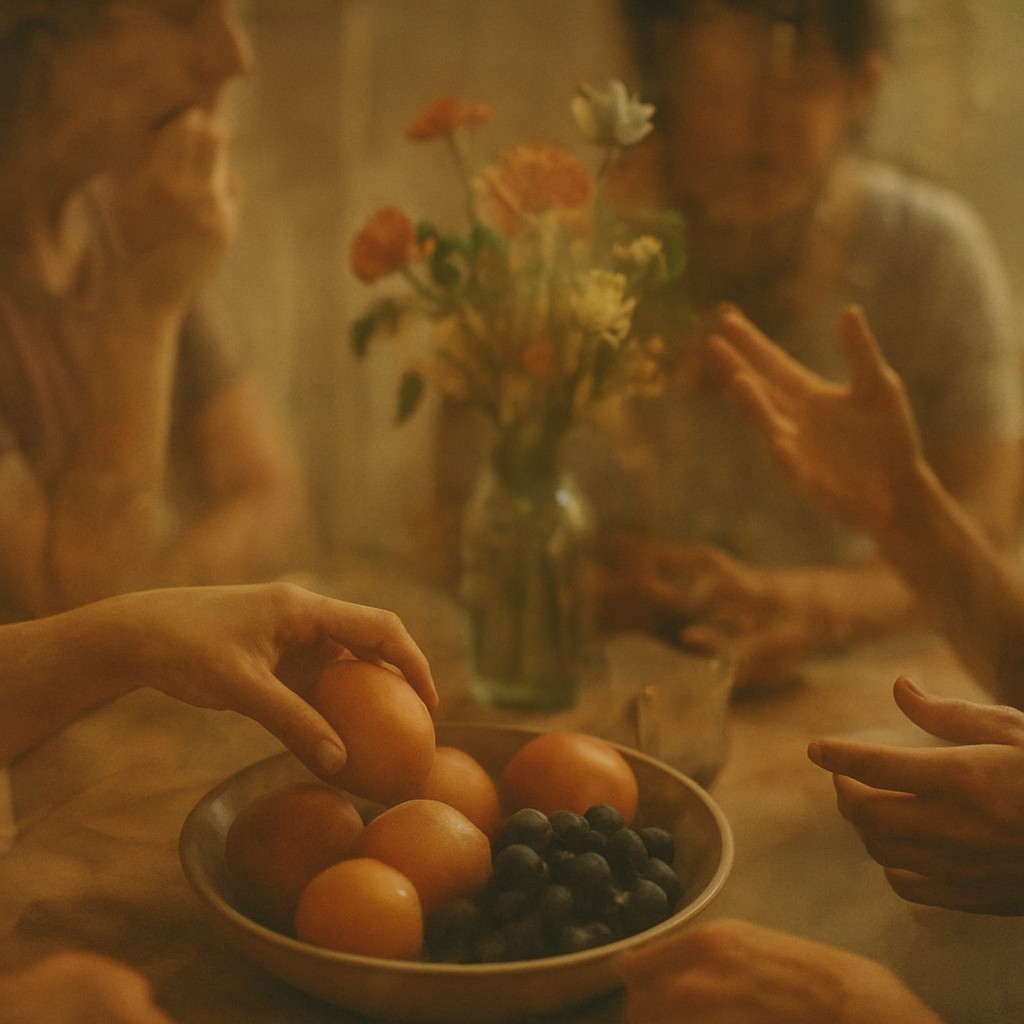
Relational Aesthetics is a critical framework and loosely associated body of art practice defined by French curator and critic Nicolas Bourriaud in the mid-1990s, most fully articulated in his 1998 book Esthétique relationnelle. Bourriaud used the term to describe art that takes as its subject and medium not a discrete physical object but a social situation—an encounter, exchange, or shared activity staged within, or in relation to, an exhibition context. Rather than producing a painting or sculpture for a viewer to contemplate, relational artists design occasions for human interaction, treating the resulting conversation, meal, or collaboration as the artwork itself.
The movement's paradigmatic figure is Rirkrit Tiravanija, who beginning around 1990 staged works in which he cooked and served Thai food to gallery visitors, transforming exhibition spaces into functioning kitchens and dining rooms and leaving behind only the props—pots, tables, packaging—as residue once the activity ended. Liam Gillick built related work around discursive, semi-functional architectural structures and texts that framed conversation and collective interpretation as central to the art experience, while Philippe Parreno, often working collaboratively, staged events and invited collective authorship, notably purchasing rights to a blank commercial manga character and inviting other artists to reanimate her in a shared project.
Relational Aesthetics rebelled against the idea, dominant in much of Western art history, that an artwork's value resides in a permanent, sellable, individually authored object to be viewed at a physical distance. It drew instead on earlier precedents—Fluxus happenings, 1960s and 1970s performance and conceptual art, and the notion of "social sculpture"—updating them for a 1990s art world increasingly interested in globalization, hospitality, and everyday exchange as legitimate artistic territory.
The movement matters both for the specific body of participatory work it produced and for the influential, contested critical vocabulary it introduced: "relational aesthetics" became a standard term for evaluating art based on the quality and structure of the social encounters it generates, a framework later art historians both built on and challenged, most notably critic Claire Bishop's argument that the movement's emphasis on conviviality avoided harder questions of conflict and exclusion.
What defines Relational Aesthetics
Art as Social Situation
The artwork consists of a staged encounter, exchange, or shared activity rather than a fixed physical object, with meaning generated through participants' interaction rather than through formal visual qualities.
Active Audience Participation
Viewers become active participants or co-producers—eating, talking, playing, collaborating—rather than passive observers maintaining traditional gallery distance from the work.
Everyday, Convivial Activities
Ordinary hospitable acts—cooking, sharing a meal, playing a game, chatting—are relocated into the exhibition space and reframed as art, elevating the mundane to the status of artistic material.
Temporary "Micro-Utopias"
Works are conceived as brief, small-scale models of ideal social exchange, creating temporary communities of exchange and hospitality within the otherwise impersonal space of the gallery or museum.
Documentation as Residue
Because the core work is an ephemeral event, photographs, leftover props, and physical structures used during the encounter typically stand in for the artwork afterward, raising ongoing questions about how such work is collected and preserved.
Minimal Formal Emphasis
Visual style is secondary to social structure; relational works are judged less by composition or craft than by the quality, openness, and democratic character of the interaction they generate.
History
Relational Aesthetics developed out of a series of exhibitions and critical writings by French curator Nicolas Bourriaud in the early-to-mid 1990s, culminating in his landmark 1996 exhibition Traffic at CAPC Musée d'Art Contemporain in Bordeaux, which gathered artists working in participatory, socially engaged modes and gave the emerging tendency its first major curatorial platform. Bourriaud consolidated the theoretical framework in his 1998 book Esthétique relationnelle, translated into English as Relational Aesthetics in 2002, which became the movement's defining text.
Rirkrit Tiravanija had already begun the works most closely associated with the framework around 1990, cooking and serving Thai curry to gallery visitors in New York exhibitions that turned exhibition spaces into functioning communal kitchens; his 1996 installation Untitled (Tomorrow Is Another Day), a full-scale replica of his own apartment built inside a German gallery and left accessible to the public around the clock, extended this participatory logic into an inhabitable structure. Liam Gillick and Philippe Parreno, both associated with Bourriaud's Traffic exhibition, developed related practices centered on discursive structures, collective authorship, and staged events, including Parreno's collaboration with Pierre Huyghe on the 1999–2002 project No Ghost Just a Shell, in which multiple artists were invited to make work using rights to a single purchased manga character.
The framework spread quickly through European and international biennials and museum exhibitions through the late 1990s and 2000s, becoming a widely used curatorial lens for participatory and socially engaged art broadly, even beyond the specific artists Bourriaud originally discussed. It also drew significant critical pushback, most influentially from art historian Claire Bishop, whose 2004 essay "Antagonism and Relational Aesthetics" argued that Bourriaud's model favored harmonious conviviality over genuine social conflict or exclusion, limiting its critical range.
By the 2010s, "relational aesthetics" as a specific named framework had been largely absorbed into the broader, more expansive category of social practice or socially engaged art, though its core artists continued active, internationally recognized careers and its founding arguments remain a standard reference point in discussions of participatory contemporary art.
Key works
| Work | Artist | Year | Why it matters |
|---|---|---|---|
| Untitled (Free) | Rirkrit Tiravanija | 1992 | The artist cooked and served Thai food to gallery visitors, turning exhibition space into a functioning kitchen and dining room in a founding gesture of the movement. |
| Untitled (Tomorrow Is Another Day) | Rirkrit Tiravanija | 1996 | A full-scale replica of the artist's own apartment built inside a gallery and left unlocked around the clock for public use. |
| No Ghost Just a Shell | Philippe Parreno and Pierre Huyghe | 1999 | A collaborative project built around purchased rights to a blank manga character, inviting multiple artists to reanimate her and exploring collective authorship. |
| Traffic | Nicolas Bourriaud (curator) | 1996 | A group exhibition at CAPC Bordeaux that gave relational, socially engaged art practice its first major curatorial platform and helped coin the movement's name. |
How to make art in this style
Working in a Relational Aesthetics Style
Relational Aesthetics is defined by social structure rather than visual technique, so working in this mode means designing an experience and its supporting props rather than composing an image.
Concept: Start from an everyday convivial activity—sharing a meal, playing a game, exchanging a skill, having a conversation—and consider how relocating it into an exhibition context changes its meaning or visibility. The activity itself, not an accompanying object, should be the primary artwork.
Structure and hospitality: Design clear, simple, low-barrier terms of participation; the most effective relational works make it easy and inviting for a visitor to join in, whether that means sitting down to eat, picking up a tool, or joining a discussion already in progress.
Props and staging: Build or select functional objects—tables, cooking equipment, seating, games—that support the interaction without becoming the primary focus; these should feel closer to furniture or equipment than to sculpture, since their role is facilitating exchange rather than being contemplated.
Duration and documentation: Plan for the work's temporary, event-based nature from the outset. Decide in advance what will remain afterward—photographs, leftover materials, a rebuilt structure—understanding that this residue, not the live event, is often what audiences who weren't present will actually encounter.
Role of the artist: Consider positioning yourself as host, facilitator, or organizer rather than sole author of a finished image, and be prepared for the work's outcome to depend significantly on participants' choices and behavior rather than being fully predetermined.
Legacy
Relational Aesthetics gave curators and critics a durable vocabulary for discussing participatory, socially engaged art, and its influence is visible across the subsequent decades of biennials, museum commissions, and public art programs built around audience interaction, hospitality, and collective activity rather than fixed objects. The framework helped legitimize performance-adjacent, ephemeral, and collaborative practices within institutions historically organized around collecting and displaying permanent objects, pushing museums to develop new approaches to commissioning, documenting, and occasionally re-staging works whose primary form is a temporary social event.
Rirkrit Tiravanija's cooking-based installations in particular have become a widely cited reference point for participatory art generally, influencing countless later works involving shared meals, communal labor, or hosted gatherings within gallery and museum contexts. Claire Bishop's critical response to the movement also proved influential in its own right, shaping ongoing debates about whether socially engaged art should prioritize harmony and inclusion or embrace friction and disagreement as more honest models of social life.
Today, "relational" and "participatory" have become standard descriptive terms across contemporary art broadly, and the movement's core premise—that a shared social experience can constitute a complete artwork—remains foundational to social practice art, much public and community-based art commissioning, and experience-driven installations designed explicitly for audience interaction.
Frequently asked questions
What is Relational Aesthetics?
Relational Aesthetics is an art framework defined by critic Nicolas Bourriaud in the 1990s that treats social situations—shared meals, conversations, collaborative activities—as artworks in themselves, rather than valuing art primarily as a fixed physical object.
Who coined the term "Relational Aesthetics"?
French curator Nicolas Bourriaud coined and developed the term, most fully in his 1998 book Esthétique relationnelle, drawing on exhibitions he curated including the 1996 show Traffic in Bordeaux.
What is a well-known example of relational art?
Rirkrit Tiravanija's practice of cooking and serving food to gallery visitors, beginning around 1990, is the movement's most widely cited example, turning the exhibition space into a functioning communal kitchen.
What is the main criticism of Relational Aesthetics?
Art historian Claire Bishop argued in a widely discussed 2004 essay that the movement's focus on harmonious conviviality avoided genuine social conflict or exclusion, limiting how critical or politically engaged the resulting work could be.
Is Relational Aesthetics still used as a term today?
The specific term is used less frequently now, having been largely absorbed into the broader category of social practice or socially engaged art, though its core ideas and artists remain influential and active.