 Art
Art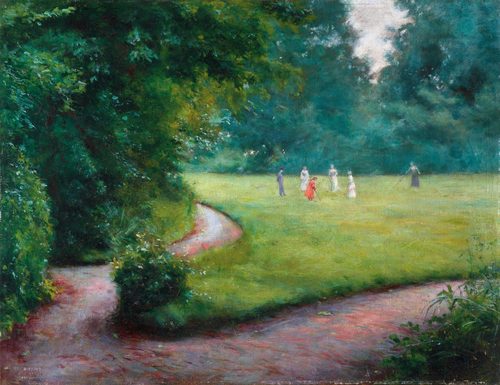
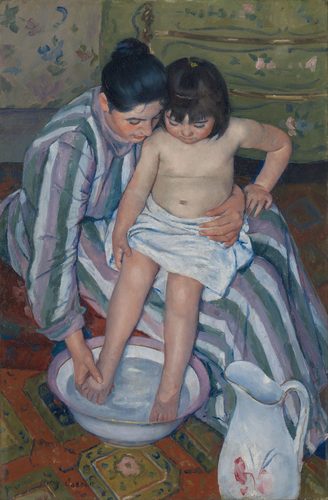
Impressionism is the original French movement that captured fleeting light in Paris starting around 1860; American Impressionism is the adaptation of that technique by American painters, applied to American subjects and running later, into the 1920s. French Impressionism, led by Monet, Renoir, and Pissarro, developed loose brushwork and broken color to record fleeting atmosphere. American painters like Childe Hassam and Theodore Robinson, along with the group known as the Ten American Painters, encountered the style in Paris and brought it home starting around 1880, applying it to New England coastlines, city streets, and domestic scenes rather than the French countryside and cafes. American Impressionists often kept somewhat firmer drawing and more decorative, sometimes brighter color than their French counterparts, and the style persisted in the United States for decades after French Impressionism had already given way to Post-Impressionism and modernism.
Impressionism vs. American Impressionism at a glance
| Impressionism | American Impressionism | |
|---|---|---|
| Years | 1860–1890 | 1880–1920 |
| Origin | Paris, France | United States |
| Origin & subjects | Parisian streets, French rivers, cafes, and countryside. | New England coastlines, American gardens, cities, and domestic scenes. |
| Timeline | Peaked and largely faded by the 1880s-90s. | Flourished into the 1910s-20s, well after French Impressionism waned. |
| Drawing | Form often dissolves fully into light and color. | Drawing frequently stays firmer and more legible beneath the color. |
| Palette | Naturalistic light captured as directly observed. | Often brighter, more decorative, sometimes idealized coloring. |
| Key figures | Monet, Renoir, Pissarro, and Degas, working in and around Paris. | Childe Hassam, Theodore Robinson, and the Ten American Painters. |
| Reception | Initially mocked, later embraced as a major French movement. | Embraced relatively quickly by American collectors and institutions. |
How to tell them apart
If the light and setting feel unmistakably French — a Parisian boulevard, a Seine riverbank, a dance hall — you're looking at Impressionism proper. If the same broken brushwork and bright color describe a New England harbor, a Manhattan street in snow, or a garden behind an American porch, that's American Impressionism. American Impressionist figures also tend to hold their shape a bit more firmly than the atmospheric dissolve typical of Monet's late work, and the style shows up in American paintings dated well into the 1910s and 1920s, long after France had moved on.
What they share
American Impressionism is a direct descendant of French Impressionism — many of its practitioners studied in Paris, met French Impressionists, or saw their work firsthand before adapting the technique at home. Both share the core commitment to loose brushwork, broken color, and painting light as directly observed rather than idealized in the studio.
Try both
Settle it yourself — generate the same subject in each style and compare the results.
Frequently asked questions
Is American Impressionism just Impressionism painted in America?
Essentially, yes — it's the American adaptation of French Impressionist technique, applied to American subjects, though it often kept firmer drawing and a brighter, more decorative palette than its French source.
Which came first, Impressionism or American Impressionism?
French Impressionism, emerging around 1860 in Paris. American Impressionism followed around 1880, once American painters encountered the style in France and brought it home.
Did American Impressionism last longer than French Impressionism?
Yes. French Impressionism had largely given way to Post-Impressionism and modernism by the 1890s, while American Impressionism remained popular into the 1910s and 1920s.