 Art
Art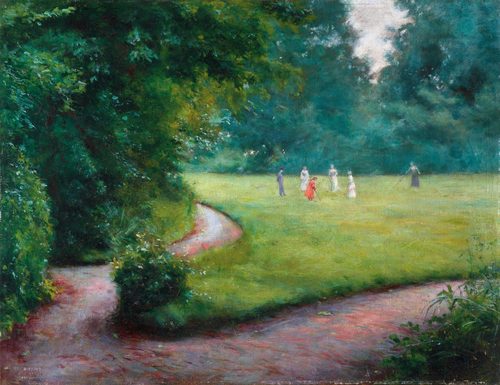
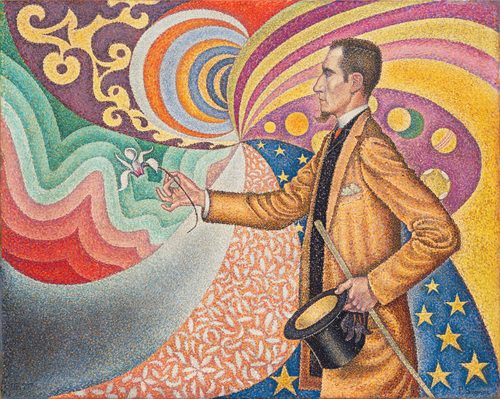
Impressionism paints light intuitively and spontaneously; Neo-Impressionism applies color according to a deliberate, near-scientific system of tiny dots or strokes. Impressionism emerged in Paris around 1860, with painters like Monet working quickly and instinctively to capture a fleeting moment. By 1884, Georges Seurat and Paul Signac developed a more rigorous method — later called pointillism or divisionism — placing small, separate dots of pure, unmixed color across the canvas so the eye would optically blend them at a distance, based on contemporary color theory. Where Impressionist brushwork looks loose and improvised, Neo-Impressionist surfaces look calculated, even mathematical, built up dot by dot over long working sessions rather than captured in a single outdoor sitting. Both movements share a fascination with color and light, but Neo-Impressionism traded Impressionism's spontaneity for method, planning each canvas with technical precision.
Impressionism vs. Neo-Impressionism at a glance
| Impressionism | Neo-Impressionism | |
|---|---|---|
| Years | 1860–1890 | 1884–1905 |
| Origin | Paris, France | France |
| Method | Spontaneous, intuitive application of color and light. | Systematic application of small, separate dots of pure color. |
| Brushwork | Loose, visible strokes of varying size and direction. | Tiny, uniform dots or strokes applied with careful control. |
| Working process | Often completed quickly, in a single outdoor session. | Built up slowly over many sessions, planned in advance. |
| Color theory | Color mixed intuitively on the canvas or palette. | Color left unmixed, relying on optical blending by the eye. |
| Composition | Informal, capturing a natural, unplanned moment. | Carefully structured and deliberately composed beforehand. |
| Mood | Spontaneous, alive, atmospheric. | Calm, orderly, almost architectural stillness. |
How to tell them apart
Step close to the canvas: if the strokes are loose, varied, and clearly brushed, that's Impressionism. If the surface resolves into thousands of tiny, distinct dots of pure color that only blend together from a distance, you're looking at Neo-Impressionism — Seurat's A Sunday on La Grande Jatte is the textbook example. Impressionist scenes often feel caught in a passing moment; Neo-Impressionist scenes feel still, posed, and carefully engineered, even when the subject is the same park or riverbank.
What they share
Neo-Impressionism grew directly from Impressionism's interest in light and color, sharing many of the same modern subjects — parks, rivers, leisure scenes — and several Neo-Impressionists, including Pissarro, moved between both circles. Both movements rejected academic finish in favor of visible technique as part of the picture's meaning, differing mainly in whether that technique was spontaneous or systematic.
Try both
Settle it yourself — generate the same subject in each style and compare the results.
Frequently asked questions
Is Neo-Impressionism the same as pointillism?
Pointillism is the technique most associated with Neo-Impressionism — applying small dots of pure color — though the movement is also called divisionism, referring more broadly to its systematic separation of color.
Which came first, Impressionism or Neo-Impressionism?
Impressionism, emerging around 1860. Neo-Impressionism followed roughly two decades later, beginning around 1884 when Georges Seurat introduced his systematic pointillist technique.
Did Impressionist painters use Neo-Impressionist technique?
Camille Pissarro experimented with pointillism for several years in the mid-1880s before returning to a looser Impressionist style, illustrating how closely connected — yet technically distinct — the two movements were.