 Art
Art
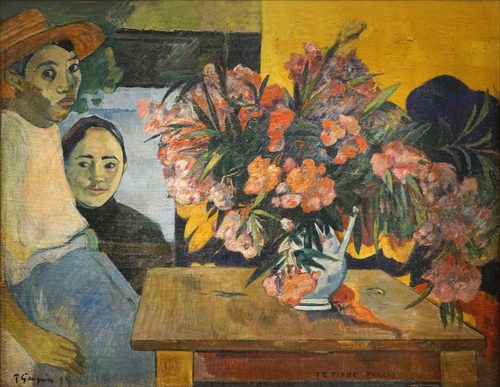
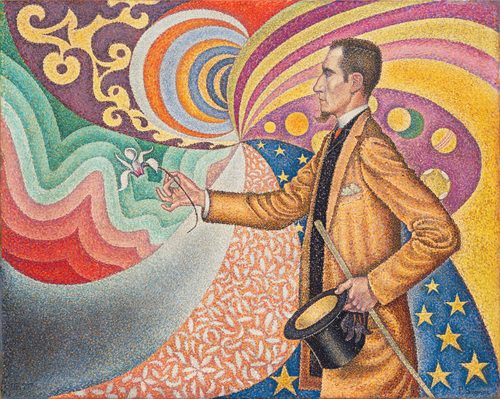
Impressionism records the fleeting sensation of light on a scene; Post-Impressionism uses that same broken color and loose brushwork as a starting point for structure, symbolism, or personal emotion rather than pure optical observation. Impressionism took shape in Paris around 1860 among painters like Monet and Renoir, who prioritized capturing a specific moment of light over form or narrative. By the mid-1880s, a more varied group of painters — including Paul Cézanne, Vincent van Gogh, Paul Gauguin, and Georges Seurat — felt Impressionism had sacrificed too much structure and meaning for pure sensation, and each pushed painting in a different direction: Cézanne toward solid geometric form, Van Gogh toward raw emotional color, Gauguin toward flat symbolic pattern, Seurat toward scientific color theory. Post-Impressionism is less a single style than a loose label for these divergent responses, unified mainly by their shared root in, and rebellion against, Impressionist technique.
Impressionism vs. Post-Impressionism at a glance
| Impressionism | Post-Impressionism | |
|---|---|---|
| Years | 1860–1890 | 1885–1910 |
| Origin | Paris, France | France |
| Goal | To capture a fleeting optical sensation of light and atmosphere. | To express structure, emotion, or symbolic meaning beyond optics. |
| Form | Solid form often dissolves into light and color. | Form is deliberately rebuilt — geometric, simplified, or exaggerated. |
| Color use | Color records observed light as perceived in the moment. | Color used expressively or symbolically, sometimes unnaturalistic. |
| Brushwork | Broken, spontaneous strokes applied quickly, wet-on-wet. | Varied by artist — deliberate, patterned, or thickly built up. |
| Cohesion | A relatively unified group with a shared visual approach. | A loose umbrella term covering several distinct individual styles. |
| Subject matter | Landscape, leisure, and modern city life observed directly. | Ranges widely — still life, symbolic scenes, structured landscape. |
How to tell them apart
If the color feels like an accurate record of light at one instant — soft, atmospheric, forms slightly blurred — that's Impressionism. If the color feels deliberately heightened or the composition feels built rather than observed — Cézanne's blocky apples, Van Gogh's swirling stars, Seurat's dotted precision, Gauguin's flat bold outlines — you're looking at Post-Impressionism. Impressionism asks 'what did this look like right now?'; Post-Impressionism asks 'what does this mean, or how should it feel?' The brushwork in Post-Impressionist work often looks more calculated than spontaneous.
What they share
Post-Impressionist painters trained in or absorbed Impressionist technique, and several — including Cézanne and Gauguin — exhibited alongside the Impressionists before diverging. Both movements rejected academic finish and continued Impressionism's commitment to bright, modern color, differing mainly in how much structure or personal meaning they layered back on top of that shared foundation.
Try both
Settle it yourself — generate the same subject in each style and compare the results.
Frequently asked questions
Is Post-Impressionism the same as Impressionism?
No. Post-Impressionism grew out of Impressionist technique but reacted against its focus on pure optical sensation, pushing instead toward structure, symbolism, or emotional expression, as seen in Cézanne, Van Gogh, and Gauguin.
Which came first, Impressionism or Post-Impressionism?
Impressionism, emerging around 1860 in Paris. Post-Impressionism followed in the mid-1880s as a diverse reaction against Impressionist limits, continuing into the early 1900s.
Is Post-Impressionism one unified style?
No. It is an umbrella term for several distinct individual approaches — Cézanne's structured form, Van Gogh's expressive color, Gauguin's symbolism, Seurat's pointillism — united mainly by their shared break from Impressionism.