 Art
Art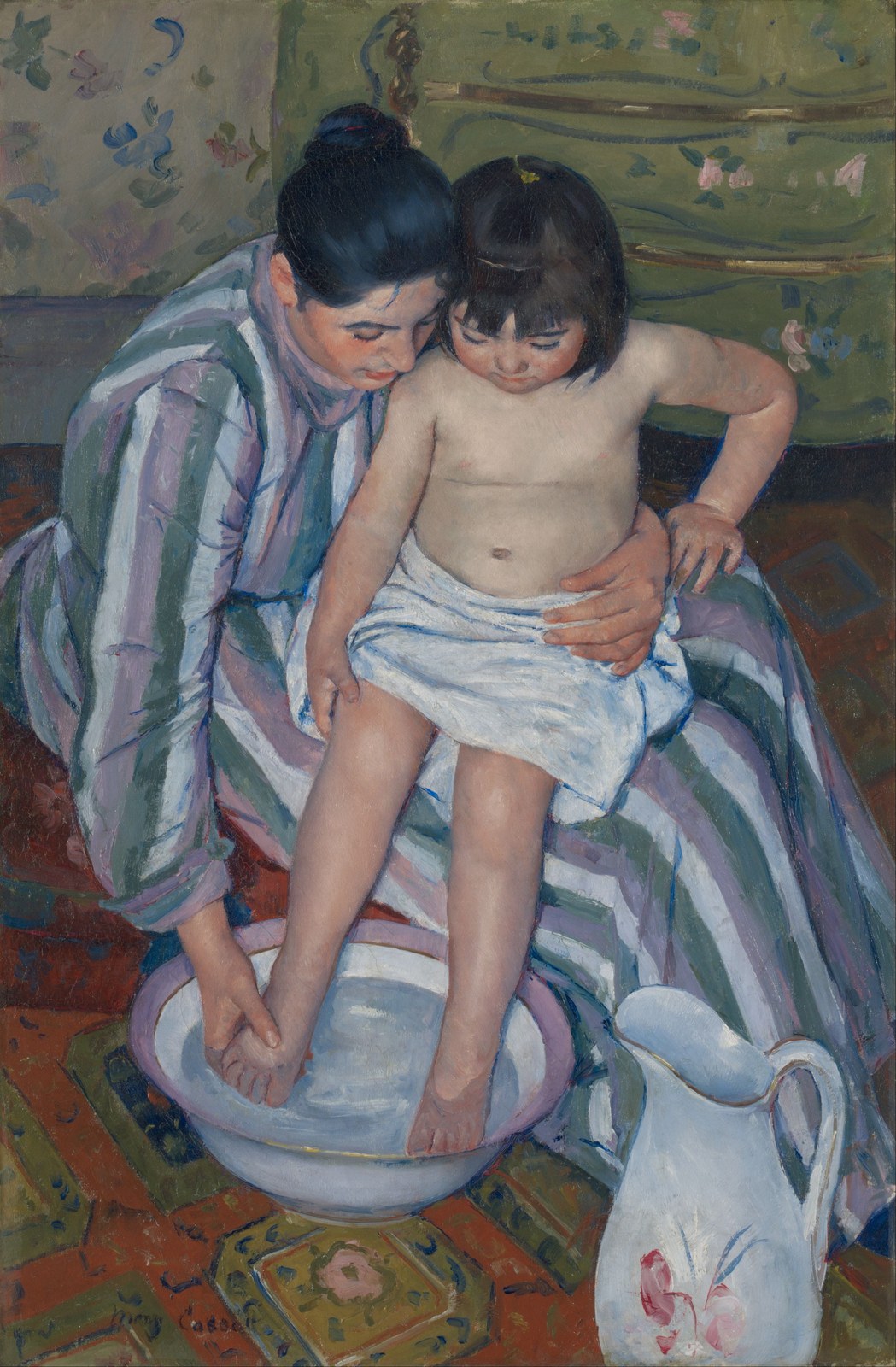
The Child’s Bath. Image: Mary Cassatt · Public domain · Wikimedia Commons, accessed 2026-08-04
American Impressionism took shape as painters from the United States encountered French Impressionism firsthand, either studying in Paris or seeing the movement's work exhibited, and brought its techniques home to depict American subjects: New England gardens, Connecticut shorelines, and the bustling avenues of a rapidly modernizing New York. Beginning around 1880 and flourishing into the 1920s, the movement adapted broken brushwork and bright, light-filled color to a distinctly American sensibility, often more attached to solid drawing and legible subject matter than its French counterpart.
Visually, American Impressionist paintings share the loose, dabbed brushwork and outdoor light effects of the French movement, but frequently retain a stronger sense of underlying structure and finish, reflecting the academic training many of these artists received before converting to Impressionist method. Subjects ranged from Childe Hassam's flag-draped Fifth Avenue parades and sunlit garden scenes to William Merritt Chase's park and beach views to the more intimate, tonally subtle landscapes of John Henry Twachtman and Theodore Robinson, the latter of whom had direct contact with Monet in France.
The movement rebelled against the dark, heavily varnished academic and Barbizon-influenced landscape painting that dominated American taste through the mid-nineteenth century, arguing instead for painting that recorded light and atmosphere with immediacy and optimism. It also positioned itself as a distinctly American answer to European modernism, adapting an imported style to native subject matter and often more patriotic, celebratory themes, especially visible in Hassam's wartime flag paintings.
American Impressionism matters as the bridge that carried Impressionist technique into American visual culture, shaping how the country's landscape, particularly its coastal towns and rural art colonies, was depicted for a generation. Painting colonies at Old Lyme, Connecticut, and Cos Cob became centers of the style, and its popular, accessible beauty made it one of the most collected and beloved American painting movements, even as more radical modernist styles emerged alongside and after it.
What defines American Impressionism
Broken color with retained structure
Paintings use dabbed, visible brushwork similar to French Impressionism, but often keep firmer drawing and clearer spatial structure beneath the surface, reflecting many artists' academic training.
American art colonies and plein air practice
Artists gathered in rural or coastal communities, especially Old Lyme and Cos Cob, Connecticut, to paint outdoors together, forming close-knit colonies that shaped a shared regional style.
Bright, high-key sunlight
A recurring interest in strong, clear sunlight, on gardens, beaches, and building facades, often rendered in warmer, more saturated tones than the cooler grays of French Impressionist skies.
Genteel, leisured subject matter
Paintings often depicted women in gardens, sunlit interiors, and comfortable domestic or resort settings, reflecting the tastes and patronage of an American upper-middle class.
Urban modernity alongside rural scenes
Alongside garden and coastal landscapes, painters like Childe Hassam captured the energy of modern city life, flag-lined avenues, rain-slicked streets, and crowded parks in New York and Boston.
Regional variation
The style adapted to different American landscapes, from the misty, tonal New England scenes of Twachtman to the sun-bleached beaches of Chase's Shinnecock paintings on Long Island.
History
American Impressionism developed as American art students, many trained first in the conservative academic tradition, traveled to Paris in the 1870s and 1880s and encountered Impressionist painting directly. Theodore Robinson worked closely alongside Claude Monet in Giverny in the late 1880s, becoming one of the first Americans to fully absorb the technique, while Mary Cassatt, though generally classified within French Impressionism itself, provided an important American link to the Paris group.
Returning home, painters including Childe Hassam, William Merritt Chase, and John Henry Twachtman began applying broken brushwork and bright outdoor light to American subjects. Chase, already an established teacher, ran influential summer art schools, notably at Shinnecock Hills on Long Island beginning in 1891, training a generation of students in plein air technique. Art colonies formed around shared painting grounds: the Cos Cob colony in Connecticut in the 1890s, followed by the more famous Old Lyme colony, centered on the Florence Griswold House, which became a hub for Hassam, Twachtman, and others through the 1900s and 1910s.
In 1897, a group of ten prominent American Impressionist and tonalist painters, including Childe Hassam, John Henry Twachtman, and J. Alden Weir, resigned from the conservative Society of American Artists to exhibit independently as "The Ten American Painters," seeking greater control over how their work was shown, and held their first show together in 1898; William Merritt Chase joined the group later, in 1902, after Twachtman's death. The group exhibited together for roughly two decades, helping cement Impressionist technique as a mainstream, respected American style rather than a radical import.
By the 1910s and into the 1920s, American Impressionism remained popular with collectors even as more radical European modernism, introduced dramatically at the 1913 Armory Show, began to draw younger American artists toward Cubism, Fauvism, and abstraction. The style persisted in landscape and garden painting well into the twentieth century, gradually absorbed into a broader American realist and regionalist landscape tradition rather than ending abruptly.
Key works
| Work | Artist | Year | Why it matters |
|---|---|---|---|
| Allies Day, May 1917 | Childe Hassam | 1917 | Part of Hassam's celebrated flag series depicting a flag-draped Fifth Avenue, blending patriotic subject with Impressionist light and color. |
| A Friendly Call | William Merritt Chase | 1895 | A sunlit interior scene showing Chase's fluid brushwork and interest in fashionable, comfortable domestic life. |
| The Wedding March | Theodore Robinson | 1892 | Painted after Robinson's close contact with Monet in Giverny, showing direct French influence adapted to an American subject. |
How to make art in this style
Palette. Combine the bright, light-driven color of French Impressionism, blues, greens, warm yellows, with slightly higher contrast and clearer local color than typical French examples. American coastal and garden scenes often call for strong warm sunlight against cool shadow, crisp whites on architecture or clothing, and saturated summer greens.
Composition. Balance Impressionist spontaneity with clearer structure: keep a legible sense of perspective and solid underlying drawing even while applying loose, broken brushwork on top. Garden paths, porches, flags, and shoreline horizons offer strong compositional anchors that many American Impressionists relied on.
Brushwork. Use visible, confident strokes, but consider tightening the brushwork slightly in focal areas, a face, a central architectural feature, while keeping the surrounding foliage or background looser and more broken. This mix of finish and looseness is a hallmark distinguishing the American approach from the more uniformly broken surface of French Impressionism.
Subjects. Favor recognizably American settings: white clapboard houses, flower gardens, rocky New England coastlines, sunlit park scenes, or flag-lined city streets. Depicting familiar, comfortable leisure, a woman reading on a porch, children on a beach, captures the genteel spirit central to the movement.
Light. Study how strong, direct sunlight behaves differently from the softer, often overcast light common in French Impressionist painting; American Impressionists frequently worked with harder-edged shadows and brighter highlight contrast, particularly in coastal and summer scenes.
Legacy
American Impressionism shaped the popular image of the American landscape, its coastal towns, gardens, and small-town greens, for decades after the movement's peak, and its paintings remain among the most widely collected and reproduced works of American art. The Old Lyme and Cos Cob colonies established a lasting model for artist communities organized around shared landscape and mutual support, a pattern later echoed by twentieth-century artist colonies elsewhere in the country.
Its technical legacy lives on in American plein air painting, which remains an active, organized movement today, with dedicated painting festivals and societies explicitly citing Hassam, Chase, and their contemporaries as forebears. Chase's influence as a teacher extended especially far, shaping generations of American art students in observational, light-focused outdoor painting technique.
Because the style paired accessible, optimistic beauty with recognizably American settings, it also became closely tied to popular and civic taste, appearing in museum collections, calendars, and public buildings, and helping define a comfortable, patriotic visual identity for American painting distinct from the more provocative modernism arriving from Europe at the same time. That accessible warmth is a large part of why the style remains commercially popular with collectors today.
Frequently asked questions
What is American Impressionism?
American Impressionism is the adaptation of French Impressionist technique, broken brushwork, bright outdoor light, and everyday subject matter, by American painters between roughly 1880 and 1920, applied to distinctly American landscapes and city scenes.
How is American Impressionism different from French Impressionism?
American Impressionists often retained stronger underlying drawing and compositional structure than their French counterparts, reflecting academic training, and frequently depicted more genteel, patriotic, or recognizably American subjects, such as flag-draped avenues and New England coastal towns.
Who are the major American Impressionist painters?
Childe Hassam, William Merritt Chase, Theodore Robinson, and John Henry Twachtman are among the most prominent, along with other members of the group known as The Ten American Painters.
What was The Ten American Painters?
The Ten American Painters was a group of American Impressionist and tonalist artists, including Childe Hassam, John Henry Twachtman, and J. Alden Weir, who resigned from the more conservative Society of American Artists in 1897 and first exhibited independently in 1898; William Merritt Chase joined the group in 1902, after Twachtman's death.
Where were the main American Impressionist art colonies?
The most important colonies were at Cos Cob and Old Lyme in Connecticut, along with Chase's summer art school at Shinnecock Hills on Long Island, all of which drew painters together to work outdoors on shared landscapes.