 Art
Art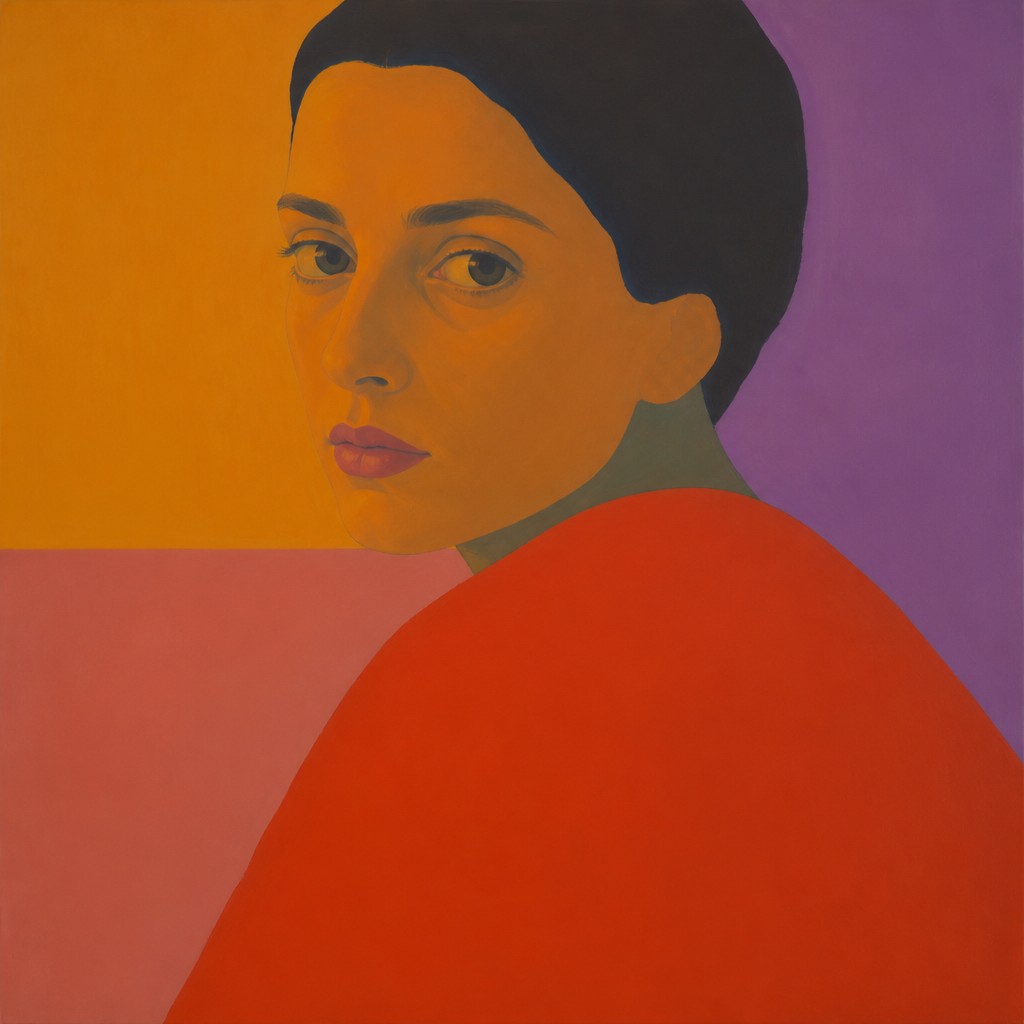 AI-generated
 AI-generated
 AI-generated
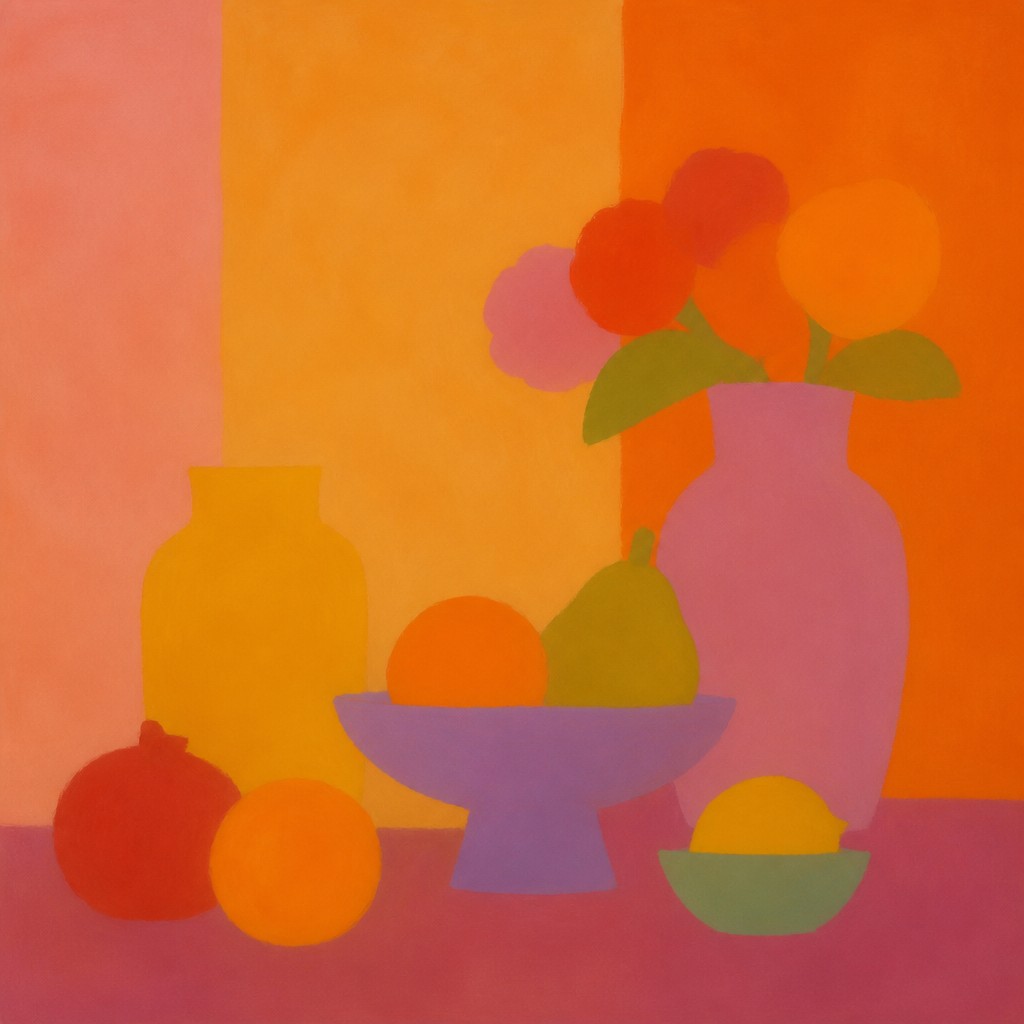
Color Field Painting is the quieter, more contemplative of Abstract Expressionism's two major currents, developed in the United States from the late 1940s through the 1960s by artists including Mark Rothko, Barnett Newman, Clyfford Still, and Helen Frankenthaler. Where action painting foregrounded visible gesture and physical exertion, color field painting foregrounded color itself, applied in large, simplified areas with minimal internal incident, meant to be experienced as an immersive environment rather than examined for brushwork or narrative content.
Visually, the style favors expansive canvases dominated by a small number of large color shapes — Rothko's softly bordered floating rectangles, Newman's flat fields interrupted by a single vertical "zip," Still's jagged torn-edge color masses. Frankenthaler introduced a distinct technical variant in 1952 with her "soak-stain" technique, pouring heavily thinned paint directly onto unprimed canvas so it soaked into the fabric rather than sitting on the surface, producing luminous, watercolor-like fields that later influenced the Washington Color School painters Morris Louis and Kenneth Noland.
Color field painting rebelled against both illustrative, narrative art and against the emphasis on visible gesture and personal drama that defined action painting; its practitioners wanted color and scale alone to produce a direct emotional or even spiritual response, without the mediating drama of the artist's visible hand. Rothko in particular spoke of wanting his paintings to induce profound emotional states, insisting viewers stand close to his large canvases so the color would fill their field of vision.
The style matters because it pushed abstract painting toward pure sensation — scale, color, and surface as ends in themselves — clearing a path toward Minimalism's even further reduction of the canvas to essential elements. Its insistence that a painting could function as an immersive environment rather than a framed picture also anticipated installation art's interest in enveloping the viewer's whole physical experience.
What defines Color Field Painting
Large, simplified color areas
Compositions typically reduce the canvas to a handful of expansive color shapes — rectangles, bands, or fields — rather than the complex, gesture-filled surfaces of action painting, so the eye rests in broad zones of color rather than tracking individual marks.
Soft or hard edges
Edges between color areas range from hazy, glowing borders achieved by thin layered washes to crisp, taped-off lines, but in both cases the boundary itself becomes a carefully considered element of the composition.
Monumental scale for immersion
Canvases are often large enough to exceed the viewer's peripheral vision at close range, an effect several artists intended deliberately so the color would surround rather than simply be observed.
Minimal gesture and surface incident
Unlike action painting's visible brushwork, color field surfaces are typically smooth or evenly worked, with the artist's hand deliberately suppressed so attention stays on color relationships rather than process.
Stain and soak technique
Helen Frankenthaler's method of pouring thinned paint onto unprimed canvas let pigment soak directly into the fabric rather than sit on top of it, producing luminous, translucent color fields that inspired the later Washington Color School.
Emotional and spiritual ambition
Many practitioners described their work in terms of the sublime or the transcendent, treating color and scale as capable of producing an almost overwhelming viewing experience.
History
Color Field Painting emerged alongside action painting as part of the broader Abstract Expressionist movement in New York in the late 1940s, though its key figures pursued a distinctly different visual approach. Mark Rothko and Clyfford Still had both painted in more surrealist-influenced, biomorphic styles earlier in the decade before arriving, independently, at their mature styles around 1947 to 1949 — Rothko's softly bordered floating rectangles and Still's jagged, torn-edge fields of color. Barnett Newman, who had painted relatively little before the mid-1940s, found his signature format — a flat field of color interrupted by one or more narrow vertical bands he called "zips" — with Onement I in 1948.
Helen Frankenthaler brought a crucial technical innovation in 1952 with Mountains and Sea, pouring turpentine-thinned paint directly onto unprimed, unstretched canvas laid on the floor, so the pigment soaked into the fabric rather than sitting on its surface. This "soak-stain" technique, seen by Morris Louis and Kenneth Noland on a visit to Frankenthaler's studio in 1953, became foundational to the Washington Color School, a second-generation offshoot centered in Washington, D.C., through the late 1950s and 1960s.
Color field painting maintained critical support through the 1950s and 1960s, championed particularly by critic Clement Greenberg, who saw in it a purer, more advanced formal achievement than action painting's residual gesture and drama. As Abstract Expressionism's dominance faded in the 1960s, color field painting's emphasis on flatness, scale, and reduced formal means fed directly into Minimalism and Post-Painterly Abstraction, extending its influence even after the original movement's peak had passed.
Key works
| Work | Artist | Year | Why it matters |
|---|---|---|---|
| Orange and Yellow | Mark Rothko | 1956 | A luminous pairing of softly bordered color rectangles exemplifying Rothko's mature style of immersive, glowing color. |
| Vir Heroicus Sublimis | Barnett Newman | 1951 | A vast red field interrupted by narrow vertical "zips," intended to be viewed at close range so its scale overwhelms the viewer. |
| Mountains and Sea | Helen Frankenthaler | 1952 | The painting that introduced Frankenthaler's soak-stain technique, pouring thinned paint into unprimed canvas, a method that shaped the Washington Color School. |
| 1957-D No. 1 | Clyfford Still | 1957 | A jagged, torn-edge field of color typical of Still's rough-textured, monumental approach to color field painting. |
How to make art in this style
Working in the Color Field Style
Palette: Choose two or three colors with a considered emotional relationship — deep maroon against burnt orange, saturated red against itself in slightly different values, or deep blue against soft ochre. Mix generously so you have enough of each hue for a large, evenly worked area; consistency of mixed color across a big field matters more than variety.
Composition: Reduce the canvas to a small number of large, simple shapes — rectangles, bands, or a single field interrupted by one narrow line. Resist adding incident, texture, or gesture; the composition should feel inevitable and calm rather than eventful. Work at a large scale where possible, since the immersive effect depends on the color filling more of the viewer's vision than a small canvas allows.
Technique: For soft, glowing edges, apply paint in thin, diluted layers, letting each coat partly show through the next, and blend or feather boundaries between colors rather than defining them sharply. For a stain effect, thin paint significantly and pour or apply it to unprimed canvas so pigment soaks into the fabric rather than sitting on top. For crisp edges, mask boundaries with tape before painting a flat, evenly loaded area.
Subjects: None in the representational sense — color and scale themselves are the subject.
Mood: Aim for stillness, depth, and a slow-building emotional or contemplative charge rather than energy or drama; the painting should reward sustained, quiet looking rather than a quick glance.
Legacy
Color Field Painting's reduction of the canvas to scale, color, and surface fed directly into Minimalism, whose practitioners took the format's emphasis on formal essentials even further, stripping away color's emotional rhetoric in favor of cool, industrial precision. The Washington Color School — Morris Louis, Kenneth Noland, and others who adopted Frankenthaler's stain technique — extended the style's technical innovations through the 1960s, and Post-Painterly Abstraction, a term coined by critic Clement Greenberg, grouped color field painting with related tendencies emphasizing flatness and reduced gesture.
The style's insistence that scale and color alone could produce a profound emotional response continues to shape how large-scale abstract painting and immersive installation art are conceived; Rothko's specific ambition to surround the viewer in color anticipates later light and space installations. His paintings, along with Newman's and Frankenthaler's, remain touchstones for meditative, non-narrative abstraction and are frequently cited by contemporary painters working with large fields of poured, stained, or glazed color.
Color field painting's calm, glowing surfaces also entered popular visual culture more broadly, influencing graphic design, textile and interior color schemes, and the general aesthetic vocabulary for "contemplative" or "soothing" abstract imagery used well outside the fine-art context in which it originated.
Frequently asked questions
What is Color Field Painting?
Color Field Painting is a style within Abstract Expressionism that uses large, simplified areas of color, often soft-edged and applied at a monumental scale, to create immersive, contemplative paintings rather than gestural or narrative ones.
How does Color Field Painting differ from action painting?
Action painting emphasizes visible gesture and physical energy, with dripped or slashed paint recording the artist's movement, while color field painting suppresses gesture in favor of large, calm areas of color meant to be experienced as an immersive environment.
Who are the major Color Field painters?
Mark Rothko, Barnett Newman, Clyfford Still, and Helen Frankenthaler are the movement's central figures, later joined by Washington Color School painters Morris Louis and Kenneth Noland, who adopted Frankenthaler's stain technique.
What is the "soak-stain" technique?
Developed by Helen Frankenthaler starting in 1952, it involves pouring heavily thinned paint onto unprimed canvas so the pigment soaks directly into the fabric, producing translucent, watercolor-like fields of color rather than paint sitting on the surface.
Why did Rothko want viewers to stand close to his paintings?
Rothko believed that at close range his large color fields would fill the viewer's entire field of vision, producing an immersive, near-overwhelming emotional experience rather than being viewed as a distant framed picture.