 Art
Art AI-generated
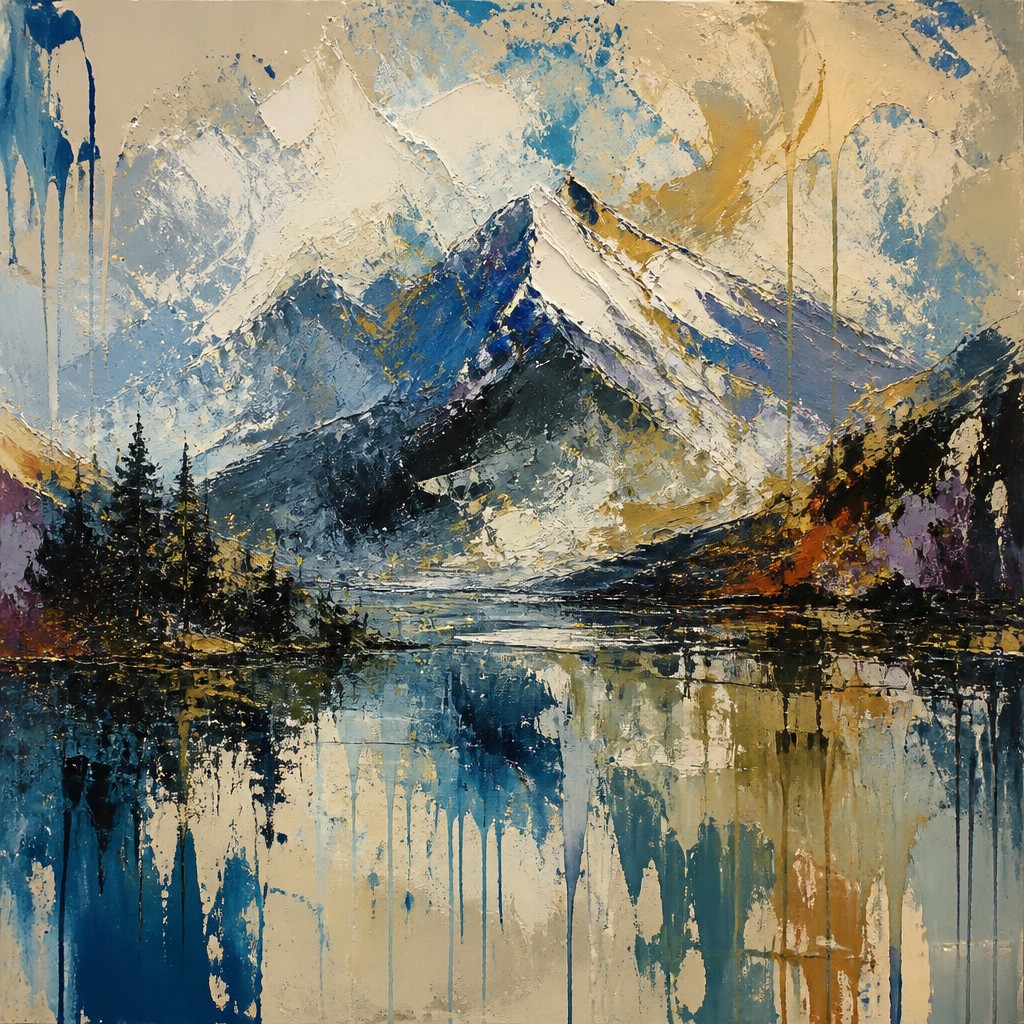 AI-generated
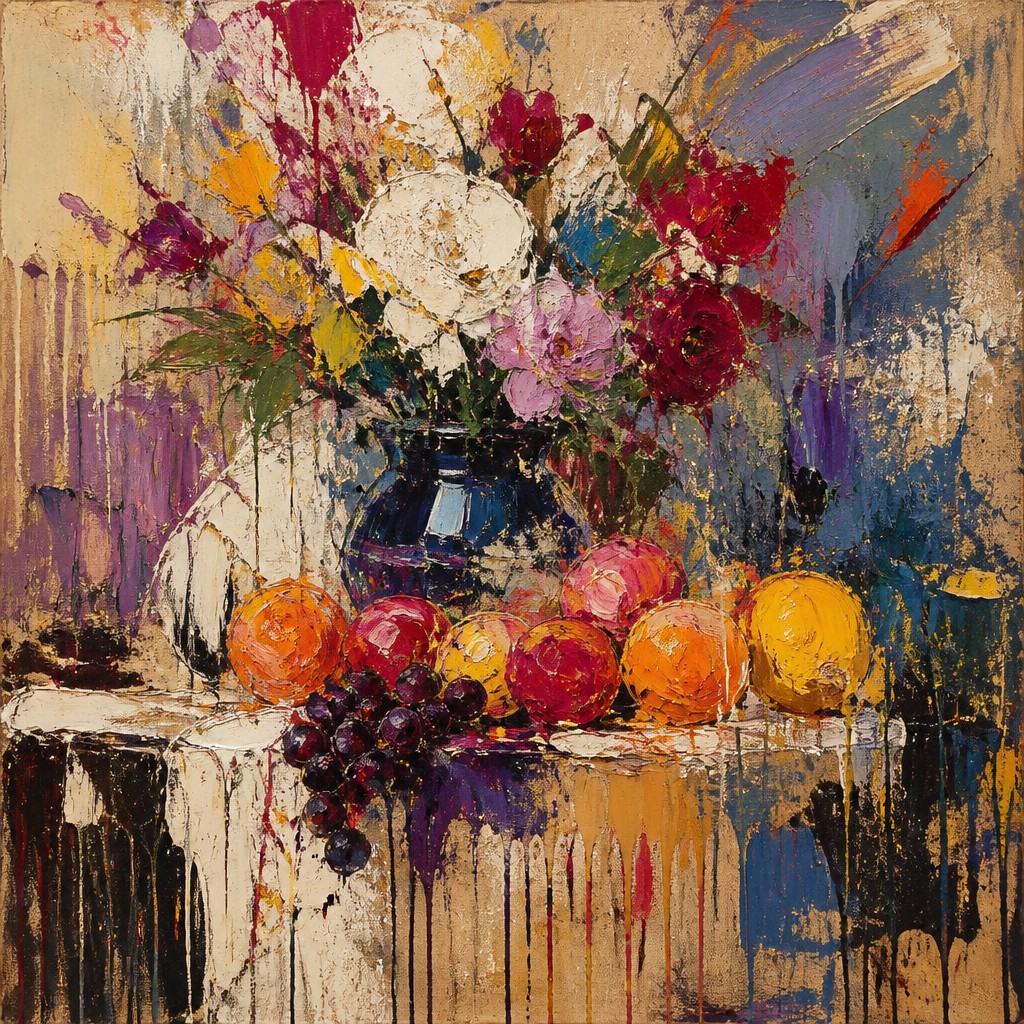 AI-generated
Action painting refers to the gestural, physically energetic strand of Abstract Expressionism practiced chiefly by Jackson Pollock, Franz Kline, and Willem de Kooning in New York from the mid-1940s through the 1950s. The term, coined by critic Harold Rosenberg in his 1952 essay "The American Action Painters," reframed the canvas not as a surface for depicting an object but as, in his words, an arena in which to act — a space where the record of the artist's physical movement, rather than any finished image, constituted the work's meaning.
Visually, action paintings are dense with visible process. Pollock's drip paintings, made by pouring, flinging, and dripping paint from sticks and hardened brushes onto canvas laid on the studio floor, produce tangled, rhythmic skeins of line with no discernible top, bottom, or focal point. Kline's large black-and-white canvases translate the gesture of a loaded brush into bold, architectural slashes that read simultaneously as abstract marks and as fragments of structure. De Kooning's canvases sit between the two, combining fast, slashing brushwork with fragments of recognizable, often violently distorted figures.
Action painting rebelled against the idea that a painting should be a carefully composed, premeditated image built up through preparatory studies. Instead, it treated the act of painting as itself a kind of performance or existential event, closely tied to ideas then circulating about individual authenticity, spontaneity, and the unconscious mind drawn from Surrealist automatism and postwar existentialist philosophy. The finished canvas was less an object to be admired than a residue or trace of the process that produced it.
The style matters because it pushed the physical, bodily dimension of painting further than any prior Western movement, directly anticipating Happenings, performance art, and later process-based art that treats the act of making as inseparable from the work itself. It also produced some of the most immediately recognizable images of twentieth-century American art, Pollock's drip paintings foremost among them.
What defines Action Painting
Drip and pour technique
Paint is applied without the brush ever touching the canvas — poured, dripped, or flung from sticks, trowels, or loaded brushes — producing tangled, rhythmic webs of line built up in successive layers.
Canvas on the floor
Working with the canvas laid flat on the studio floor rather than upright on an easel let painters like Pollock move around and across the surface, approaching it from all four sides rather than one fixed viewpoint.
Bold gestural strokes
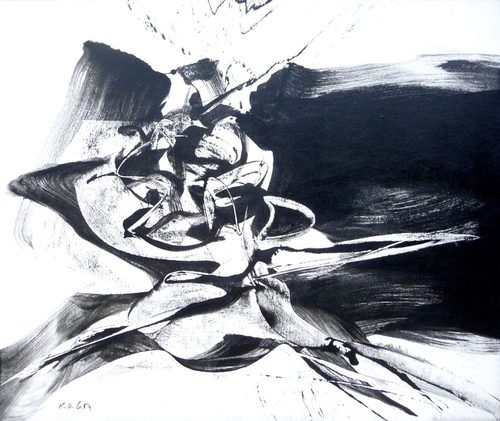
Broad, confident, often black-and-white marks — as in Franz Kline's work — translate the full-arm sweep of a loaded brush directly into the image, with the gesture itself, not any resulting shape, treated as the content.
All-over, non-hierarchical composition
Compositions have no single focal point or center of interest; marks distribute evenly across the entire surface, so the eye is kept in continuous motion rather than settling anywhere.
Visible speed and physical exertion
The pace and force of the artist's body register directly in the paint — flung droplets, dragged trails, sudden changes of direction — so the finished canvas reads as a record of physical performance.
Improvisation over premeditation
Works were built through direct, intuitive response to the canvas as it developed, rather than from preparatory sketches or a predetermined plan, echoing Surrealist ideas about tapping the unconscious through automatic gesture.
History
Action painting developed within Abstract Expressionism in New York during the mid-1940s, as Jackson Pollock began moving away from the semi-figurative, Jungian-influenced imagery of his early work toward pure gesture. By 1947 he had arrived at his signature technique of pouring and flinging paint onto canvas laid on the studio floor, a method he pursued through 1950 in works like Autumn Rhythm and One: Number 31.
The critical framework for the style arrived in 1952, when critic Harold Rosenberg published "The American Action Painters" in ARTnews, arguing that for artists like Pollock the canvas had become "an arena in which to act" rather than a space to reproduce, design, or express an image. Rosenberg's essay, though it named no artists directly, was widely understood to describe Pollock, Franz Kline, and Willem de Kooning, and the term stuck as a way of distinguishing their gestural, process-focused work from the calmer color field painting of Rothko and Newman.
Franz Kline developed his mature black-and-white style around 1950, enlarging small brush studies into monumental architectural gestures, while de Kooning moved between fully abstract gestural canvases and his controversial figurative "Woman" series through the early 1950s, drawing criticism from some peers for reintroducing recognizable imagery into a supposedly non-representational movement.
Action painting's peak lasted roughly through the 1950s. Pollock's death in a car accident in 1956 and Kline's death in 1962 closed the movement's founding generation, and by the early 1960s Pop Art and Minimalism had begun displacing gestural abstraction as the avant-garde's central concern, though de Kooning himself continued painting prolifically for decades afterward.
Key works
| Work | Artist | Year | Why it matters |
|---|---|---|---|
| Number 1, 1950 (Lavender Mist) | Jackson Pollock | 1950 | A dense, luminous drip painting created by pouring and flinging paint onto a canvas laid on the studio floor. |
| One: Number 31, 1950 | Jackson Pollock | 1950 | A monumental poured canvas exemplifying the rhythmic, all-over web of line central to Pollock's mature technique. |
| Chief | Franz Kline | 1950 | A bold black-and-white canvas that translates the sweep of a loaded brush into monumental abstract architecture. |
| Excavation | Willem de Kooning | 1950 | A dense, all-over composition of interlocking fragmented forms marking the height of de Kooning's gestural abstraction. |
How to make art in this style
Working in the Action Painting Style
Palette: Keep it simple and high-contrast — black and white, or a limited earth-and-primary range of black, white, raw umber, and one or two saturated accents. Avoid elaborate color mixing; the gesture, not subtle color relationships, carries the work.
Composition: Abandon planning. Let the composition emerge through the accumulation of marks rather than a preconceived layout, and keep the whole surface active — no single passage should dominate as a focal point. Working large helps: scale forces full-body movement rather than wrist-and-finger control.
Technique: Lay the canvas flat on the floor if possible, allowing you to approach and mark it from every side. Use sticks, hardened brushes, or trowels loaded with thinned paint to pour, drip, and fling rather than apply paint by conventional brushing. Work fast, in a sustained continuous session, letting momentum and rhythm — not deliberation — guide each pass. For a bolder, more architectural approach, instead study small ink or brush sketches, then enlarge the most successful gesture onto a large canvas with a wide, fully loaded brush.
Subjects: None in the representational sense; the physical act of applying paint is the subject.
Mood: Aim for urgency, physical exertion, and a sense of risk — marks that could not have been made slowly or cautiously. The finished canvas should read as evidence of a real, sustained physical event.
Legacy
Action painting's insistence that the act of creation is itself the artwork's true content directly anticipated later performance art, Happenings, and process art, all of which treat making as inseparable from the finished object, or dispense with a lasting object altogether. Its emphasis on chance, gesture, and the artist's body prefigures much of the conceptual shift art took in the 1960s and 1970s.
Pollock's drip technique in particular became one of the most widely recognized and imitated images in modern art, entering popular culture as visual shorthand for abstract art itself and inspiring countless film, television, and design references, sometimes reducing a rigorous, physically demanding practice to a cliché of paint-splattering spontaneity. Franz Kline's bold black-and-white gesture continues to influence graphic design and calligraphic abstraction, while de Kooning's fusion of gesture and fragmented figuration influenced later Neo-Expressionist painters.
Action painting also permanently changed how painting could be discussed critically: Harold Rosenberg's framing of the canvas as an "arena" rather than a picture gave later critics and artists a vocabulary for treating process, performance, and physical engagement as legitimate artistic content in their own right, well beyond painting itself.
Frequently asked questions
What is action painting?
Action painting is a gestural style within Abstract Expressionism in which the physical act of applying paint — dripping, flinging, or slashing it onto canvas — became the artwork's primary content, rather than any finished image.
Who coined the term "action painting"?
Critic Harold Rosenberg coined the term in his 1952 essay "The American Action Painters," describing the canvas as an arena in which the artist acts rather than a surface on which an image is composed.
Is action painting the same as Abstract Expressionism?
Action painting is a subset of Abstract Expressionism — specifically its gestural, process-focused wing, represented by artists like Jackson Pollock, Franz Kline, and Willem de Kooning — distinct from the quieter color field painting of Rothko and Newman.
How did Jackson Pollock make his drip paintings?
Pollock laid unstretched canvas on the studio floor and poured, dripped, and flung paint from sticks and hardened brushes while moving around and over it, building up dense, rhythmic layers of line without the brush ever touching the surface.
What defines action painting visually?
Visible, energetic gesture with no single focal point — tangled skeins of dripped line, bold slashing brushstrokes, or fragmented forms — built through fast, physical, often improvised application of paint.