 Art
Art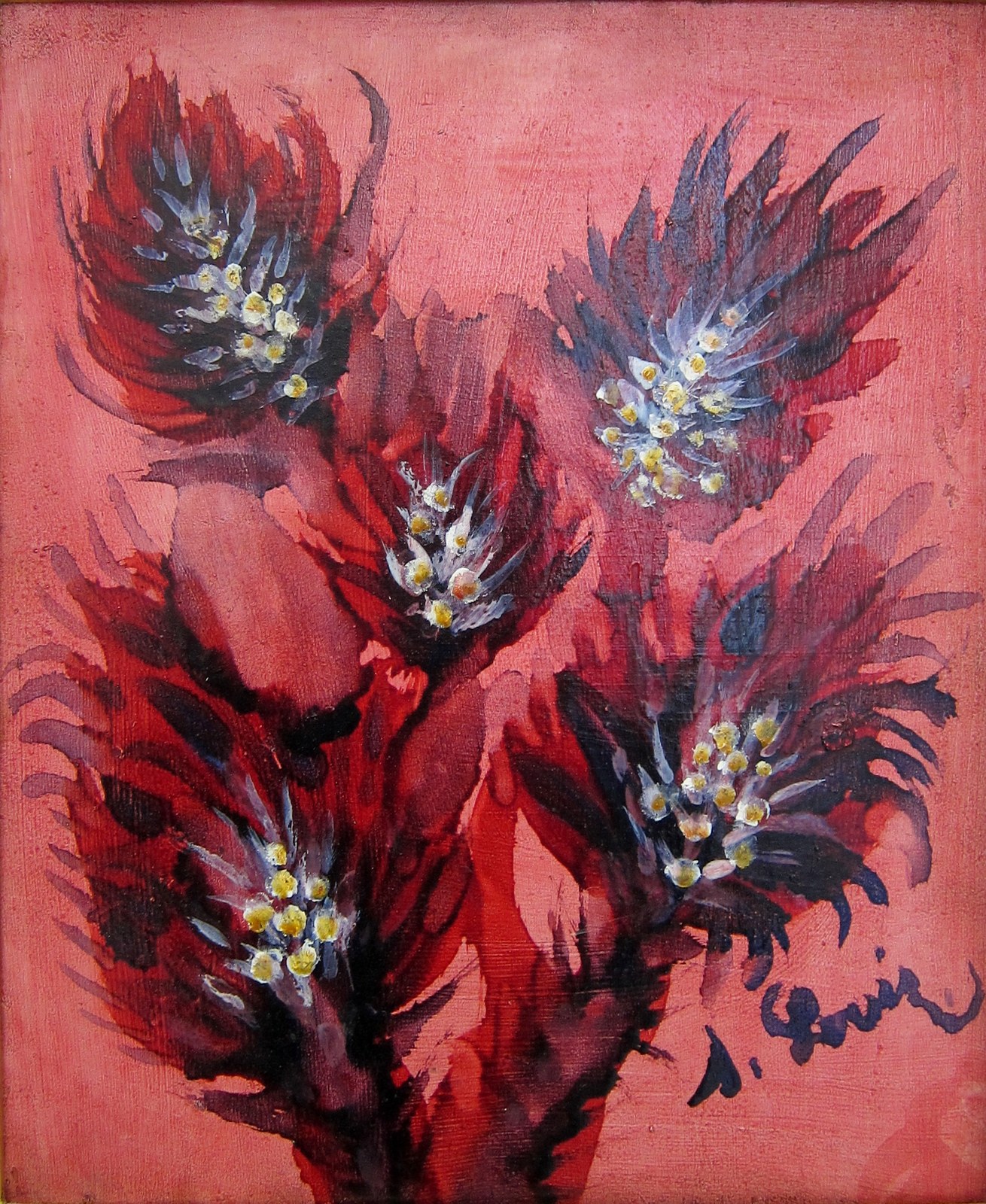
VdA LaM seraphine bouquet. Image: Séraphine Louis · Public domain · Wikimedia Commons, accessed 2026-08-04
Art Brut, French for "raw art," is a category coined in 1945 by painter Jean Dubuffet to describe work made entirely outside the conventions, training, and audience expectations of the official art world — by psychiatric patients, prison inmates, spiritualist mediums, and isolated self-taught individuals with no interest in or awareness of art history. Dubuffet, himself a trained and exhibiting artist, spent years collecting such work, ultimately assembling thousands of pieces into the Collection de l'Art Brut, and drew heavily on its visual language in his own increasingly crude, deliberately "raw" paintings.
Visually, art brut work is marked by an absence of academic technique and a corresponding intensity of private vision: dense, obsessive patterning that can cover every inch of a surface, crude bold outlines, flattened and often distorted figures, invented symbolic systems and scripts, and materials scavenged or improvised rather than conventionally purchased — cardboard, bedsheets, and found objects among them. Because its makers worked without regard for taste, market, or critical reception, the results feel urgent and unmediated in ways trained art rarely does.
Art brut rebelled directly against the entire apparatus of official "Culture" — art schools, museums, critics, and the market — which Dubuffet viewed as having exhausted and standardized creative expression. He argued that art produced under cultural pressure to conform, however skilled, was inherently less vital than work made by people with no stake in art-world approval, no training to unlearn, and often no expectation their work would ever be seen.
The movement matters because it permanently expanded the definition of who counts as an artist, challenging assumptions that skill, training, or sanity were prerequisites for serious creative achievement. It also gave rise to the broader English-language category of "outsider art," which today encompasses self-taught and visionary artists worldwide and has become a significant, actively collected and exhibited category within contemporary art institutions.
What defines Art Brut
Untrained, unmediated technique
Makers had no formal art education and often no awareness of art-historical conventions, producing work driven entirely by internal necessity rather than learned technique or an eye toward audience reception.
Dense, obsessive patterning
Many works fill every available surface with repeated marks, symbols, or figures, sometimes built up over years, reflecting compulsive or highly private working methods rather than a planned, finished composition.
Crude, bold outlines and flattened forms
Figures and objects are typically rendered with thick, direct contour lines and little concern for proportion, perspective, or naturalistic modeling, giving the work a raw, immediate graphic quality.
Invented symbolic systems
Some artists developed private scripts, numerological systems, or recurring iconography understood only to themselves, turning individual works into fragments of larger, idiosyncratic personal cosmologies.
Improvised or scavenged materials
Working often without access to conventional art supplies, many art brut makers used whatever was available — cardboard, bedsheets, packaging, found objects — incorporating the constraints of their circumstances directly into the work's material identity.
Isolation from the art world
Makers typically worked alone, without dealers, critics, or exhibition in mind, frequently in psychiatric institutions, prisons, or extreme personal isolation, a condition central to how Dubuffet defined the category.
History
Art brut's roots lie in early twentieth-century psychiatric interest in patient artwork; physician Hans Prinzhorn's 1922 book on the art of psychiatric patients, based on a collection he assembled in Heidelberg, was widely read by avant-garde artists including several Surrealists, who admired its unmediated intensity. Jean Dubuffet, already a painter reacting against academic training, encountered this material and began his own systematic search for similar work in 1945, touring psychiatric hospitals in Switzerland with writer and critic friends and coining the term "art brut" to describe what he found.
Dubuffet founded the Compagnie de l'Art Brut in Paris in 1948 with support from figures including André Breton, formalizing the collection and study of such work. Key figures he championed included Adolf Wölfli, a Swiss psychiatric patient who produced a vast, meticulously illustrated autobiographical epic over decades of institutionalization, and Aloïse Corbaz, another Swiss patient whose densely colored, operatic imagery of romance and royalty became central to the collection.
The Compagnie disbanded temporarily in the early 1950s amid disagreements among its founders, and the collection spent roughly a decade in the United States at the painter Alfonso Ossorio's East Hampton estate before returning to Paris in 1962, after which Dubuffet permanently donated it to the city of Lausanne, Switzerland, where it opened as the Collection de l'Art Brut museum in 1976, still the field's central institution.
Meanwhile, the concept spread internationally under looser translations and adaptations: British critic Roger Cardinal coined the English term "outsider art" in 1972, broadening Dubuffet's stricter, psychiatrically focused category to include a wider range of self-taught and visionary artists worldwide. By the mid-1970s, art brut as Dubuffet originally defined it had largely given way to this broader, more inclusive international "outsider art" field, though the Lausanne collection continues to maintain Dubuffet's original, narrower criteria.
Key works
| Work | Artist | Year | Why it matters |
|---|---|---|---|
| Dhôtel nuancé d'abricot | Jean Dubuffet | 1947 | A portrait from Dubuffet's Plus beaux qu'ils croient series, built from thick, textured paint applied in a deliberately unrefined manner. |
| Joe Bousquet in Bed | Jean Dubuffet | 1947 | A portrait of the poet Joë Bousquet, part of the same series exploring crude, direct portraiture as a rejection of academic technique. |
How to make art in this style
Working in the Art Brut Style
Palette: Favor raw, earthy, unmixed-feeling color — ochre, brick red, muddy green, chalky white, and black — applied without concern for subtle harmony or academic color theory. Let colors feel chosen instinctively rather than composed.
Composition: Abandon conventional rules of proportion, perspective, and balance. Fill the surface densely, edge to edge, if that feels natural, or let empty space sit uneasily beside crowded passages — consistency and "good" design are not the goal. Let a personal symbol, figure type, or motif repeat obsessively across a work or body of work, as if returning compulsively to the same private subject.
Technique: Use direct, unrefined mark-making — thick outlines, scratched or incised lines, built-up layers of paint or found material — rather than smooth blending or careful modeling. Working with unconventional materials, such as cardboard, packaging, or textured reclaimed surfaces, can help break habitual, trained approaches to a "proper" canvas. Draw or paint quickly and intuitively rather than planning a composition in advance; let the image accumulate through repeated, private mark-making sessions.
Subjects: Figures, faces, invented creatures, private symbols, or fragments of personal narrative, treated with total disregard for anatomical accuracy or realism. Subject matter should feel urgent and personal rather than chosen for its aesthetic or market appeal.
Mood: Aim for authenticity over polish — work that feels necessary to its maker rather than performed for an audience. Genuine art brut cannot be manufactured by imitating its look alone; the closest a trained artist can come is working with the same disregard for external approval that defines the category.
Legacy
Art brut permanently broadened the definition of who counts as an artist, establishing that serious, powerful creative work could come from people entirely outside formal training, institutional support, or awareness of art history. This premise now underlies the large and actively collected international field of outsider art, supported by dedicated museums, fairs, and dealers, and its influence runs through numerous later movements that valued rawness, intuition, or the vernacular over academic polish.
Dubuffet's own late paintings and sculptures, especially his colorful, cartoonish "Hourloupe" cycle beginning in the 1960s, extended the raw, anti-academic sensibility he had championed in others into a widely recognized signature style of his own, and his theoretical writings remain foundational reference points for discussions of authenticity and outsider status in art.
The field has also drawn sustained ethical scrutiny: much art brut was made by institutionalized psychiatric patients who had no say in how their work was collected, exhibited, or sold, raising ongoing questions about consent and authorship that continue to shape how museums and collectors handle outsider art today. Despite this tension, the Collection de l'Art Brut in Lausanne remains a major destination for scholars and the public, and the category Dubuffet named continues to expand as new self-taught artists are identified worldwide.
Frequently asked questions
What is Art Brut?
Art Brut, French for "raw art," is a term coined in 1945 by Jean Dubuffet for artwork made entirely outside academic training and the official art world, typically by psychiatric patients, prisoners, or isolated self-taught individuals with no interest in art-world recognition.
What is the difference between Art Brut and outsider art?
Art brut is Dubuffet's original, stricter French category, defined specifically by makers' total isolation from art culture and often institutionalization. "Outsider art," coined by critic Roger Cardinal in 1972, is a broader English-language term covering a wider range of self-taught and visionary artists internationally.
Who coined the term Art Brut?
Painter Jean Dubuffet coined the term in 1945 after touring psychiatric hospitals in Switzerland and encountering patient artwork that struck him as more vital and unmediated than academically trained art.
Is Jean Dubuffet an Art Brut artist?
Dubuffet was a trained, exhibiting artist and art brut's chief collector and theorist, not strictly an "art brut" maker himself by his own definition, but his own paintings deliberately adopted the raw, anti-academic aesthetic he championed in the outsider work he collected.
Where can Art Brut be seen today?
The Collection de l'Art Brut in Lausanne, Switzerland, founded on Dubuffet's donated holdings and opened in 1976, remains the field's central museum, alongside outsider art collections, fairs, and galleries worldwide.