 Art
Art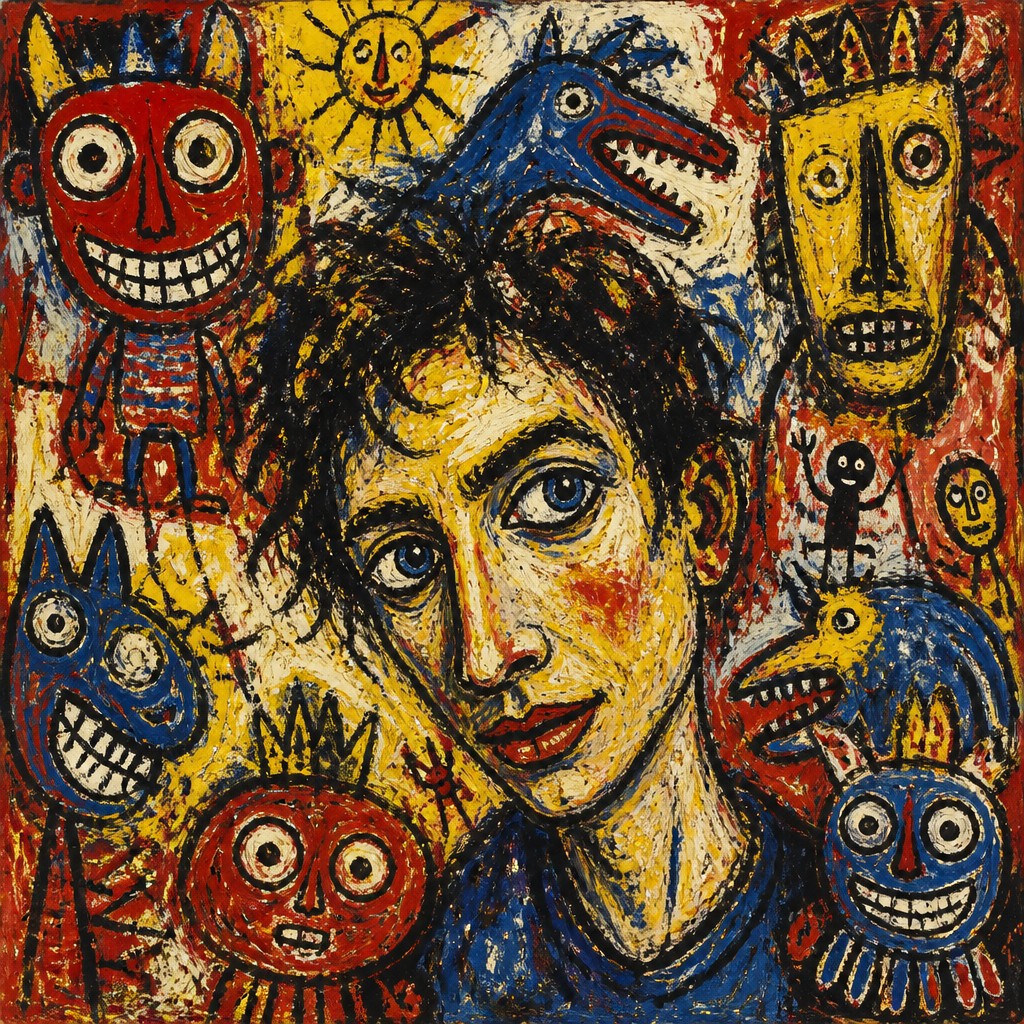 AI-generated
 AI-generated
 AI-generated
CoBrA formed in November 1948 in Paris, when a group of Danish, Belgian, and Dutch painters and poets signed a manifesto titled La Cause était entendue ("The Case Was Settled"), rejecting the dominant art movements of the moment. Its name — an acronym of Copenhagen, Brussels, and Amsterdam — signaled a deliberately international, anti-Parisian alliance at a time when Paris still claimed to be the center of the art world.
The founders, including Asger Jorn, Christian Dotremont, Karel Appel, Constant Nieuwenhuys, and Corneille, were frustrated with two dominant tendencies: the cool geometric abstraction descended from De Stijl and Constructivism, and the doctrinaire Surrealism then centered on André Breton, which they felt had calcified into theory and literary game-playing. CoBrA wanted painting that was direct, physical, and collective, closer to folk art, children's drawings, and the visionary distortions of Paul Klee and Joan Miró than to any refined European tradition.
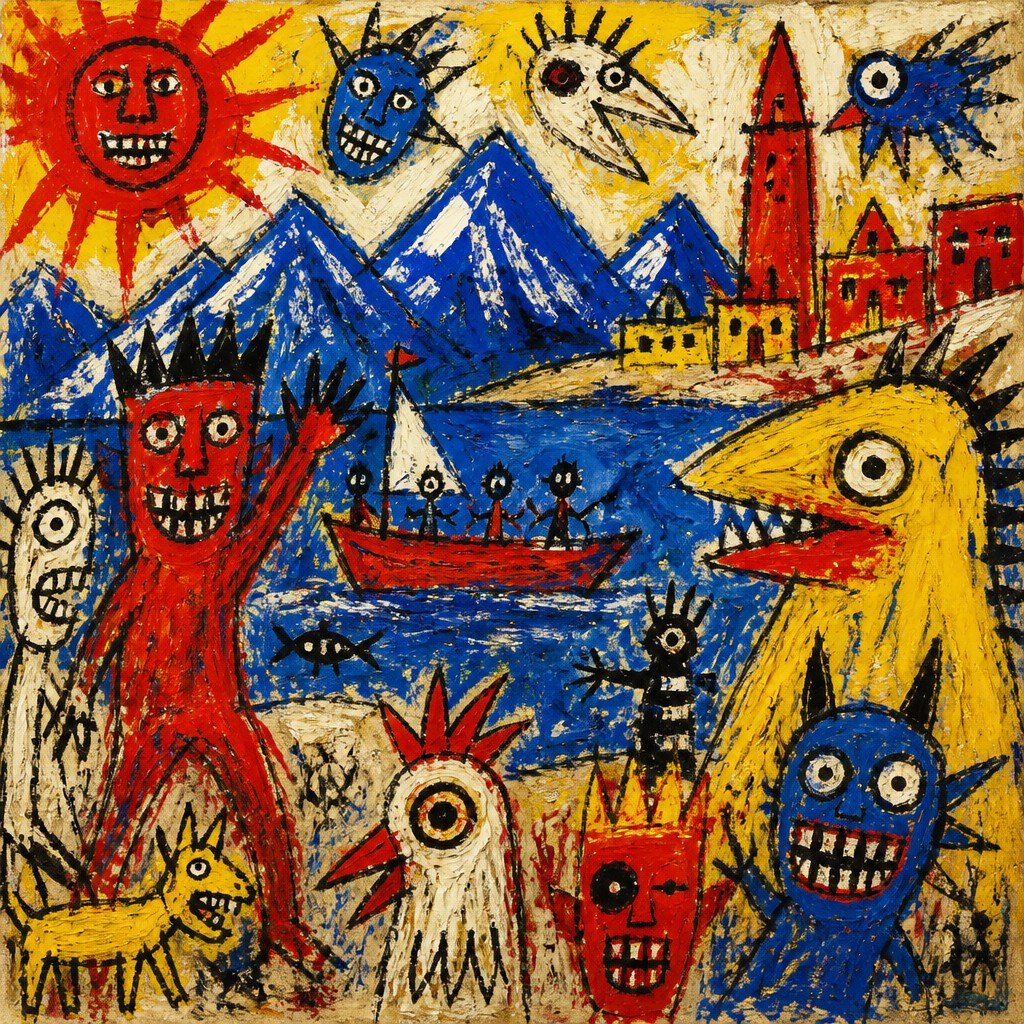
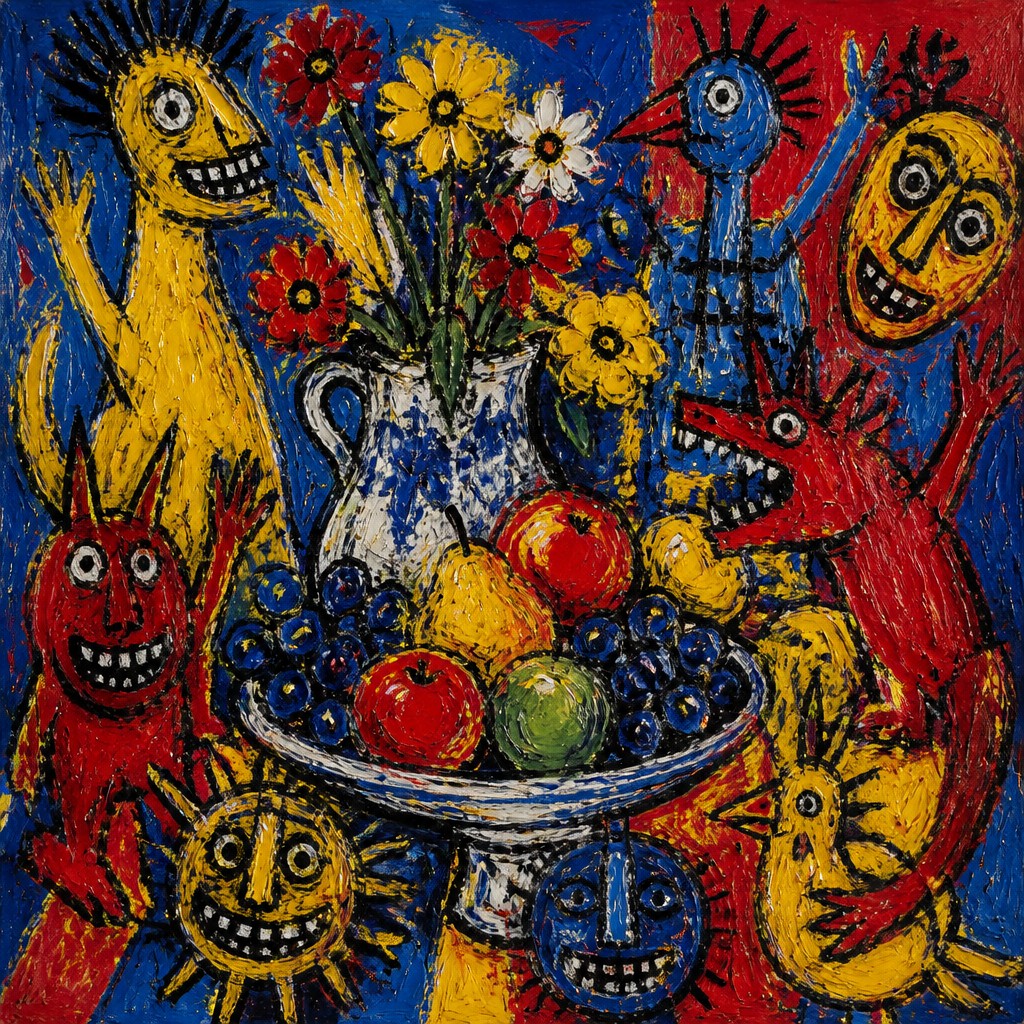
The resulting paintings are loud and unruly: thick black outlines corral fields of raw red, blue, and yellow; figures mutate into birds, animals, and masked spirits drawn from Nordic and medieval folklore; paint is applied fast and heavy, often straight from the tube. Members frequently painted collaboratively on a single canvas, improvising over one another's marks in sessions closer to jazz than studio discipline. The group's journal, Cobra, ran for ten issues and mixed reproductions with poetry, linking painters and writers in a shared project.
CoBrA rebelled against restraint of every kind — stylistic, national, and psychological — favoring instinct and the unconscious expressed through the body rather than through Surrealist dream-analysis. It mattered because it kept a channel of raw, expressive figuration alive in Europe just as abstraction was becoming the international default, and because it modeled art-making as a genuinely collective, cross-border activity rebuilding culture from the wreckage of the war. The group dissolved formally in 1951, worn down by illness, internal disputes, and the practical difficulty of sustaining an international collective, but its core members went on to shape later movements — Constant toward the utopian urbanism of Situationism, Jorn toward Cobra-inflected Art Informel, Appel toward an international career in expressive figuration.
What defines CoBrA
Thick black contour lines
Figures and forms are typically bounded by heavy, calligraphic black outlines that flatten and cartoon the image, echoing stained glass or a child's coloring-book drawing.
Primary and secondary color fields
Reds, blues, yellows, and greens are applied in raw, undiluted fields rather than blended, creating a deliberately unsophisticated, folk-art brightness.
Hybrid animal-human figures
Recurring motifs include birds, masks, and creatures that merge human and animal traits, drawn from Nordic mythology, medieval marginalia, and children's imagination.
Fast, physical brushwork
Paint is applied with speed and bodily force, often straight from the tube, prioritizing gesture and instinct over careful composition or refinement.
Collaborative, improvised canvases
Members frequently painted together on a single work, layering and reworking each other's marks in sessions that treated painting as a group performance.
Rough, unfinished surfaces
Canvases often retain visible corrections, drips, and scraped-back passages, rejecting the polished finish associated with academic or fine-art painting.
History
CoBrA's roots lie in several small postwar groups: the Danish Høst ("Harvest") circle around Asger Jorn, a Belgian Surrealist-revisionist circle around Christian Dotremont, and the Dutch Reflex group formed by Karel Appel, Constant, and Corneille in 1948. When representatives of these circles met in Paris in November 1948 — reportedly during a heated debate at a Surrealist conference — they broke away and signed a joint declaration, founding CoBrA on the spot.
Over the next three years the group organized exhibitions in Copenhagen, Amsterdam, and Liège, published the journal Cobra, and expanded to include the young Belgian artist Pierre Alechinsky and others. Its most notorious exhibition, at Amsterdam's Stedelijk Museum in November 1949, scandalized critics and the public with its raw, seemingly chaotic canvases; Karel Appel's mural for the Amsterdam city hall cafeteria, Questioning Children, provoked such outrage that it was hidden under wallpaper for years before being restored.
The group was never a tight stylistic school so much as a loose alliance held together by shared attitude and friendship, and it strained under practical pressures: contributors were scattered across countries, funds were thin, and Constant's growing interest in architecture, urbanism, and social theory pulled in a different direction from Appel's more purely painterly ambitions. Christian Dotremont's tuberculosis diagnosis in 1951 forced a retreat that effectively ended the group's collective activity, and CoBrA formally dissolved that year after a final large exhibition in Liège.
Though short-lived, CoBrA's influence outlasted its three years considerably. Jorn went on to co-found the Situationist International with Guy Debord in 1957, carrying CoBrA's anti-academic spirit into a broader critique of consumer society; Constant's New Babylon project extended its freedom into an architectural utopia. Appel and Alechinsky each built major international painting careers, keeping the movement's expressive, mythic figuration visible in galleries and museums for decades after the original group disbanded.
Key works
| Work | Artist | Year | Why it matters |
|---|---|---|---|
| Questioning Children | Karel Appel | 1949 | A mural for the Amsterdam city hall cafeteria so controversial it was papered over for years before restoration. |
| Hip, Hip, Hoorah! | Karel Appel | 1949 | A raucous, thickly painted scene of masked, celebrating figures typical of CoBrA's bright, unruly figuration. |
| Stalingrad | Asger Jorn | 1957 | A monumental, repeatedly reworked painting extending CoBrA's raw gestural energy into Jorn's later career. |
How to make art in this style
Working in a CoBrA Style
Palette: Reach for undiluted primary and secondary colors — red, blue, yellow, black, and white — straight from the tube rather than mixed on a palette. Avoid subtle gradations; CoBrA color is meant to feel raw and immediate, not refined.
Composition: Build the image around a central hybrid figure — part animal, part human, part mask — rather than a naturalistic scene. Let the figure fill most of the canvas, leaving little background, and allow proportions to distort freely; anatomical accuracy was never the point.
Brushwork: Work fast and physically. Apply paint thickly with a loaded brush or palette knife, and don't correct or smooth over mistakes — visible reworking, drips, and scraped passages are part of the aesthetic. Outline major forms in heavy black line after the color is down, the way a child might trace over a drawing.
Subjects: Draw from folklore, mythology, and the imagery of children's drawings — birds, moons, masks, imagined creatures, and simplified human figures with oversized heads or eyes. Avoid careful realism or symbolic subtlety; CoBrA imagery works through directness and instinct rather than allegory.
Process: If working with others, try genuinely collaborative sessions — passing a canvas back and forth and painting over each other's marks rather than dividing the surface. Even working alone, aim to paint quickly enough that conscious planning gives way to instinct, checking the urge to tidy or refine as you go.
Legacy
CoBrA's insistence that painting could be spontaneous, collective, and rooted in folk and childhood imagery fed directly into later European movements. Asger Jorn's post-CoBrA involvement in co-founding the Situationist International in 1957 carried the group's anti-academic energy into radical politics and urban theory, while Constant's New Babylon reimagined CoBrA's freedom as an architectural utopia. Karel Appel and Pierre Alechinsky both built long, internationally recognized careers that kept CoBrA's brand of expressive, mythic figuration in dialogue with later developments in painting.
More broadly, CoBrA offered an alternative to the two dominant postwar poles — American Abstract Expressionism and French geometric abstraction — proving that raw, figurative, color-driven painting still had force after 1945. Its embrace of children's drawing, folk art, and instinctive mark-making anticipated the later interest in outsider and vernacular imagery that surfaced in Art Brut, Neo-Expressionism, and graffiti-influenced painting. Museums in Copenhagen, Amsterdam, and Liège maintain dedicated CoBrA collections, and the movement is now recognized as one of the few genuinely pan-European artistic alliances of the postwar period — a reminder that abstraction and cool restraint were never the only paths available to art rebuilding itself after catastrophe.
Frequently asked questions
What does CoBrA stand for?
CoBrA is an acronym formed from the first letters of Copenhagen, Brussels, and Amsterdam, the home cities of the artists who founded the group in Paris in 1948.
Who started CoBrA?
CoBrA was founded in November 1948 by artists and writers including Asger Jorn, Christian Dotremont, Karel Appel, Constant Nieuwenhuys, and Corneille, who broke away from a Surrealist conference to sign a joint manifesto.
How long did CoBrA last?
CoBrA was active for only about three years, from its founding in 1948 to its formal dissolution in 1951, though its members continued working in related styles for decades afterward.
What did CoBrA rebel against?
CoBrA rejected both the geometric abstraction descended from De Stijl and Constructivism and the theory-heavy Surrealism of André Breton's circle, favoring spontaneous, instinctive painting over intellectual or formal systems.
What subjects appear in CoBrA paintings?
CoBrA artists favored hybrid animal-human figures, masks, birds, and mythic creatures rendered in bright, raw color with heavy black outlines, drawing on folklore and children's drawings rather than observed reality.
Is CoBrA the same as Art Informel?
No. CoBrA is a specific, short-lived group with a shared manifesto and journal, while Art Informel (also called Tachisme) is a broader, looser term for gestural, non-geometric abstraction across postwar Europe; some artists overlapped between the two circles.