 Art
Art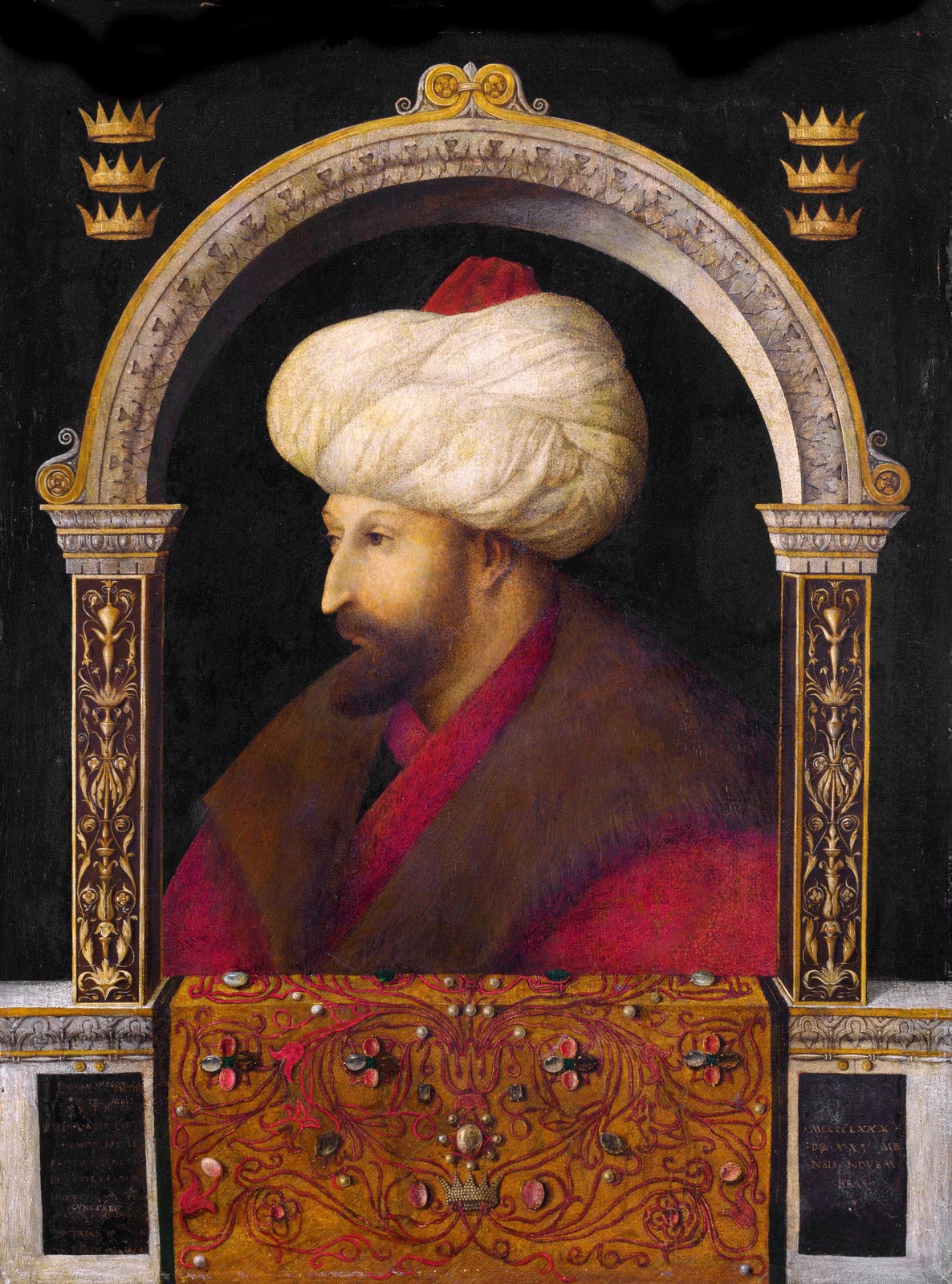
The Sultan Mehmet II. Image: Gentile Bellini · Public domain · Wikimedia Commons, accessed 2026-08-04
The Venetian School describes the distinctive tradition of oil painting that flourished in Venice from roughly 1450 to 1600, defined less by a shared subject matter than by a shared conviction: that color, light, and the physical handling of paint — what Italians called colorito — mattered as much as, or more than, precise underlying drawing, or disegno, the value Florentine and Roman artists prized above all else.
Venice's particular conditions shaped this approach. Its humid lagoon climate made fresco, the dominant technique elsewhere in Italy, impractical, pushing painters toward oil on canvas, a more forgiving and portable medium that rewarded reworking, glazing, and visible brushwork. Venice's wealth, built on maritime trade, and its relative political independence from Rome supported patrons — the state, religious confraternities called scuole, and private collectors — with different tastes than papal Rome, favoring sensuous color, rich fabric, and atmospheric mood over strict classical correctness.
Giovanni Bellini, working from the mid-1400s, established the tradition's foundations: luminous, softly modeled devotional paintings marked by careful attention to light. Giorgione, trained in Bellini's workshop by most accounts and active only briefly before his early death around 1510, developed a poetic, atmospheric mode — pastoral scenes suffused with mysterious mood — that proved hugely influential despite his small surviving output. Titian, who worked in close proximity to Giorgione early in his career, dominated Venetian painting for the following six decades, developing an increasingly free, almost abstract late style built from visible, loaded brushstrokes rather than smooth blending.
This was, in its way, a genuine rebellion against the Florentine-Roman consensus that drawing and design were painting's intellectual core; Venetian painters argued, implicitly and sometimes explicitly, that color and paint handling were equally capable of carrying meaning and feeling. Tintoretto and Veronese, the school's late-century masters, pushed the tradition toward dramatic scale and theatrical composition. The Venetian School matters because its emphasis on color and expressive brushwork offered European painting an alternative to line-based classicism, a tension that would echo through the Baroque, Impressionism, and beyond.
What defines Venetian School
Colorito over disegno
Venetian painters prized color and the physical handling of paint as the primary carrier of meaning and beauty, in explicit contrast to the Florentine and Roman emphasis on precise underlying drawing.
Oil on canvas
Venice's humid climate discouraged fresco, so painters worked in oil on canvas, a medium that allowed extensive reworking, glazing, and increasingly visible, expressive brushwork over a long career.
Atmospheric, poetic mood
Giorgione and his followers cultivated a soft, dreamlike atmosphere in pastoral and mythological scenes, prioritizing mood and suggestion over narrative clarity.
Rich, saturated color
Deep reds, warm golds, and glowing flesh tones gave Venetian paintings a sensuous warmth distinct from the cooler, more linear palettes typical of central Italy.
Loose, painterly late brushwork
Especially in Titian's later career, forms were built from visible, energetic strokes and drags of loaded paint rather than smooth, invisible blending, anticipating painterly techniques centuries later.
Large-scale narrative and mythological scenes
Venetian painters, especially Veronese and Tintoretto, produced vast multi-figure compositions for churches, civic buildings, and confraternity halls, staged with theatrical lighting and dramatic perspective.
History
The Venetian School's roots lie in the workshop of Giovanni Bellini, whose long career from the 1450s to his death in 1516 established a distinctly Venetian sensitivity to light and atmosphere within an otherwise fairly traditional devotional format. Bellini trained or influenced most of the next generation, including Giorgione and, by most accounts, the young Titian.
Giorgione, active only from around 1500 until his death, probably from plague, around 1510, developed a new kind of secular painting — poetic, atmospheric, deliberately ambiguous in subject — exemplified by The Tempest. His premature death left an unusually small body of work, but his influence on Titian, who absorbed and extended his innovations, was immense.
Titian's career, spanning roughly six decades until his death in 1576, defined Venetian painting for most of the 1500s. He served an international clientele, including the Holy Roman Emperor Charles V and King Philip II of Spain, and his style evolved dramatically over his lifetime, from the clear, saturated color of his early Assumption of the Virgin to the loose, almost dissolved brushwork of his final decades.
Later in the century, Tintoretto and Paolo Veronese, working somewhat independently of and in rivalry with each other, extended the Venetian tradition in different directions: Tintoretto toward dramatic, dynamically lit religious cycles, most famously his enormous decoration of the Scuola Grande di San Rocco; Veronese toward sumptuous, brightly colored, theatrically staged banquet scenes such as The Wedding at Cana.
Venice's political and economic decline through the late 1500s and 1600s gradually reduced the city's centrality to European art, though its colorist, painterly tradition never disappeared — it fed directly into the Baroque through artists like Rubens, who studied Titian closely, and remained a reference point for colorist painters for centuries afterward.
Key works
| Work | Artist | Year | Why it matters |
|---|---|---|---|
| The Tempest | Giorgione | 1508 | A pastoral scene of enigmatic subject matter, celebrated for its atmospheric mood and its priority of feeling over narrative clarity. |
| Assumption of the Virgin | Titian | 1518 | A monumental altarpiece for the Frari church whose dynamic composition and saturated color announced Titian's mature style. |
| Bacchus and Ariadne | Titian | 1523 | A mythological scene painted for the Duke of Ferrara, admired for its vivid color and energetic composition. |
| The Wedding at Cana | Paolo Veronese | 1563 | An enormous banquet scene reimagining a biblical story as contemporary Venetian spectacle, celebrated for its scale and color. |
| Crucifixion | Tintoretto | 1565 | A vast, dramatically lit canvas at the Scuola Grande di San Rocco, exemplifying Tintoretto's theatrical, dynamic staging. |
How to make art in this style
Painting in the Venetian School Style Today
Palette: Build around warm, saturated color — deep crimson and vermilion reds, rich golds, warm flesh tones, set against deep blues or greens. Let color, not line, define form: where a shape ends should feel like a shift in hue and temperature rather than a drawn edge.
Composition: Favor dynamic, diagonal arrangements over strict symmetry, especially for large narrative scenes — figures entering and exiting the frame, dramatic changes in scale, theatrical lighting from an identifiable source. For quieter, pastoral work, aim instead for a soft, hazy atmosphere and an ambiguous, mood-driven subject.
Technique: Work in oil, building color through successive layers and glazes rather than flat application. Let brushwork stay visible, especially in later stages — loaded, dragged strokes that describe form loosely rather than with photographic precision. Blend edges softly where forms meet light and shadow; avoid the crisp linear outlines associated with Florentine drawing. Canvas, with its slight texture, suits this looser handling better than smooth panel.
Subjects: Mythological and biblical narrative, portraiture, and large-scale devotional or civic commissions all fit the tradition, staged with sensuous color and theatrical light. Give fabric, flesh, and sky real weight and warmth — Venetian painting is, above all, an argument that the physical sensation of color and light is itself a worthy subject, not just a vehicle for a story.
Legacy
The Venetian School's central legacy is the idea that color and paint handling can carry as much meaning, feeling, and sophistication as line and design — a position that shaped a recurring debate in European painting for centuries, echoed later in disputes between Poussinistes and Rubenistes in France, and in the nineteenth century between academic linearism and the loose, colorist brushwork of the Impressionists.
Titian's late, increasingly free technique, built from visible strokes and drags of paint, was studied intensely by later painters including Rubens, Velázquez, and Rembrandt, all of whom developed their own painterly, colorist styles partly in dialogue with his example. Veronese's theatrical staging and Tintoretto's dramatic lighting fed directly into Baroque compositional strategies.
Today, "Venetian color" remains shorthand for warm, saturated, atmospherically rich painting, and the school's basic insight — that oil paint's physical qualities are themselves expressive, not merely a means to an end — underlies much of the painterly tradition in Western art, from Baroque drama through Romantic color to modern expressive brushwork.
Frequently asked questions
What is the Venetian School?
The Venetian School refers to the distinctive tradition of oil painting that developed in Venice from roughly 1450 to 1600, prioritizing color, light, and expressive brushwork over the precise drawing favored in Florence and Rome.
What is 'colorito' versus 'disegno'?
Colorito, color and paint handling, was the value Venetian painters prized most; disegno, precise underlying drawing, was the value central Italian painters in Florence and Rome prized instead. The contrast defined a long-running debate about painting's true foundation.
Who were the leading Venetian School painters?
Giovanni Bellini established the tradition, Giorgione developed its poetic, atmospheric mode, Titian dominated it for six decades, and Tintoretto and Veronese extended it toward dramatic scale and theatrical staging late in the 1500s.
Why did Venetian painters use canvas instead of fresco?
Venice's humid lagoon climate made fresco impractical, since damp plaster does not hold paint well, so painters worked in oil on canvas instead, a medium that also allowed extensive reworking and increasingly visible brushwork.
How did the Venetian School influence later art?
Its emphasis on color and loose, painterly brushwork influenced Baroque painters like Rubens and Velázquez, fed into later color-versus-line debates in French academic painting, and anticipated the looser handling later prized by colorist and Impressionist painters.