 Art
Art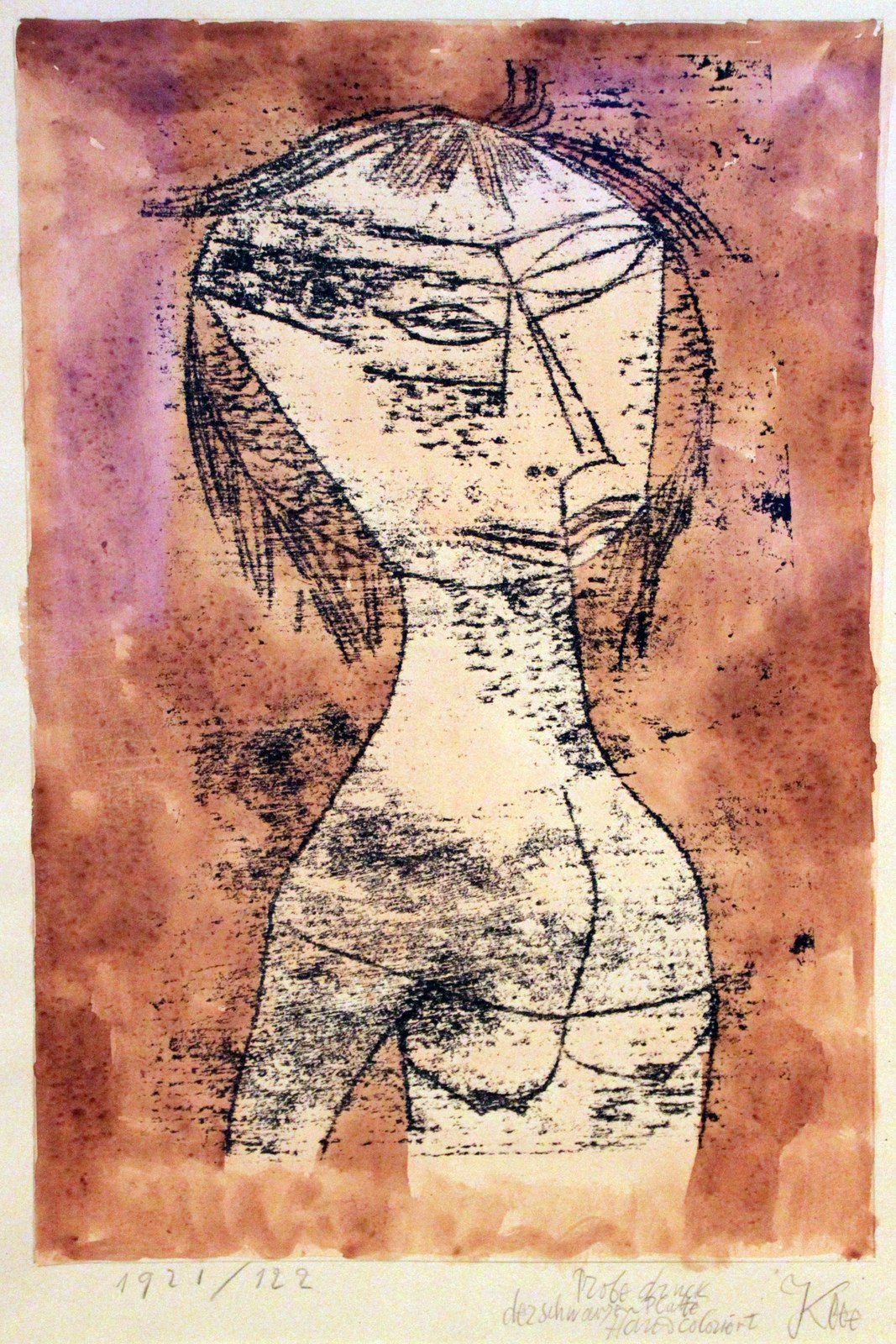
German: Die Heilige vom inneren Licht The Saint of the Inner Light. Image: Paul Klee · Public domain · Wikimedia Commons, accessed 2026-08-04
Surrealism began in Paris in 1924, when the poet André Breton published the "Manifesto of Surrealism," redirecting the anarchic energy of Dada toward a more constructive exploration of the unconscious mind, informed by Sigmund Freud's psychoanalytic theories of dreams and repressed desire. Breton sought to reconcile dream and waking reality into what he called an "absolute reality," a surreality accessible by bypassing rational, conscious control.
To reach it, Surrealists developed techniques of automatism — automatic writing and drawing performed without deliberate direction — alongside chance-based procedures such as the collaborative exquisite corpse drawing game, frottage (rubbing textures from surfaces), and decalcomania (pressing and pulling wet paint between surfaces). Two broad visual tendencies emerged within the movement: an illusionistic strand, practiced by Salvador Dalí and René Magritte, that rendered dreamlike or physically impossible scenes with meticulous, almost hallucinatory realism; and a biomorphic, more abstract strand, practiced by Joan Miró, Max Ernst, and André Masson, built from organic, semi-abstract forms generated partly through automatic technique.
Recurring themes ran across both strands: distorted or melting time and matter, uncanny doubling, eroticism, metamorphosis, and ordinary objects displaced into contexts where they no longer make rational sense. The movement rebelled against rationalism, academic realism, and bourgeois respectability, and many of its members aligned loosely with radical left politics. Women occupied a complicated position within Surrealism — frequently cast as muses or objects of desire in male Surrealists' work, while artists including Leonora Carrington, Leonor Fini, and Dorothea Tanning developed major, independent bodies of Surrealist work of their own, increasingly recognized in recent decades.
Surrealism spread internationally through exhibitions and journals across the 1930s, and gained further reach when many of its members fled Europe for New York during World War II, directly exposing American artists to automatism and helping seed the emergence of Abstract Expressionism. The movement matters because it fundamentally expanded what art could depict — interior psychological states, dream, and desire — while pioneering techniques of chance and automatism that reshaped twentieth-century art, literature, and film, and whose uncanny visual logic remains instantly recognizable in popular culture today.
What defines Surrealism
Dreamlike and impossible imagery
Scenes defy physical law — melting objects, floating figures, incongruous scale — yet are rendered with the vivid, specific clarity of a remembered dream.
Automatism and chance
Techniques including automatic drawing, frottage, decalcomania, and collaborative exquisite corpse drawings were used to bypass conscious control and surface unconscious imagery.
Startling juxtaposition
Unrelated objects or images were deliberately combined to create shock and revelation, following the Surrealist ideal of a "chance meeting" between disparate elements.
Hyperreal or meticulous technique
Many Surrealist painters used precise, almost photographic rendering to make physically impossible scenes feel convincingly, unsettlingly real.
Biomorphic abstraction
Organic, amoeba-like forms and invented creatures, especially in the work of Miró and Ernst, suggested primal or subconscious biological life.
Recurring symbolic motifs
Clocks, eyes, mirrors, doubled figures, and metamorphosing bodies recur across artists as visual shorthand for desire, time, and unstable identity.
History
Surrealism emerged directly from Dada's Paris circle around 1922–24, as André Breton and others sought a more theory-driven, constructive successor to Dada's nihilism. Breton's 1924 "Manifesto of Surrealism" defined the new movement around the concept of psychic automatism and the unconscious, drawing on Freudian psychoanalysis as well as earlier precedents in Symbolism and Giorgio de Chirico's Metaphysical Painting. Early adherents included poets such as Louis Aragon and Paul Éluard alongside visual artists including Max Ernst, André Masson, and Joan Miró. The group organized exhibitions, published journals such as La Révolution surréaliste, and practiced collective creative games like the exquisite corpse.
Salvador Dalí and filmmaker Luis Buñuel joined the circle around 1929, Dalí introducing his "paranoiac-critical method" for generating hallucinatory imagery and collaborating with Buñuel on the shocking short film Un Chien Andalou (1929). The Belgian painter René Magritte, who lived near Paris in close contact with Breton's circle from 1927 to 1930 before returning to Brussels, developed a distinct, deadpan illusionistic style built on visual and linguistic paradox. Internal political and personal conflicts repeatedly split the movement; Breton's often authoritarian leadership led to a series of expulsions, eventually including Dalí, whose ambiguous politics drew increasing suspicion from the group.
Surrealism spread internationally through the 1930s via major exhibitions in London (1936) and New York (1936), gaining further momentum when many of its members fled Europe for New York during World War II. Their presence there directly exposed American artists to automatism and dream-based imagery, contributing to the emergence of Abstract Expressionism in the following decade. The movement persisted formally under Breton's continued leadership until his death in 1966, but its cohesive identity as an organized avant-garde had already dissolved by mid-century as its imagery and techniques were absorbed into mainstream art, film, fashion, and advertising.
Key works
| Work | Artist | Year | Why it matters |
|---|---|---|---|
| The Persistence of Memory | Salvador Dalí | 1931 | Melting clocks draped across a barren landscape became the single most recognized image of Surrealist dream logic. |
| The Treachery of Images | René Magritte | 1929 | A painted pipe captioned "Ceci n'est pas une pipe" interrogates the gap between an image and the reality it depicts. |
| The Elephant Celebes | Max Ernst | 1921 | A mechanical-organic hybrid creature exemplifies Ernst's uncanny biomorphic invention. |
| The Tilled Field | Joan Miró | 1923 | A dense field of symbolic biomorphic forms marks Miró's transition toward Surrealist automatism. |
| Un Chien Andalou | Luis Buñuel and Salvador Dalí | 1929 | A shocking short film built from dream logic and jarring imagery that extended Surrealism into cinema. |
| Self-Portrait (Inn of the Dawn Horse) | Leonora Carrington | 1937 | Hybrid human-animal imagery marks Carrington's distinct, independent strand of Surrealist painting. |
How to make art in this style
Palette: Palette varies widely by approach — warm desert ochres and clear blues suit vast, empty dreamscape settings; flat, naturalistic color makes an impossible scene look convincingly mundane; bold primary colors against dark or neutral grounds suit more biomorphic, abstract compositions.
Composition: Place ordinary objects within impossible settings or unexpected scale relationships. Use vast, empty space — deserts, plain skies, blank interiors — to isolate strange elements and heighten their psychological impact; avoid cluttering the scene, since isolation intensifies uncanniness.
Technique: Choose between two broad approaches. For illusionistic dream imagery, use meticulous, near-photographic rendering so the impossible reads as convincingly, unsettlingly real. For a more automatist approach, work quickly and without a fixed plan, letting forms emerge unplanned — frottage (rubbing textures from a surface beneath the paper) and decalcomania (pressing and pulling wet paint between two surfaces) are useful ways to generate unexpected shapes to build from.
Subjects: Consider melting or metamorphosing objects, doubled or fragmented figures, everyday items removed from their normal context and scale, and hybrid creatures that merge human, animal, and mechanical elements.
Underlying principle: Let dream logic override physical plausibility, and trust unexpected combinations over deliberate, pre-planned symbolism — the Surrealist method values the startling "chance meeting" of unrelated elements over a composition built to illustrate a predetermined idea.
Legacy
Surrealism reshaped twentieth-century visual culture more thoroughly than almost any other movement. Its techniques of automatism and chance fed directly into Abstract Expressionism — Jackson Pollock's drip technique grew partly out of Surrealist automatist practice absorbed from exiled Surrealists in wartime New York. Its dreamlike juxtapositions became a lasting visual language for advertising, film, and fashion photography, from dream sequences in classic cinema to the persistently surreal imagery of contemporary music videos and editorial photography.
Magritte's deadpan visual paradoxes anticipated Conceptual Art's later interrogation of the relationship between language, image, and meaning. The movement's embrace of the irrational, the erotic, and the psychologically taboo opened space that later feminist and identity-based art would use to reclaim the body and psyche as legitimate subject matter on new terms. Surrealist automatism and chance procedures also influenced later aleatoric practices across visual art, music, and literature.
Surrealist imagery remains instantly recognizable and endlessly quoted in popular culture — melting clocks, bowler-hatted men, impossible perspectives — making it one of the most commercially pervasive and visually inescapable art movements in history, still shaping how contemporary culture pictures dreams, the uncanny, and the unconscious mind.
Frequently asked questions
What is Surrealism?
Surrealism is an international art and literary movement founded in Paris in 1924 that sought to express the unconscious mind through dreamlike imagery, automatism, and startling juxtapositions of ordinary objects.
Who founded Surrealism?
The poet André Breton founded the movement with his 1924 "Manifesto of Surrealism," building on ideas from Dada and Freudian psychoanalysis, joined early on by artists including Max Ernst, André Masson, and Joan Miró.
What is the difference between Surrealism and Dada?
Dada, active from around 1916, was a nihilistic, anti-art protest movement responding to World War I, while Surrealism, which grew directly out of it, redirected that energy toward a more structured exploration of dreams and the unconscious rather than pure negation.
What is automatism in Surrealist art?
Automatism refers to creating art without conscious, deliberate control — automatic drawing or writing intended to bypass rational thought and let unconscious imagery or ideas surface directly onto the page or canvas.
Is Salvador Dalí the most famous Surrealist?
Dalí is likely the movement's most widely recognized figure today, largely due to The Persistence of Memory, but René Magritte, Max Ernst, and Joan Miró were also central to the movement's history and development, and artists such as Leonora Carrington have been increasingly recognized as major Surrealists in recent decades.
When did Surrealism end?
As an organized, cohesive avant-garde group it effectively dissolved by the mid-twentieth century, though André Breton continued to lead a formal Surrealist group until his death in 1966; the style's imagery and techniques have continued to influence art ever since.