 Art
Art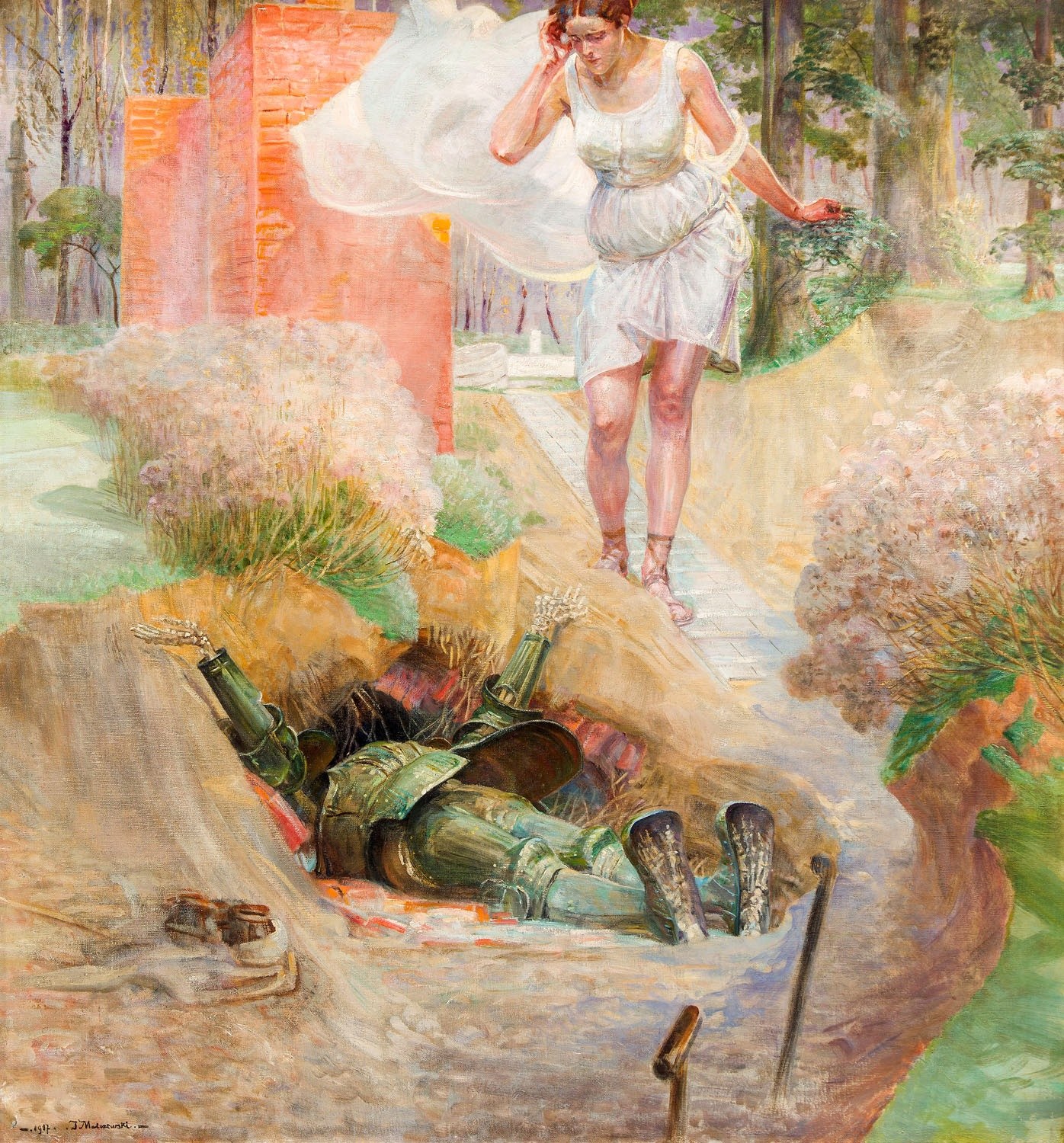
Polish: Ad Astra. Image: Jacek Malczewski · Public domain · Wikimedia Commons, accessed 2026-08-04
Symbolism emerged in France and Belgium around 1880 as a reaction against both Realism's fidelity to ordinary observed life and Impressionism's fixation on fleeting optical sensation. Symbolist painters believed that art's true subject was not the visible world but the invisible one — dreams, myths, spiritual states, sexuality, death, and the unconscious — and that these could only be suggested, never directly depicted. The result is a body of work that favors mystery over clarity: shadowy interiors, mythological and biblical figures rendered as psychological archetypes, femmes fatales, sphinxes, and androgynous or ambiguous bodies drifting through spaces that defy ordinary logic.
Where Impressionism looked outward at gardens, boulevards, and riverbanks, Symbolism looked inward and backward, mining literature, mythology, and religious tradition for imagery that could carry heavy emotional and philosophical freight. Gustave Moreau painted jewel-encrusted, hallucinatory versions of Salome and other mythic figures; Odilon Redon conjured spectral, half-abstract visions from his own imagination — a giant eye afloat like a balloon, solitary hybrid creatures; Fernand Khnopff painted enigmatic, self-contained women whose sealed rooms and locked doors suggested interior worlds no viewer could fully enter; Arnold Böcklin's Isle of the Dead offered a haunting, wordless meditation on mortality that became one of the era's most reproduced and imitated images.
Symbolism was as much a literary as a visual phenomenon — the term itself was coined in 1886 by the poet Jean Moréas for a movement in French poetry that painters then adapted to canvas — and Symbolist painters often worked in close dialogue with writers, sharing an interest in suggestion, ambiguity, and the idea that direct statement was aesthetically and spiritually inferior to allusion.
The movement rebelled against positivism and materialism generally: against a nineteenth-century culture increasingly organized around science, industry, and empirical fact, Symbolists asserted that inner, spiritual, and mythic experience was equally real and more important to art. Symbolism matters because it reopened painting to subjectivity, psychology, and the irrational just as those forces were becoming central to modern thought, and its atmosphere of dream logic and interior mystery echoes directly through Surrealism and much of twentieth-century art concerned with the unconscious.
What defines Symbolism
Mythological, Literary, and Biblical Subjects
Symbolists drew heavily on classical mythology, the Bible, and contemporary literature for figures and stories, using them as vessels for psychological or philosophical ideas rather than historical illustration.
The Femme Fatale and Sexual Anxiety
Recurring images of dangerous, seductive women — Salome, sphinxes, sirens — expressed fin-de-siècle anxieties about desire, sexuality, and gender that ran through much Symbolist imagery.
Dream Logic and the Uncanny
Scenes often defy ordinary spatial or narrative logic, presenting hybrid creatures, disembodied elements, or impossible settings that feel closer to dream or vision than observed reality.
Muted, Moody, or Jewel-Like Color
Palettes ranged from somber, veiled tones evoking dusk, mist, and interior gloom to richly saturated, almost bejeweled color used for hallucinatory or exotic effect, but rarely the bright, sunlit palette of Impressionism.
Suggestion Over Statement
Symbolist artists deliberately favored ambiguity and allusion, believing that a directly stated idea lost its power; meaning is implied through mood, gesture, and symbol rather than spelled out.
Static, Contemplative Compositions
Figures are frequently still, withdrawn, or self-absorbed, gazing inward or into the middle distance, producing an atmosphere of reverie, isolation, or trance rather than narrative action.
History
Symbolism developed first in literature, where the poet Jean Moréas published a "Symbolist Manifesto" in Le Figaro in 1886, defending Mallarmé, Verlaine, and other poets against charges of obscurity and decadence by arguing that poetry's task was to clothe ideas in sensuous form rather than describe them directly. Painters absorbed this idea over the following years, though a Symbolist sensibility in visual art had already been building through the 1870s and early 1880s in the work of Gustave Moreau, whose hallucinatory, jewel-encrusted mythological scenes influenced a generation of students at the École des Beaux-Arts, and Pierre Puvis de Chavannes, whose pale, hieratic murals offered a calmer, more classical strand of the same impulse. Arnold Böcklin's brooding Isle of the Dead, painted in several versions from 1880, became one of the era's most widely reproduced and imitated images.
Belgium developed an especially strong Symbolist current, centered on Brussels, where Fernand Khnopff and the Groupe des Vingt exhibition society provided a showcase for Symbolist and related avant-garde work through the 1880s and into the early 1890s. Odilon Redon, working largely in isolation in Paris, developed an intensely personal, quasi-abstract visionary imagery in charcoal and lithography before turning to radiant pastel and oil color in the 1890s.
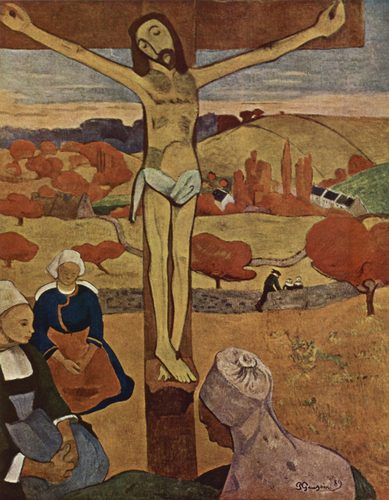
The critic Albert Aurier's influential 1891 essay effectively named Gauguin a Symbolist painter too, showing how porous the boundaries were between Symbolism and contemporaneous movements like Synthetism and Les Nabis — many artists moved fluidly among these overlapping circles. Symbolism was never a tightly organized movement with a single manifesto in painting the way it had in poetry; it was more a shared sensibility exhibited across salons, particularly the Salon de la Rose + Croix in Paris (1892–1897), which staged Symbolism's most theatrical showcase. By the early twentieth century, Symbolism's mystical, anti-materialist stance had been absorbed into and superseded by Art Nouveau's decorative language and, more radically, by Expressionism and Surrealism's continued exploration of the irrational.
Key works
| Work | Artist | Year | Why it matters |
|---|---|---|---|
| The Isle of the Dead | Arnold Böcklin | 1880 | A haunting, wordless meditation on death and passage that became one of the nineteenth century's most reproduced and imitated images. |
| Salome Dancing before Herod | Gustave Moreau | 1876 | A hallucinatory, jewel-encrusted vision that established the femme fatale as a central Symbolist archetype. |
| I Lock My Door Upon Myself | Fernand Khnopff | 1891 | An enigmatic interior portrait of self-enclosed feminine reverie, emblematic of Symbolism's fascination with inaccessible inner worlds. |
| The Poor Fisherman | Pierre Puvis de Chavannes | 1881 | A pale, hieratic image of quiet suffering that influenced a generation of Symbolist and early modern painters. |
| The Eye Like a Strange Balloon Mounts Toward Infinity | Odilon Redon | 1882 | A lithograph from Redon's 'To Edgar Poe' series that distills his early visionary, quasi-abstract imagery drawn from dream and the unconscious. |
How to make art in this style
Working in a Symbolist mode is less about a fixed technique than about cultivating suggestion and mood.
Subject: Draw on myth, religious imagery, literature, or personal dream and memory rather than everyday observed life. Choose subjects that carry symbolic weight — thresholds, mirrors, veils, sleep, death, hybrid or mythological creatures — and treat them as psychological states rather than illustrations of a story.
Palette: Favor muted, atmospheric, or moody color — deep violets, smoky blues, somber greens, and golds — used to build interior or twilight atmosphere, or alternately a richly saturated, jewel-like palette (deep crimson, gold, emerald) for more hallucinatory or exotic scenes. Avoid the bright, evenly lit palette of outdoor naturalism.
Composition: Keep compositions still and contemplative rather than active. Figures often face inward, downward, or into the middle distance rather than engaging the viewer directly. Leave negative space and shadow to do narrative work — what is obscured or half-seen should feel as important as what is shown.
Technique: Soft, veiled transitions and blurred edges suit Symbolist mood better than crisp, high-contrast rendering; consider glazing or scumbling to build a hazy, dreamlike surface. Ornamental detail — patterned fabric, decorative border, stylized hair or drapery — can carry symbolic meaning of its own.
Guiding principle: Resist explaining. A Symbolist image should imply more than it states, leaving the viewer with an atmosphere or question rather than a resolved narrative — ambiguity is the point, not a flaw to correct.
Legacy
Symbolism's insistence that art should express interior, psychological, and spiritual states rather than observed fact directly prepared the ground for Surrealism, whose interest in dream, myth, and the unconscious owes an explicit debt to Redon, Moreau, and their circle — later Surrealists explicitly claimed Redon as a forerunner. The movement's decorative, flattened, and richly patterned strand fed into Art Nouveau design, and its brooding, mythic atmosphere echoes through early twentieth-century Expressionism, particularly in artists who bridged Symbolist mood and Expressionist urgency.
Symbolism also shaped how later generations thought about the femme fatale, the artist-as-visionary, and the idea that meaning in art could be deliberately withheld or encoded rather than stated — a stance that runs through much of twentieth-century modernism's suspicion of literal narrative. Its visual vocabulary of veiled color, mythic figures, and dreamlike ambiguity continues to surface in film, fashion photography, album art, and fantasy illustration whenever a mood of mystery, eroticism, or the uncanny is wanted, making Symbolism one of the more quietly persistent undercurrents of modern visual culture.
Frequently asked questions
What is Symbolism in art?
Symbolism is a late-nineteenth-century movement, centered in France and Belgium from around 1880 to 1910, in which painters depicted myth, dream, and psychological or spiritual states rather than observed reality, favoring suggestion and mood over direct description.
What's the difference between Symbolism and Impressionism?
Impressionism recorded the fleeting optical experience of the observed world, typically painted outdoors from life. Symbolism turned away from external observation entirely, drawing instead on myth, literature, and imagination to evoke ideas, moods, and inner psychological states.
Who started Symbolism?
Symbolism began as a literary movement, named by the poet Jean Moréas in an 1886 manifesto defending poets like Mallarmé and Verlaine. In painting, Gustave Moreau, Odilon Redon, and Pierre Puvis de Chavannes are usually credited as founding figures, building on ideas developing since the 1870s.
Is Symbolism the same as Art Nouveau?
No, though they overlap and influenced each other. Symbolism is primarily concerned with mysterious, mythic, or psychological subject matter, while Art Nouveau is a decorative design movement defined by flowing organic line; many Symbolist images were adapted into Art Nouveau's ornamental style.
What subjects appear most often in Symbolist art?
Common subjects include mythological and biblical figures (especially Salome and the sphinx), femmes fatales, death and mortality, dreams and the unconscious, and solitary, self-absorbed figures in ambiguous interior or twilight settings.