 Art
Art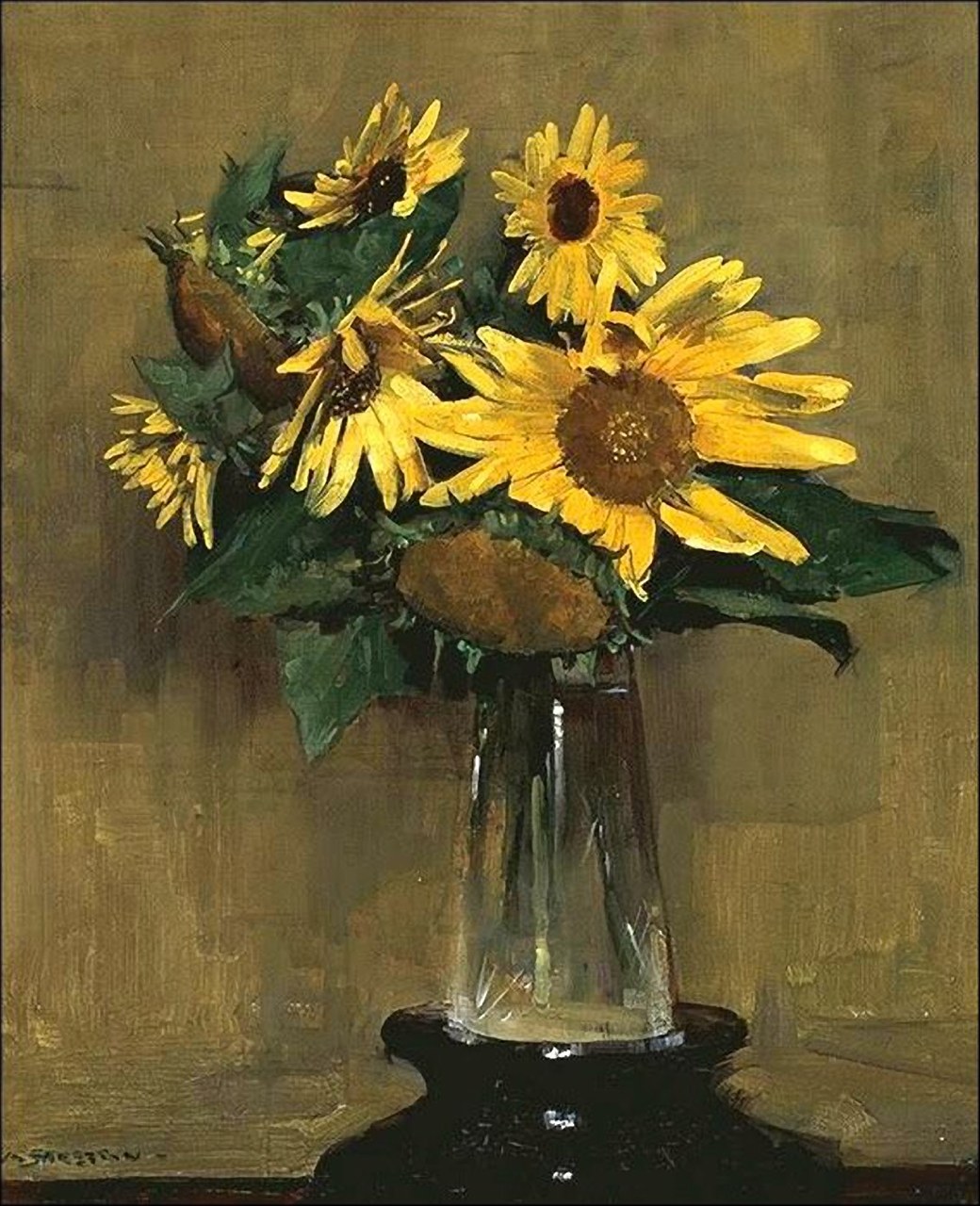
Sir Arthur Ernest Streeton (1867-1943) 127 (25910368047). Image: Arthur Streeton · Public domain · Wikimedia Commons, accessed 2026-08-04
The Heidelberg School, also called Australian Impressionism, was a group of painters working around Melbourne from the mid-1880s to 1900 who set out to capture the distinctive, often harsh light of the Australian bush rather than continuing to paint the country through a European visual vocabulary. Named after Heidelberg, a rural district near Melbourne where several artists camped and painted together, the movement produced the first body of Australian landscape painting widely regarded as capturing a genuinely national character.
Visually, the paintings share Impressionism's loose, broken brushwork and outdoor observation but apply it to an unmistakably Australian palette: sun-bleached ochres and golds, dusty blue-grey skies, and the silvery green of eucalyptus foliage, all under a hard, high sunlight very different from the softer, cooler light of French or English landscape painting. The artists worked in informal camps at Box Hill and Heidelberg, painting rapidly outdoors on small wooden panels, cigar-box lids among them, to capture fleeting effects of light and atmosphere quickly.
The movement rebelled against the imported European convention of painting the Australian landscape as if it were a version of English countryside, dark, deeply shadowed, and picturesquely composed, a habit that had produced landscapes poorly matched to the actual look and feel of the country. Heidelberg School painters instead sought direct, honest observation of local conditions, including subjects specific to Australian rural and pastoral life: shearing sheds, drought, bushfire, and the isolation of settler existence.
The movement matters as the founding moment of a self-consciously national Australian art, arriving at a period of growing colonial identity in the lead-up to Australian federation in 1901. Works like Tom Roberts's Shearing the Rams and Arthur Streeton's sunlit river and coastal scenes became, and largely remain, part of the core visual imagery through which Australians picture their own landscape and pioneering history.
What defines Heidelberg School
Harsh, high Australian sunlight
Paintings render the strong, often unforgiving light of the Australian bush at midday, producing sharp contrasts between bleached highlights and deep shadow rather than the softer light typical of European landscape painting.
Ochre, gold, and eucalyptus-green palette
A distinctive color range of sun-dried grasses, red-brown earth, and the silvery blue-green of gum tree foliage replaced the deep greens and browns of imported European landscape convention.
Rapid outdoor sketching on small panels
Artists often worked quickly outdoors on small wooden panels, including cigar-box lids, to capture fleeting light effects directly, a practice tied to their informal camps at Box Hill and Heidelberg.
Pastoral and pioneering subject matter
Shearing sheds, droving, bush clearing, and isolated selectors' huts appear alongside landscape, reflecting the movement's interest in the labor and hardship of rural settler life.
National and nostalgic mythmaking
Paintings frequently romanticized the bush and pioneer struggle, contributing to an emerging national identity narrative in the lead-up to Australian federation.
Broken, gestural brushwork
Following Impressionist example, paint was applied in visible, energetic strokes to suggest heat, dust, and shimmering light rather than smooth academic finish.
History
The movement grew out of informal painting camps organized by Tom Roberts, who returned to Melbourne in 1885 after studying in London and absorbing plein air and Impressionist ideas circulating in Europe. Roberts, along with Frederick McCubbin, Arthur Streeton, and later Charles Conder, began painting together outdoors at Box Hill and then at Heidelberg, both then semi-rural areas outside Melbourne, seeking to capture the specific qualities of Australian light and landscape directly from observation.
A defining moment came in 1889 with the "9 by 5 Impression Exhibition" in Melbourne, where the group displayed roughly 180 small, rapidly executed paintings, many on cigar-box lids measuring nine by five inches, deliberately embracing an unfinished, sketch-like Impressionist aesthetic that provoked considerable controversy among conservative critics and audiences accustomed to more polished academic landscape painting.
Through the late 1880s and 1890s, the core painters produced their most celebrated works: Roberts's large pastoral scenes including Shearing the Rams (1890) and A break away! (1891), Streeton's luminous river and harbor views, and McCubbin's studies of settler hardship such as Down on His Luck (1889). The artists moved through several shared camps and studios around Melbourne and later Sydney, maintaining close personal and professional ties even as their individual styles diverged.
By the mid-1890s the core group began to disperse: Streeton and Conder both traveled to Europe, while Roberts increasingly turned to portraiture, notably a monumental group portrait of the opening of the first Australian federal parliament in 1901. Though the tightly grouped camp period effectively ended by 1900, the artists continued working individually for decades afterward, and the movement's imagery, sunlit paddocks, gum trees, and pioneering rural labor, became deeply embedded in Australian national visual culture well beyond its original painters' lifetimes.
Key works
| Work | Artist | Year | Why it matters |
|---|---|---|---|
| Shearing the Rams | Tom Roberts | 1890 | A large-scale scene of shearers at work, treating rural pastoral labor with the scale and dignity usually reserved for history painting. |
| Golden Summer, Eaglemont | Arthur Streeton | 1889 | A luminous, sun-bleached landscape of grazing sheep in golden light, among the most celebrated images of the Heidelberg camps. |
| Down on His Luck | Frederick McCubbin | 1889 | A solitary bushman by a campfire, capturing the isolation and hardship of settler life in the Australian bush. |
| A break away! | Tom Roberts | 1891 | A dramatic scene of sheep stampeding toward a dam during drought, combining Impressionist light with narrative pastoral drama. |
| Fire's On | Arthur Streeton | 1891 | A depiction of railway construction workers in a rocky gorge, marking a moment of danger and labor rendered in bright, heat-drenched color. |
How to make art in this style
Palette. Work with sun-bleached, dry-country color: warm ochres and golden straw tones for grass and earth, dusty sage and silvery blue-green for eucalyptus foliage, and a pale, heat-hazed blue-grey for sky, avoiding the deep, cool greens typical of European landscape painting.
Composition. Favor wide, open pastoral spaces, paddocks, dry riverbeds, distant tree lines, under a high, dominating sky, or alternatively tight, shaded compositions inside shearing sheds or bushland that contrast strong sun outside with deep shadow within. Human figures, when included, are often small against the landscape's scale or engaged in specific rural labor.
Brushwork and technique. Apply paint quickly and directly with visible, energetic strokes, closer to a sketch than a finished academic surface, to capture the shimmer and heat-haze of strong midday light. Working rapidly, on-site and from direct observation if possible, keeps the sense of immediacy central to the style; a smaller working scale can help maintain looseness.
Light. Aim for harsh, high-contrast sunlight, bleached highlights, sharp-edged shadow, rather than the gentler, more diffused light common in European Impressionism. Consider working around midday conditions rather than the softer dawn or dusk light favored by some other Impressionist traditions.
Subjects. Draw on rural and pastoral Australian life: shearing, droving, bush clearing, drought, isolated homesteads, and native eucalyptus landscape. Treat labor and hardship with the same seriousness and scale traditionally given to historical or heroic subjects, a key move that gave the Heidelberg School's pastoral scenes their impact.
Legacy
The Heidelberg School established the visual template through which the Australian landscape and pioneering national story have been pictured ever since, its sunburnt paddocks, gum trees, and shearing sheds becoming foundational images in Australian art, education, and popular memory. Its major works remain among the most reproduced and publicly recognized paintings in Australian museums, regularly appearing on stamps, currency, and in school curricula tied to national history.
The movement's influence carried into twentieth-century Australian landscape painting broadly, encouraging later generations of artists to keep engaging directly and distinctively with local light and terrain rather than imported European convention, an approach later modernists like the artists of the Angry Penguins group would react against in different directions, but never entirely escape.
Beyond fine art, the Heidelberg School's imagery, golden paddocks, hardy bushmen, sunlit gum trees, remains deeply embedded in Australian visual identity, echoed in tourism imagery, film, and popular nostalgia for a pioneering rural past. Its status as the first painting movement widely understood as distinctly and self-consciously Australian gives it continuing significance in the country's cultural self-image, even as contemporary Australian art has moved to include Indigenous perspectives largely absent from the movement's own settler-focused vision.
Frequently asked questions
What is the Heidelberg School?
The Heidelberg School was a group of Australian painters working around Melbourne between roughly 1886 and 1900 who applied Impressionist-influenced, outdoor painting technique to distinctly Australian landscape and rural subjects, producing the country's first widely recognized national art movement.
Why is it called the Heidelberg School?
It takes its name from Heidelberg, a rural district near Melbourne, Australia, where several of the core artists, including Tom Roberts, Arthur Streeton, and Frederick McCubbin, set up informal outdoor painting camps in the late 1880s.
Is the Heidelberg School the same as Australian Impressionism?
Yes, the two terms are generally used interchangeably. Heidelberg School refers to the specific camps and circle of artists, while Australian Impressionism describes the broader stylistic approach they shared with international Impressionist painting.
Who were the main Heidelberg School artists?
The core figures were Tom Roberts, Arthur Streeton, Frederick McCubbin, and Charles Conder, who painted together at camps in Box Hill and Heidelberg near Melbourne during the late 1880s and 1890s.
What was the 9 by 5 Impression Exhibition?
It was a 1889 Melbourne exhibition of roughly 180 small, rapidly painted works, many done on cigar-box lids measuring nine by five inches, through which the group deliberately embraced a loose, sketch-like Impressionist aesthetic that startled conservative critics.