 Art
Art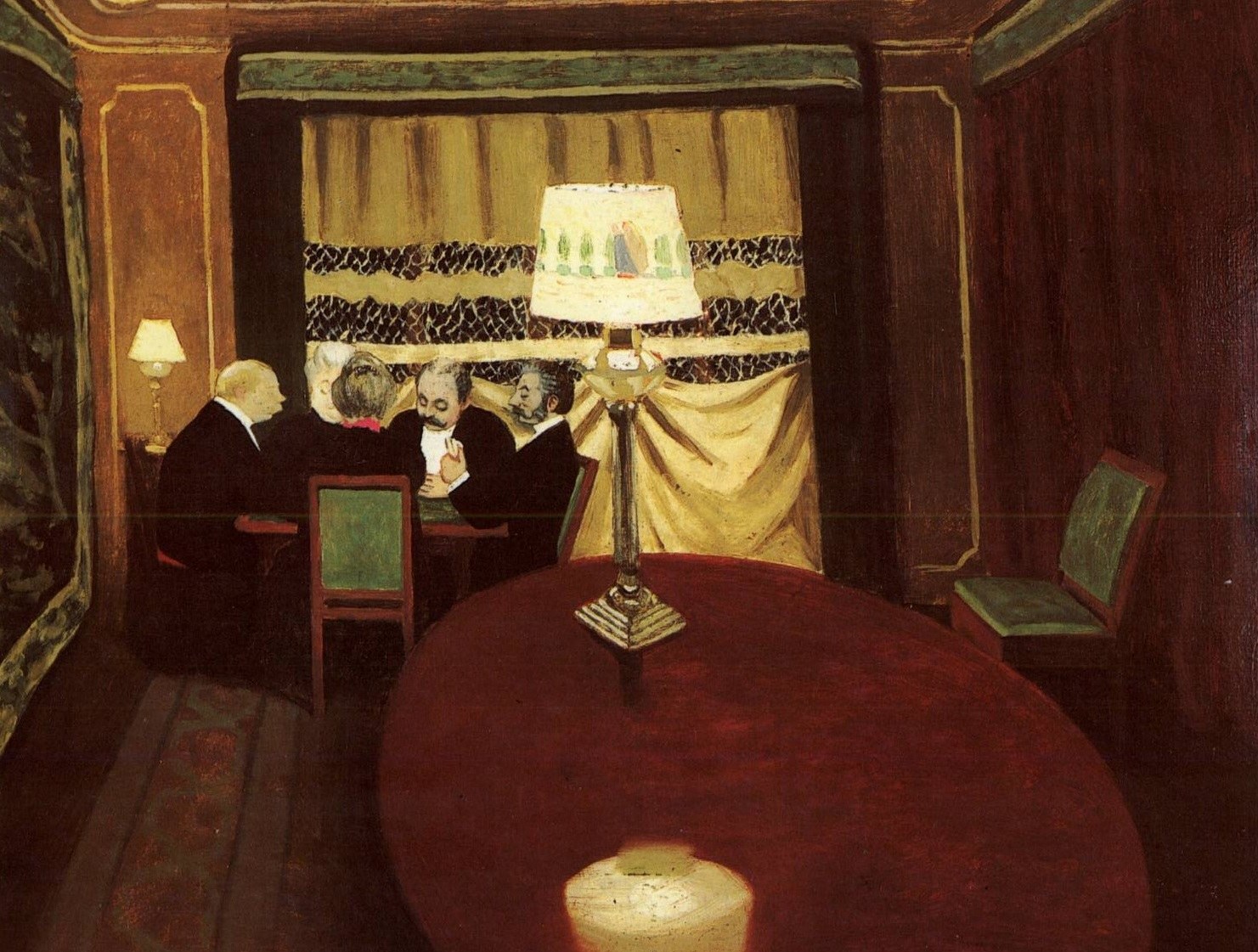
Poker. Image: Félix Vallotton · Public domain · Wikimedia Commons, accessed 2026-08-04
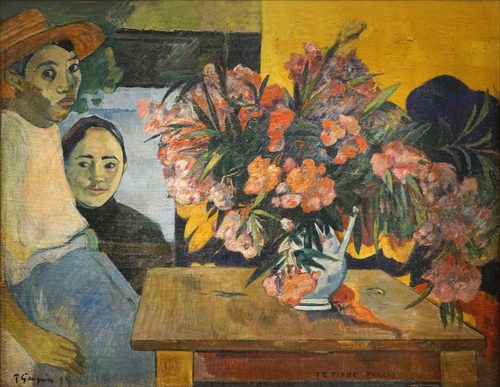
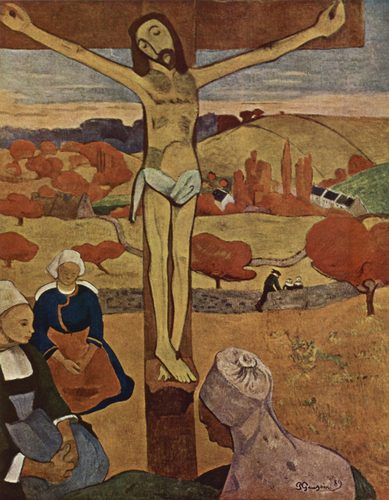
Les Nabis — Hebrew for "the prophets," a name chosen half-seriously by a group of young Paris art students who saw themselves as initiates into a new artistic truth — formed in 1888 after Paul Sérusier returned from Pont-Aven with a small landscape, later nicknamed The Talisman, painted under Paul Gauguin's direct instruction in bold, non-naturalistic color. Sérusier showed the painting to fellow students at the Académie Julian, including Pierre Bonnard, Maurice Denis, and Paul Ranson, with Édouard Vuillard among those who soon joined the circle, and the group adopted its flattened, synthesized approach to color and form as a shared program.
Maurice Denis supplied the movement's most quoted theoretical statement, published in 1890: that a picture, before being a warhorse, a nude, or some anecdote, is essentially a flat surface covered with colors assembled in a certain order. This was a genuinely radical claim for its time — an assertion that a painting's arrangement of color and shape mattered as much as, or more than, what it depicted — and it anticipated abstraction's later logic by decades.
In practice, the Nabis' work looked less austere than that sentence suggests. Bonnard and Vuillard in particular turned toward intimate, domestic subjects — cluttered apartment interiors, women sewing or reading, gardens seen through lace curtains — rendered in dense, patterned color that flattened furniture, wallpaper, and figures into a single decorative surface. This intimate, interior-focused strand of their work is often called Intimisme. The group was also unusually committed to erasing the hierarchy between "fine" and "decorative" art: Nabis members designed stained glass, theater sets and programs, posters, textiles, furniture, and illustrated books, treating a poster or a folding screen as worthy of the same care as an easel painting.
The Nabis rebelled against academic illusionism and, more specifically, against the idea that painting should describe deep, convincing space at all; they wanted surface, pattern, and mood instead. They also absorbed heavily from Japanese ukiyo-e prints, which several members collected, borrowing flattened perspective, cropped compositions, and bold silhouette. Loosely organized and exhibiting together through the 1890s, the group dissolved around 1900 as its members' individual styles diverged, but its insistence on the picture-as-decoration and its blurring of fine and applied art proved lastingly influential.
What defines Les Nabis
Flat Decorative Surface
Following Maurice Denis's famous dictum, the Nabis treated a painting first as a flat arrangement of color and shape, subordinating illusionistic depth to overall pattern and design.
Patterned, All-Over Composition
Wallpaper, fabric, and floor patterns often merge with figures and furniture into a single dense visual field, so that a room's decor and its occupants share equal pictorial weight.
Intimate Domestic Subjects (Intimisme)
Members especially favored quiet, everyday interior scenes — women sewing, reading, or gathered at a table — observed with warmth and psychological closeness rather than grand narrative.
Muted, Harmonized Color
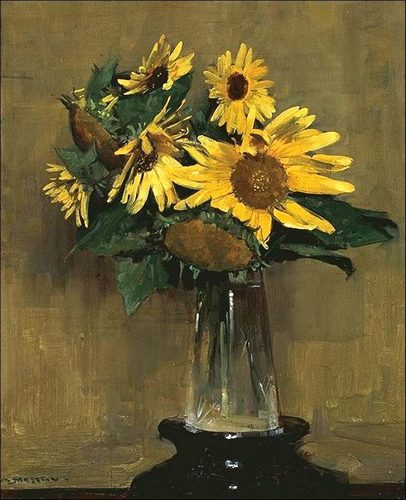
Unlike the bold primary contrasts of Fauvism that followed, Nabi color often favored closely related, softly harmonized tones — dusty golds, sage greens, warm browns — built up in patches rather than sharp outline.
Blurring of Fine and Decorative Art
Members designed posters, stained glass, theater programs, screens, and furniture alongside easel paintings, rejecting any strict hierarchy between painting and applied design.
Influence of Japanese Prints
Cropped, asymmetrical compositions, flattened perspective, and bold silhouette borrowed from ukiyo-e woodblock prints, which several Nabis collected avidly, shaped both their painting and their graphic design work.
History
Les Nabis formed in Paris in October 1888, when Paul Sérusier returned from a summer at Pont-Aven with The Talisman, the small landscape he had painted under Paul Gauguin's direct verbal guidance toward pure, non-naturalistic color. Sérusier shared the painting and its lesson with fellow students at the Académie Julian — among them Pierre Bonnard, Maurice Denis, and Paul Ranson, soon joined by Édouard Vuillard and Ker-Xavier Roussel — who adopted both the technique and, soon after, the group's self-mocking name, Les Nabis, Hebrew for "prophets," reflecting their sense of having received a revelation about painting's true nature.
The group met regularly, often at Ranson's studio (nicknamed "the Temple"), cultivating private rituals, nicknames, and in-jokes alongside serious aesthetic debate. Maurice Denis emerged as the group's principal theorist, publishing his influential 1890 essay with its declaration that a painting is fundamentally a flat surface covered in ordered color. The Nabis exhibited together at several Paris venues through the 1890s, including the gallery of dealer Ambroise Vollard and the offices of the journal La Revue Blanche, and contributed extensively to Symbolist theater, designing sets and programs for productions staged by leading avant-garde theater companies of the period.
Individual members pursued increasingly distinct paths through the 1890s: Bonnard and Vuillard developed the intimate, patterned domestic scenes now called Intimisme; Denis moved toward a more classical, religiously inflected style; Ranson and others explored Symbolist and decorative extremes. The group held its final major joint exhibition around 1899 and effectively dissolved as a self-conscious circle by 1900, though its members remained lifelong friends and continued working, in some cases for decades afterward, well into the twentieth century. Les Nabis is generally understood as the direct conduit through which Gauguin's Pont-Aven ideas were absorbed into the wider Paris avant-garde of the 1890s.
Key works
| Work | Artist | Year | Why it matters |
|---|---|---|---|
| The Talisman | Paul Sérusier | 1888 | A small landscape painted under Gauguin's direct guidance that became the founding icon of Les Nabis. |
| Homage to Cézanne | Maurice Denis | 1900 | A group portrait of Nabi and allied figures gathered around a Cézanne still life, documenting the circle's shared reverence for the older painter. |
| France-Champagne | Pierre Bonnard | 1891 | A flat, patterned lithographic poster that helped launch Bonnard's career and exemplified the Nabis' embrace of graphic design. |
| Public Gardens | Édouard Vuillard | 1894 | A decorative panel series merging figures and foliage into a single patterned surface for a private Paris dining room. |
How to make art in this style
To paint in a Nabi-influenced way, focus on pattern, intimacy, and flatness rather than dramatic subject matter.
Subjects: Choose quiet, everyday domestic scenes — a figure reading or sewing, a breakfast table, a garden glimpsed through a window or curtain — observed with warmth rather than grandeur. Interiors with visible wallpaper, patterned textiles, or tiled floors are especially suited to the approach.
Palette: Favor closely harmonized, somewhat muted color relationships rather than high-contrast primaries — warm golds, sage and olive greens, dusty rose, soft browns — built up in related tones so the whole composition feels unified and cozy rather than jarring.
Composition: Flatten the picture deliberately. Let pattern in wallpaper, upholstery, or clothing merge visually with the figures in front of it, so foreground and background compete for attention rather than one clearly receding behind the other. Crop compositions asymmetrically, sometimes cutting off a figure or object at the frame's edge, borrowing from Japanese print conventions.
Brushwork: Apply paint in small, dense, patch-like strokes that build texture and pattern rather than smooth, blended modeling. Edges between figure and ground can dissolve into the surrounding pattern rather than staying crisply defined.
Beyond the canvas: Consider applying the same flattened, patterned sensibility to a poster, screen, or decorative object — the Nabis themselves saw no meaningful distinction between painting and design, and treating a composition as potential decoration is itself part of the approach.
Legacy
Les Nabis' insistence that a painting is first a flat, decorated surface directly anticipated core assumptions of twentieth-century modernism and abstraction; Maurice Denis's 1890 formulation is still quoted in art history classrooms as an early statement of modernist formalism. Pierre Bonnard's mature work, extending Nabi color and pattern for another four decades, remained a major influence on colorists throughout the twentieth century, prized for its saturated, intuitive, almost abstract color harmonies. The group's commitment to erasing the boundary between fine and applied art — designing posters, stage sets, stained glass, and furniture with the same seriousness as paintings — paralleled the Arts and Crafts and Art Nouveau movements and prefigured the Bauhaus-era blurring of art and design disciplines.
The Nabis' intimate domestic subject matter also helped legitimize the everyday, private interior as a serious subject for ambitious painting, an approach that echoes in later twentieth-century figurative art focused on domestic and quiet psychological space. Their patterned, all-over compositional logic — treating wallpaper, clothing, and figure as a unified decorative field — continues to inform textile design, illustration, and interior-focused visual art today.
Frequently asked questions
What does "Les Nabis" mean?
Les Nabis is French for "the prophets," from the Hebrew nabi. A group of young Paris art students adopted the name half-jokingly in 1888 to express their sense of having received a revelation about painting's true, flat, decorative nature.
Who were the main Nabi artists?
The core members included Pierre Bonnard, Édouard Vuillard, Maurice Denis, Paul Sérusier, Paul Ranson, and Ker-Xavier Roussel, most of whom met as students at the Académie Julian in Paris.
What's the difference between Les Nabis and Synthetism?
Synthetism is the theory and technique associated with Paul Gauguin's circle at Pont-Aven; Les Nabis is the group of younger Paris painters who adopted and extended that theory, via Paul Sérusier's Talisman, into a broader decorative program covering painting, posters, theater design, and more.
What is Intimisme?
Intimisme describes the quiet, patterned domestic interior scenes — figures reading, sewing, or gathered at a table — favored especially by two Nabi painters, treating everyday private life as a serious subject for ambitious painting.
What was Maurice Denis's famous statement about painting?
In an 1890 essay, Denis wrote that a picture, before being a subject, is essentially "a flat surface covered with colors assembled in a certain order" — an early statement of the idea that a painting's design matters independent of what it depicts.